Backhoe Loader Operation Guide: Controls, Techniques, and Safety
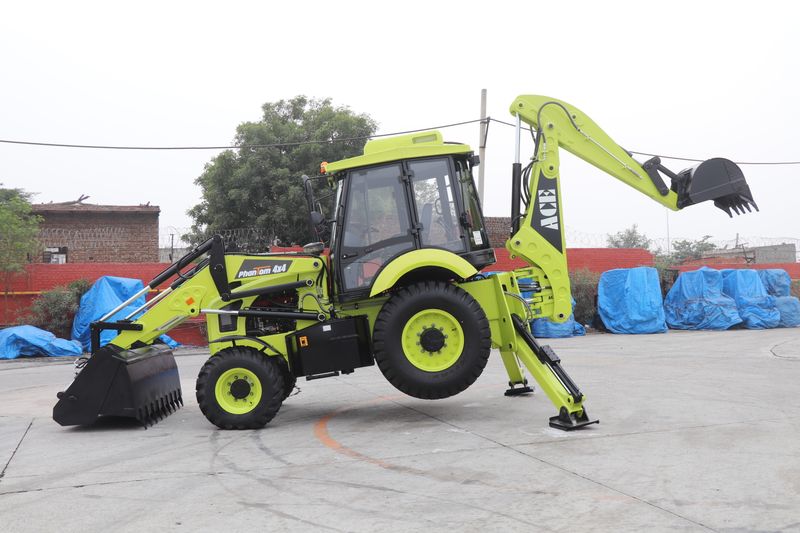
The backhoe loader is one of the most versatile machines in construction. It functions as a front-end loader, a backhoe excavator, a dozer, and a material handler — all in one unit. That versatility is also what makes it challenging to operate well. Unlike single-function machines, operating a backhoe requires fluency with two distinct control systems, an understanding of how machine geometry changes between front and rear work, and the discipline to stabilize properly before digging.
This guide is a complete backhoe loader operation guide for new operators and experienced hands looking to sharpen their technique. We cover machine familiarization, controls, stabilizer deployment, front loader operations, backhoe operations, digging techniques, slope work, and the safety rules that prevent injuries and fatalities on job sites.
Machine Familiarization
Before you operate any backhoe loader, you need to understand its layout. Spend 15 minutes walking around a machine before your first shift — the few minutes it takes can prevent serious mistakes.
The Three Working Ends
A backhoe loader has three operating positions:
- Front Loader (bucket) — Operated while facing forward, using loader controls. Used for scooping, grading, and material transport.
- Backhoe (rear excavating arm) — Operated while facing rearward, using hoe controls. Used for digging trenches, foundations, and utility work.
- Blade (some models) — A rear-mounted grading blade on some configurations, typically controlled with the same lever that controls the stabilizers.
Key Operator Touchpoints
Before starting, identify:
- Ignition and throttle controls
- Loader control levers or joysticks (left/right of the operator when facing forward)
- Backhoe swing pedal or lever (rotates the backhoe left and right)
- Backhoe control levers (boom, stick, and bucket)
- Stabilizer controls (typically separate from the digging controls)
- Seat rotation or swivel mechanism (on machines with a reversible seat)
- Emergency stop and safety lockout lever
- Differential lock pedal (for front axle traction in soft ground)
Operator Seat Position
Most modern backhoe loaders have a reversible or swiveling seat that faces forward for loader work and rotates to face the rear for hoe work. Make sure the seat is fully locked in position before operating either end. An unsecured seat that rotates during operation is a safety hazard.
Pre-Operation Inspection
Never skip the pre-op inspection. Walk the full machine and check:
- Fluid levels: Engine oil, hydraulic fluid, coolant, fuel
- Tire pressure: Uneven pressure causes instability on slopes
- Hydraulic hoses: Look for chafing, leaks, or cracked fittings
- Bucket teeth: Confirm cutting edges and teeth are secure
- Backhoe pins and bushings: Check for excessive play
- Lights and safety devices: Confirm backup alarm, horn, and ROPS are intact
- Work area survey: Identify buried utilities, overhead lines, soft ground, and slope hazards
Always call 811 (USA) before any digging. Utility strikes are among the most common and most serious job-site incidents involving backhoes.
Stabilizer Deployment
The stabilizers (also called outriggers) are the most important safety feature for backhoe operation. They prevent the machine from tipping or shifting during digging. Improper stabilizer deployment is a leading cause of backhoe tip-overs.
Stabilizer Deployment Steps
- Position the machine with the backhoe end facing the work area
- Apply the parking brake
- Lower both stabilizer pads simultaneously until they contact the ground — verify both are fully lowered before applying load
- Apply additional down pressure until the rear tires lift slightly off the ground — this stabilizes the machine and eliminates tire flex during digging
- Level the machine if the site is sloped — most stabilizers can be extended to different lengths, allowing you to level the machine on moderate slopes. Never operate with the machine significantly off-level.
- Verify pad placement: Stabilizer pads must be on firm, stable ground. Avoid placing pads over trench edges, utility covers, or soft fill. If pads are sinking, move the machine or add blocking.
Stabilizer Positioning for Slope Work
On a side slope:
- The downhill stabilizer must be extended further than the uphill stabilizer
- Never allow the machine to tilt downhill during hoe operation — the combination of swing weight and slope creates tip-over risk
- If the slope exceeds 15 degrees, reconsider positioning or use cribbing under stabilizer pads
Front Loader Operations
Controls (Standard Configuration)
Most backhoe loaders use two control levers for loader functions:
- Left lever: Boom lift (raise/lower the loader arms)
- Right lever: Bucket tilt (curl/dump the bucket)
Some machines use a single joystick with combined boom and tilt control — consult the operator’s manual for your specific machine.
Basic Loader Techniques
Bucket Curl (Crowd): Curl the bucket back toward the machine to scoop or pick up material. For loading from a pile, drive into the pile with the bucket flat, then curl as you raise the boom — this maximizes fill factor.
Boom Raise and Lower: Raise the boom after the bucket is loaded to clear obstacles. Lower it fully when traveling — never carry a loaded bucket at height across uneven ground. The raised weight shifts the center of gravity forward and dramatically increases tip-over risk on hills.
Dump: Roll the bucket forward (tip it away from the machine) to release the load. For clean dumping into a truck, position the bucket over the target and dump smoothly to avoid load scatter.
Loader Grading Technique
The front bucket can be used for light grading:
- Lower the boom until the bucket cutting edge just touches the surface
- Drive forward at low throttle, allowing the bucket to float on the surface
- Use float mode if available — this allows the bucket to follow ground contours without operator input
- For cutting down high spots, tilt the bucket slightly forward (edge leading) and use engine load as your indicator of cut depth
Travel with a Loaded Bucket
- Keep the bucket low — 12–18 inches off the ground while traveling
- Slow down on slopes and rough terrain
- Never travel on slopes with a raised, loaded bucket
- Engage the differential lock in soft or uneven ground to maintain steering control
Backhoe Operations
Transitioning from Loader to Hoe
- Find a level area if possible
- Lower the loader bucket to the ground
- Apply the parking brake
- Deploy the stabilizers (see above)
- Rotate or swivel the seat to face the rear
- Identify all four backhoe controls before beginning work
Backhoe Control Layout (ISO Pattern — Most Common)
Left joystick:
- Push forward: Boom down (lower)
- Pull back: Boom up (raise)
- Left: Swing left
- Right: Swing right
Right joystick:
- Push forward: Stick out (extend away from machine)
- Pull back: Stick in (crowd toward machine)
- Left: Bucket dump (open)
- Right: Bucket curl (close)
Note: Some machines use SAE (backhoe) pattern controls with different assignments. Confirm your machine’s pattern before operation — running the wrong pattern can result in unintended movement and injury.
Swing control: On most machines, a foot pedal or separate lever controls the left/right swing of the entire backhoe assembly.
Digging Techniques
Basic Trench Digging
- Position the machine with the backhoe centered over the intended trench line
- Deploy stabilizers
- Lower the boom to position the bucket teeth at the surface
- Crowd the stick toward the machine while curling the bucket — this is the digging stroke
- Raise the boom to bring the loaded bucket clear of the trench
- Swing to the spoil pile side and dump
- Return and repeat
Maximizing Digging Force
- Keep the stick angle between 45 and 90 degrees from vertical during the digging stroke — this is the geometry of maximum breakout force
- Combine stick crowd and bucket curl simultaneously for maximum efficiency
- Let engine and hydraulic pressure do the work; jerky, fast inputs waste power and wear components
Bench Digging (Deep Excavations)
For trenches deeper than the machine’s maximum dig depth:
- Dig the first bench (upper layer) at full machine reach
- Move the machine forward to dig the next section
- Reduce the bench width as depth increases
- Keep spoil piles back from the trench edge — a loaded spoil pile on the trench edge increases collapse risk
Digging Around Utilities
When within 18–24 inches of a marked utility:
- Hand dig to expose the utility location precisely
- Use the backhoe bucket back (flip the bucket upside down and use the back of the bucket as a scraper) or use a flat-faced cleanup bucket to carefully remove material
- Never use full crowd and curl force near a marked line
Cleaning the Trench Bottom
After digging to depth, use the flat back of the bucket to scrape and smooth the trench bottom. Lower the boom to the trench bottom, extend the stick, and draw the bucket back toward the machine with the bucket fully curled — the flat back skims the bottom smooth.
Switching Between Front and Rear
Moving between loader and hoe work is common on busy job sites. Follow this discipline every time:
- Raise and secure the loader bucket — fully lower if possible, or use transport height
- Retract stabilizers fully — never travel with stabilizers down, even short distances
- Rotate seat to the appropriate position and lock it
- Travel to new position
- Re-deploy stabilizers before any hoe work
Common Mistakes
Running Too Fast
Jerky, fast joystick inputs waste hydraulic efficiency, wear components faster, and reduce load control. Smooth, progressive control inputs produce faster cycle times and less fatigue.
Overloading the Bucket
Attempting to carry more than the bucket’s rated capacity — especially with the boom extended — stresses the lift arms, pins, and hydraulic cylinders. Fill to rated capacity and make more passes.
Digging with Extended Stick
Maximum digging force occurs when the stick is perpendicular to the boom. Digging at maximum stick extension reduces breakout force by 40–60% and increases stress on pins and bushings.
Ignoring Swing Momentum
The backhoe assembly is heavy. At high swing speeds, the momentum builds quickly — and stopping it requires opposite hydraulic input, which shocks the machine. Slow, controlled swings are faster in production terms than fast swings that overshoot and require correction.
Neglecting Stabilizer Confirmation
This is the most dangerous mistake. Stabilizers that appear deployed but haven’t fully contacted firm ground can shift suddenly under load, causing tip-over. Always verify firm contact with a slight down-pressure test before beginning digging.
Safety Rules for Backhoe Operations
Before You Dig:
- Call 811 (or your country’s equivalent) to locate underground utilities
- Survey for overhead power lines — maintain a minimum 10-foot clearance from high-voltage lines
- Identify escape routes if trench walls begin to fail
- Never allow personnel in the trench without proper shoring
During Operation:
- Keep the cab door closed during hoe work — it provides rollover protection
- Never allow bystanders within the swing radius of the backhoe
- Keep the bucket below shoulder height when traveling
- Sound the horn before moving in tight areas
On Slopes:
- Park with the bucket lowered to the ground and the rear blade (if equipped) also lowered
- Park across the slope on grades — not parallel
- Engage the parking brake before leaving the seat
Machine Shutdown:
- Lower all implements to the ground
- Apply parking brake
- Engage hydraulic lockout lever
- Remove the key
Recommended PPE and Operator Gear
- Hard hat (ANSI Type I or II) — required on all active construction sites
- Safety glasses with side shields — protects against flying debris during bucket work
- High-visibility vest (ANSI Class 2) — critical when working near other equipment and traffic
- Steel-toed boots with slip-resistant sole — for mounting/dismounting and ground-level tasks
- Anti-vibration gloves — reduce hand-arm vibration during extended operation
- Hearing protection (NRR 25+ earmuffs) — diesel engine noise is significant in enclosed cabs without sound dampening
Bottom Line
Backhoe loader operation rewards smooth control inputs, disciplined pre-operation checks, and the habit of confirming stabilizer deployment before every single digging session. The machine’s versatility — loader in front, hoe in rear — is also its complexity. Operators who master both ends and understand the safety requirements for each position are the ones who work efficiently, safely, and with minimal machine wear.
Take time to learn your specific machine’s control pattern, practice smooth joystick inputs before working in tight or utility-dense areas, and never skip the stabilizer confirmation. Those habits are the foundation of everything else.

Ironworks Insider Editorial Team
Independent trade-focused editorial team