Backhoe vs. Excavator vs. Skid Steer: Which Machine Do You Need?
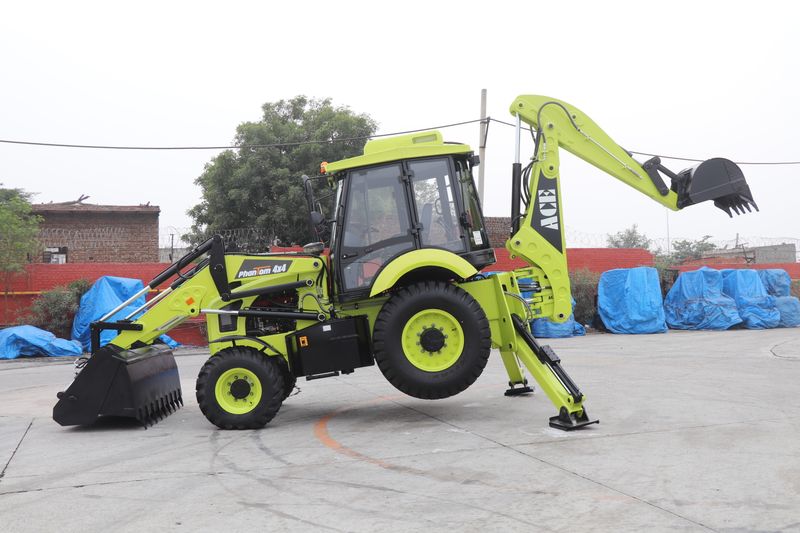
Walk onto any mid-size construction site and you’ll likely see all three: a backhoe digging a trench near the road, an excavator loading trucks on the far end, and a skid steer cleaning up spoil piles in between. They look different, they operate differently, and they excel at different things. But for contractors, municipalities, landscapers, and owner-operators trying to make a purchasing or rental decision, the lines between them are often blurry.
This guide cuts through the confusion with a direct, practical three-way comparison — and a decision framework you can use on your next job.
Quick Overview: What Each Machine Does
The Backhoe Loader
A backhoe loader is a two-in-one machine: a loader bucket on the front and a hydraulic hoe (digging arm) on the rear. The operator faces the cab forward to drive and use the front bucket, then swivels to face the rear to dig. Most backhoes are rubber-tired, street-legal, and can travel under their own power to job sites a few miles away.
Backhoes dominate in utility work: water lines, gas lines, drainage trenches, and small foundations. The John Deere 310SL, Case 580 Super N, and Caterpillar 420 are industry staples.
The Excavator
An excavator (also called a track hoe) is a purpose-built digging machine with a full 360-degree rotating upper structure sitting on steel or rubber tracks. The digging arm — boom, arm (stick), and bucket — hangs off the front and can reach depths of 15 to 25 feet depending on the machine class.
Excavators are pure work horses. They can’t load themselves into a truck; they need a lowboy trailer. But for deep digging, mass excavation, demolition, and heavy lifting, nothing comes close. CAT, Komatsu, Volvo, and Hitachi are the dominant brands.
The Skid Steer Loader
A skid steer is a compact, highly maneuverable machine with a rigid frame, four wheels (or rubber tracks on a CTL variant), and a lift arm in front. It steers by varying wheel speed on each side, which causes the tires to skid and pivot. The skid steer’s defining advantage is its universal attachment interface — switch from a bucket to forks, an auger, a trencher, a brush cutter, or a grapple in minutes.
Skid steers are the workhorses of landscaping, site cleanup, material handling, and light grading. Bobcat, Kubota, CAT, and New Holland are popular brands.
Side-by-Side Comparison
| Feature | Backhoe | Excavator | Skid Steer |
|---|---|---|---|
| Digging depth | 14–17 ft | 15–25+ ft | 4–5 ft (trencher attachment) |
| Digging force | High | Very High | Low–Moderate |
| 360° swing | No | Yes | No |
| Front loading | Yes | No (separate attachment) | Yes |
| Street travel | Yes (rubber tires) | No (trailer required) | No (trailer required) |
| Attachment versatility | Moderate | High (attachments exist) | Excellent |
| Footprint | Medium | Medium–Large | Small |
| Operating weight | 14,000–26,000 lbs | 12,000–200,000+ lbs | 5,000–12,000 lbs |
| Rental cost (per day) | $400–$700 | $600–$1,500+ | $250–$500 |
| Purchase price (new) | $60K–$110K | $50K–$500K+ | $30K–$75K |
| Best for | Utility/trenching | Deep dig/demolition | Grading/cleanup/material handling |
Digging: Where Excavators Win Decisively
For deep, precise digging — anything beyond 10 feet or requiring tight trench walls — the excavator is the clear winner.
The excavator’s long arm gives it reach and breakout force that a backhoe simply can’t match at depth. Its 360-degree rotation means it can dig, swing, and dump into a truck in a continuous cycle without repositioning. On large earthmoving projects, a skilled excavator operator with a well-sized machine will out-produce a backhoe by a wide margin.
The backhoe is competitive at shallow to mid-depth trenching (under 14 feet) in open terrain where repositioning frequently is acceptable. It’s also faster to move from spot to spot, since it drives under its own power.
The skid steer’s native digging ability is minimal. With a trencher or auger attachment, it can do small-diameter trenches or pier holes — but it’s not a digging machine at its core.
Winner for deep digging: Excavator Winner for utility trenching (6–14 ft): Backhoe Winner for shallow auger/trench work: Skid steer with attachment
Loading and Material Handling: A Split Decision
This is where the backhoe’s dual-function design shines. When you need to dig material out and immediately load it, the backhoe can dig with the rear hoe and then use the front bucket to push, pile, or load. You avoid needing a separate machine for the loading function.
The skid steer is the material handling specialist for everything that doesn’t involve deep digging. Its compact size, fast cycle times, and attachment versatility make it ideal for:
- Loading trucks or conveyor belts
- Moving pallets and lumber with forks
- Cleaning up job sites
- Grading and spreading aggregate
- Pushing snow
Excavators can load trucks, but they’re not designed for it — they’re slow at traveling to each new position, and without a loader bucket on the front, they can’t push or spread material efficiently.
Winner for combined dig-and-load: Backhoe Winner for material handling and site work: Skid steer Winner for loading from deep piles or excavations: Excavator
Mobility and Site Access
Backhoe: Drives on rubber tires, street-legal in most jurisdictions with proper lighting, can self-transport to nearby job sites. This is a huge cost advantage for contractors working multiple small sites in a day.
Excavator: Requires a lowboy or RGN trailer to move, plus a Class A CDL and (in many states) an oversize permit. Every job site move is a logistics event. For contractors running multiple small daily digs across town, this overhead adds up.
Skid steer: Requires a trailer (pickup truck and flatbed or a skid steer-rated car hauler). Very compact — a standard SSL fits on a 16-foot trailer with room to spare. Easy to move but not self-propelled over road.
Winner for mobility: Backhoe — by a wide margin on jobs within a few miles.
Tight Spaces and Confined Work Areas
Skid steer wins here. Its tight turning radius (essentially zero-radius spin) lets it work inside buildings, greenhouses, barns, and tight urban lots where no other machine can operate. Mini excavators (under 6 tons) also work well in confined spaces, but they’re a different class from full-size track hoes.
A full-size excavator needs significant clearance to swing its boom. Backhoes need space to position the rear stabilizer legs before digging.
Winner for confined spaces: Skid steer (or mini excavator if digging is required)
Attachment Versatility
The skid steer is the king of attachments. Virtually every manufacturer builds to the universal quick-attach standard, meaning hundreds of tools plug directly into your machine:
- Augers, trenchers, stump grinders
- Cold planers and brooms
- Grapple and log forks
- Mulchers and brush cutters
- Concrete mixer drums
- Box blades and grading buckets
Excavators also have a rich attachment ecosystem: hydraulic hammers (breakers), tilt buckets, grapples, shears, compactors, and couplers. For demolition and heavy breakout work, excavator attachments are transformative.
Backhoes have fewer attachment options by comparison, though quick couplers on the rear arm allow bucket swaps and some specialty attachments.
Winner for attachment versatility: Skid steer (volume and variety) Winner for heavy attachment work: Excavator
Operating and Ownership Costs
Fuel Consumption (approximate)
- Backhoe: 2–4 gallons/hour
- Excavator (20-ton class): 4–7 gallons/hour
- Skid steer: 1.5–3 gallons/hour
Maintenance Complexity
- Backhoe: Moderate (tires, two hydraulic circuits, transmission)
- Excavator: High (undercarriage wear, swing bearing, complex hydraulics)
- Skid steer: Low–Moderate (tires or tracks, simple hydraulics)
Insurance and Licensing
All three typically require inland marine/equipment insurance. Excavators above certain weights may require CDL transport. OSHA standards apply to all three on construction sites.
The Decision Framework: Which Machine Do You Need?
Work through these questions in order:
1. How deep do you need to dig?
- Over 14 feet → Excavator
- 6–14 feet in multiple locations → Backhoe
- Under 6 feet or no real digging needed → Skid steer (with attachment if needed)
2. Do you need 360-degree reach or full rotation?
- Yes (mass excavation, loading trucks from a pit, demolition) → Excavator
- No → Continue to question 3
3. Do you need to travel between multiple sites per day under your own power?
- Yes, within a few miles → Backhoe
- No, trailer logistics are acceptable → Continue to question 4
4. Is your primary work material handling, grading, site cleanup, or landscaping?
- Yes → Skid steer
- No, it’s primarily deep digging → Excavator
5. Do you need to work inside buildings or extremely tight spaces?
- Yes → Skid steer or mini excavator
Renting vs. Owning: A Practical Note
If you only occasionally need one machine type, rent it. The rental economics are clear:
- Daily skid steer rental: $250–$500
- Daily backhoe rental: $400–$700
- Daily excavator (20-ton) rental: $600–$1,200
If you use a machine more than 100–150 days per year, owning typically beats renting. Below that threshold, rental avoids depreciation, insurance, storage, and maintenance overhead.
For owner-operators who do a mix of utility work, light site development, and occasional digging, many find that a backhoe + skid steer combination covers 90% of their work at a fraction of the cost of owning multiple excavators.
Recommended Products for Each Machine Type
For backhoe operators:
- Oregon Filtration Kit (engine, hydraulic, and fuel filters for common Case/John Deere models) — stock a full-service kit on the trailer
- OTC 1700 Series Hydraulic Jack — essential for stabilizer pad work and quick field repairs
- Klein Tools Work Gloves — backhoe operators swap between driving and digging; a durable, grippy glove matters
For excavator operators:
- Komatsu/CAT Grease Gun Kit — track undercarriage fittings require regular greasing; use a cordless grease gun for efficiency
- Laser Level and Grade Rod — for precise trench bottom verification
- Cat 5P-0287 Bucket Pin Kit — keep a spare pin kit on the lowboy for attachment swaps
For skid steer operators:
- Universal Quick-Tach Coupler — upgrade to a mechanical or hydraulic quick coupler to eliminate manual pin swaps
- Solid Foam-Filled Tires — if working on demolition or debris-heavy sites, eliminate flats entirely
- Hydraulic Multi-Function Joystick Controller — aftermarket controller upgrades are available for older machines and dramatically improve operator comfort
Bottom Line
No single machine wins across all job types. The backhoe is the generalist — it’s the Swiss Army knife of construction equipment, and for utility contractors and rural operators who need to move between sites quickly, it’s often the only machine they’ll ever need. The excavator is the specialist for serious earthwork — if you’re moving significant volume or digging deep, nothing else comes close. The skid steer is the productivity multiplier for surface work, material handling, and multi-attachment job sites.
When in doubt: if the job involves digging, start with the excavator or backhoe. If the job involves moving material around a site, start with the skid steer.

Ironworks Insider Editorial Team
Independent trade-focused editorial team