Bulldozer Blade Types: U-Blade, S-Blade, Angle Blade, and More
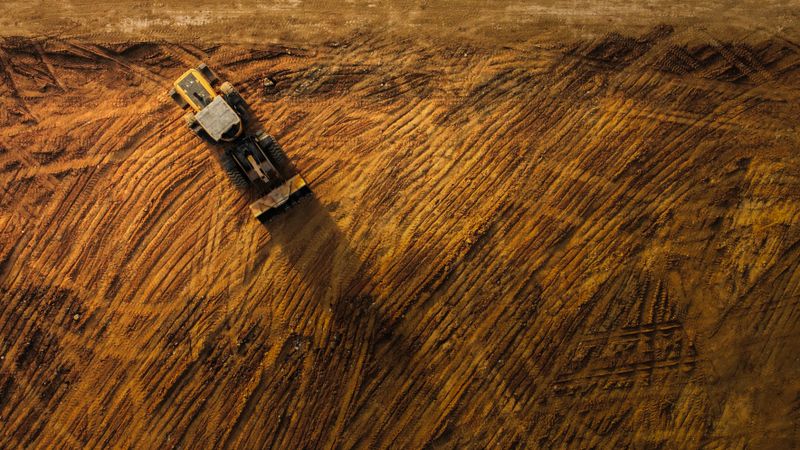
The blade is the working end of a bulldozer, and dozer blade selection is one of the most consequential equipment decisions you’ll make on any earthmoving project. The wrong blade wastes fuel, slows production, and puts unnecessary stress on the machine. The right blade multiplies efficiency — sometimes by 30 to 50 percent compared to a poorly matched alternative.
Yet blade selection is frequently overlooked. Many operators run whatever blade came with the machine rather than matching blade geometry to the job at hand. This guide changes that. We break down every major bulldozer blade type, explain the engineering logic behind each design, and give you a practical selection framework by job type and soil condition.
Why Blade Shape Matters
A dozer blade is not just a steel wall — it’s a carefully engineered cutting and carrying tool. The moldboard curve determines how soil rolls in front of the blade. The wing shape (if present) determines how much material is retained during a push. The blade height and capacity determine how much material moves per pass.
Three forces govern what happens when a blade enters the ground:
- Draft force — the horizontal force required to push the blade through the material
- Vertical component — how much the blade wants to dive or lift
- Spill — how quickly material escapes around the blade edges during a long push
Different blade types optimize these forces for different conditions. Understanding the trade-offs is the foundation of good dozer blade selection.
The S-Blade (Straight Blade)
Shape and Design
The S-Blade, or straight blade, is the oldest and simplest bulldozer blade design. It has a flat or slightly curved moldboard with no side wings. The blade is typically shorter in height compared to a U-Blade and offers a relatively modest carrying capacity.
Some S-Blades can be angled left or right (typically 25 degrees each way), which is sometimes referred to as an S-A or straight-angle configuration.
Capacity
Moderate — the lowest carrying capacity of the primary blade types due to the absence of wings.
Best Soil Types
- Hard, compacted soil
- Clay
- Caliche
- Rocky ground
Primary Applications
- Finish grading — the flat, low-profile design gives the operator precise blade control for smooth surface preparation
- Back-blading — working in reverse to smooth driveways, pads, and slopes
- Hard digging — the blade corners dig aggressively into compacted soil that a U-Blade would ride over
- Scraping and stripping — removing thin layers of topsoil or asphalt
Key Advantage
The S-Blade’s simplicity makes it the preferred blade for precision grading. There are no wings to limit blade-angle adjustments, and the flat face gives a clean cut at grade.
Key Limitation
Low carrying capacity means poor production on long pushes or in loose, high-volume material. You’ll move less dirt per pass compared to a U-Blade under the same conditions.
The U-Blade (Universal Blade)
Shape and Design
The U-Blade is the high-capacity powerhouse of bulldozer blades. It features a deeply curved moldboard with large side wings that extend forward, creating a concave “scoop” shape when viewed from above. The wings wrap material into the center of the blade, dramatically reducing side spill during long pushes.
U-Blades are typically the tallest blade option available for a given dozer model.
Capacity
Maximum — the U-Blade carries significantly more material per pass than any other blade type.
Best Soil Types
- Loose soil
- Sandy material
- Light clay
- Fine aggregate
- Coal
- Biomass and organic material
Primary Applications
- Coal and lignite pushing — mining operations are the classic U-Blade environment
- Slot dozing — pushing long distances in a single cut, where the wings retain maximum material
- Land clearing — moving large volumes of brush, topsoil, and organic debris
- Stockpile work — building and spreading large material piles
Key Advantage
Unmatched carrying capacity. On long pushes — anything over 100 feet — the U-Blade retains more material per pass than competing blade types, making it the production leader in loose-material applications.
Key Limitation
The wing geometry makes the U-Blade poor for hard digging. The curved face doesn’t penetrate compacted soil effectively, and the wings can catch on rocky ground. Finish grading with a U-Blade is nearly impossible — the curved moldboard won’t leave a smooth, flat surface.
The SU-Blade (Semi-Universal or Combination Blade)
Shape and Design
The SU-Blade splits the difference between the S-Blade and U-Blade. It has smaller side wings than a full U-Blade and a moderately curved moldboard. Think of it as a U-Blade with trimmed wings — you get most of the carrying capacity with better penetration in harder material.
Capacity
High — second only to the U-Blade.
Best Soil Types
- Mixed conditions
- Medium to firm soil
- Moderately rocky ground
- Varied terrain where blade switching isn’t practical
Primary Applications
- General earthmoving — the jack-of-all-trades blade for contractors who face varying soil conditions
- Rough site preparation — clearing and grading in one setup
- Highway construction — building embankments and rough-shaping road beds
- Production pushing where some hard material is present — handles rocks and roots that would defeat a U-Blade
Key Advantage
Versatility. If your job changes daily or your machine runs on multiple project types, the SU-Blade is the most practical choice. You sacrifice some capacity versus the U-Blade and some grading precision versus the S-Blade, but you gain a blade that handles most conditions competently.
Key Limitation
It’s not the best at anything. Pure grading jobs deserve an S-Blade. Pure high-volume pushing in loose material deserves a U-Blade. The SU-Blade is the compromiser.
The A-Blade (Angle Blade)
Shape and Design
The A-Blade, or angle blade, is a straight-profile blade that can be hydraulically angled left or right (typically 25 degrees in either direction) while the dozer moves forward. The angling allows material to spill off the low end of the blade in a controlled direction — essentially casting material to the side rather than pushing it in a pile ahead of the machine.
Some A-Blades can also be tilted (one end raised while the other is lowered), adding another dimension of control.
Capacity
Low to moderate — the angled position reduces effective frontal capacity.
Best Soil Types
- Sandy soil
- Loose aggregate
- Topsoil
- Wet material that needs to be cast aside
Primary Applications
- Ditching — angling the blade to cut a channel and cast material up the bank
- Side-casting on road construction — pushing material off the shoulder without building a windrow in front of the machine
- Windrowing — gathering material in a line to be picked up later
- Clearing snow — the angled position throws snow to the roadside efficiently
- Trail building — casting material off a hillside while the dozer traverses the slope
Key Advantage
The ability to cast material sideways rather than accumulating a pile in front of the machine is unique to the A-Blade. On linear projects like road building, pipeline right-of-way, and trail construction, the angle blade can eliminate secondary material handling.
Key Limitation
Low capacity in straight-push mode, and the angled position increases machine side loading. Not suitable for heavy earthmoving, finish grading, or hard digging.
The PAT Blade (Power Angle and Tilt)
Shape and Design
The PAT Blade is the most controllable blade in the dozer lineup. Starting from a straight-blade profile, the operator can adjust three parameters from inside the cab without stopping:
- Angle: Left or right (casting material to either side)
- Tilt: One corner up, one corner down (for crown or cross-slope cutting)
- Pitch: Forward or backward tilt of the entire blade face (controlling cut aggressiveness)
On many modern machines, PAT blade control is integrated with GPS grade control systems for fully automatic or semi-automatic grading.
Capacity
Moderate — similar to the S-Blade, as the PAT is based on a straight-blade geometry.
Best Soil Types
- Mixed conditions
- Any soil where precision matters more than raw production
Primary Applications
- Finish grading to tight tolerances — the PAT’s tilt and angle control allows a skilled operator to achieve near-perfect flat grades, crowned road beds, and sloped pads
- GPS machine control — PAT blades are the standard blade for Trimble, Topcon, and Leica 3D grade control systems
- Utility corridor work — fine control for grading around buried lines
- Parking lots and commercial pads — achieving precise positive drainage grades
Key Advantage
Precision. For any project where grade tolerance, drainage slope, or cross-slope accuracy matters, the PAT blade with or without GPS delivers results that other blades simply cannot match. In GPS applications, the blade automatically maintains design grade without manual corrections.
Key Limitation
Cost — PAT blades are more complex and expensive than straight or U-blades. The hydraulic angle and tilt cylinders add maintenance points. Capacity is limited compared to U or SU-Blades for raw pushing volume.
Specialty and Optional Blade Configurations
Clearing Blade (C-Blade)
A heavy-duty version of the straight blade with a reinforced cutting edge and push arms designed to handle large trees and stumps. The stout build withstands impact loads that would damage a standard S-Blade or U-Blade.
Coal Blade
An extra-tall U-Blade variant with extended wings for maximum volume pushing of low-density material like coal or biomass. Rarely seen outside of mining operations.
Cushion Blade (K-Blade)
A blade equipped with hydraulic cushion cylinders that absorb impact loads during push-loading operations where a scraper is following closely behind the dozer. The cushion system protects both the dozer and the scraper from shock loading.
Landfill Blade
High-clearance blade with additional wing extensions for handling mixed waste materials. Built to resist puncture and abrasion.
Blade Selection Guide by Job Type
| Job Type | Recommended Blade | Why |
|---|---|---|
| Finish grading, pads | S-Blade or PAT | Precision, flat surface, back-blade capability |
| GPS grade control | PAT | Required for angle/tilt automation |
| High-volume pushing (loose) | U-Blade | Maximum capacity, wing retention |
| General earthmoving | SU-Blade | Versatility across soil types |
| Ditching, side-casting | A-Blade | Directional material casting |
| Land clearing (trees) | C-Blade or U-Blade | Impact resistance / high volume |
| Road construction | SU-Blade or A-Blade | Embankment building + shoulder casting |
| Coal/biomass | U-Blade or Coal Blade | Max volume, low density material |
| Scraper push-loading | Cushion Blade (K) | Shock absorption, tandem operations |
| Landfill | Landfill Blade | Puncture/abrasion resistance |
Blade Selection by Soil Hardness
Soft/loose material (topsoil, sand, loose fill): U-Blade for maximum production. The wings hold material during long pushes, maximizing cubic yards per hour.
Medium-density material (clay, moderate compaction): SU-Blade is the workhorse choice. It handles mixed conditions without requiring a blade change.
Hard material (caliche, hardpan, compacted clay): S-Blade for penetration. The flat face and blade corners dig into hard material where a U-Blade face would skip across the surface.
Rocky ground: Always use a dozer with a ripper to break material before pushing. Pair with an S-Blade or SU-Blade after ripping.
Does Blade Size Matter?
Within a given blade type, yes. A larger blade on the same machine increases capacity but also increases draft force requirements. Overloading a small dozer with an oversized blade results in:
- Track slip and loss of ground drive
- Excessive fuel consumption
- Hydraulic system strain
- Poor cycle times from slow push speeds
CAT, Komatsu, John Deere, and other OEMs publish maximum recommended blade capacities for each dozer model. Stay within those specifications.
Maintenance Tips for Dozer Blades
Cutting edges are wear items. Inspect them daily and replace when worn down to within 1 inch of the bolt holes. Running a worn cutting edge forces the blade face to contact the ground, accelerating moldboard wear.
End bits (the corners of the cutting edge) wear faster than the center section on S-Blades used for hard digging. Keep spares on hand.
Blade frame and push arms should be inspected for cracks, especially after work in rocky terrain. Inspect welds at high-stress points weekly.
Hydraulic cylinder seals on PAT and A-Blades need regular inspection. A leaking tilt cylinder causes uneven grade work even when the operator doesn’t realize the blade has drifted.
Recommended maintenance supplies:
- Cutting edge hardware kit (grade 8 bolts and lock nuts) — keep a full set in the service truck
- Anti-seize compound — apply to all blade hardware to prevent seizure in abrasive conditions
- Hydraulic jack stands and bottle jack — required for safe cutting edge replacement in the field
- Wire brush and penetrating oil — for freeing seized blade hardware
Bottom Line
Bulldozer blade types exist because no single blade geometry performs equally well across all job types. Match the blade to the work:
- U-Blade for high-volume pushing in loose or light material
- S-Blade for hard digging and precision back-grading
- SU-Blade for general-purpose work across varying conditions
- A-Blade for ditching, side-casting, and linear projects
- PAT Blade for finish grading and GPS machine control
If you operate a fleet or run one machine across diverse project types, a PAT or SU-Blade gives you the widest capability window. If you specialize — heavy earthmoving, mining, or precision finishing — select the blade that excels in that specific application. Your production numbers will show the difference.

Ironworks Insider Editorial Team
Independent trade-focused editorial team