Bulldozer vs. Track Loader: When to Use Each
Choosing between a bulldozer and a track loader is one of the most common equipment decisions contractors face. Both machines ride on steel or rubber tracks, both move massive amounts of material, and both come in a wide range of sizes — yet they are fundamentally different tools built for different primary purposes. Getting the choice wrong means either leaving productivity on the table or fighting the machine through every shift.
This guide breaks down the bulldozer vs. track loader debate across every dimension that matters: pushing power, attachment capability, grading precision, slope performance, visibility, operating cost, and total cost of ownership. We finish with a decision framework matrix so you can match the machine to your next project in minutes.
What Is a Bulldozer?
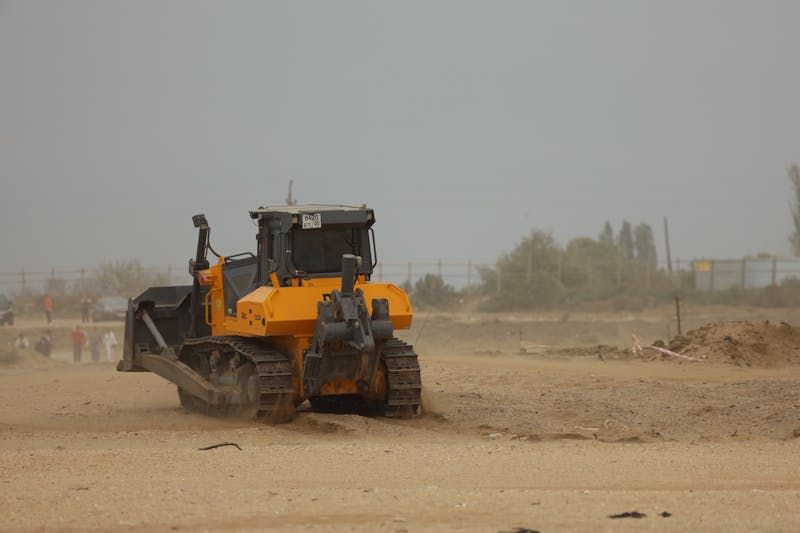
A bulldozer (also called a crawler dozer) is a tracked machine whose primary tool is a front-mounted blade. The blade is used for pushing, spreading, and grading material. Dozers are purpose-built for high-force, ground-engaging work. They excel at:
- Land clearing — pushing trees, stumps, and brush into windrows
- Rough and finish grading — establishing grades with precision blade control
- Spreading fill — distributing material pushed by scrapers or dropped by trucks
- Slot dozing — maximizing production in soft or sandy material
- Reclamation work — covering landfill cells and stabilizing slopes
Most dozers also offer a rear-mounted ripper for breaking up hardpan, rock, or compacted soil before pushing.
What Is a Track Loader?
A track loader — often called a crawler loader or, in compact form, a compact track loader (CTL) — is a tracked machine built around a lift arm with a bucket or attachment on the front. The lift arm is designed to raise material high enough to load trucks and feed hoppers.
Track loaders are built for:
- Loading trucks and hoppers — the defining advantage over a dozer
- Site preparation — rough grading and clearing with bucket or blade attachment
- Material handling — moving stockpiles, aggregates, and debris
- Attachment versatility — running augers, grapples, trenchers, forestry mulchers, and more
- Tight job sites — compact track loaders maneuver in spaces a dozer cannot
Blade Types vs. Bucket/Attachment Options
Bulldozer Blade Options
The dozer’s blade is its weapon. Different blade shapes optimize for different tasks:
- S-Blade (Straight): Flat profile, lower capacity, best for hard digging, finish grading, and back-blading
- U-Blade (Universal): Deep, curved, with end wings — maximum capacity for loose material and long pushes
- SU-Blade: Hybrid of S and U, good all-around performer
- A-Blade (Angle): Can be angled left or right for ditching and side-casting material
- PAT (Power Angle Tilt): Operator can adjust angle and tilt from the cab — most versatile for finish grading
Track Loader Attachment Options
The track loader’s universal quick-coupler is a game-changer. One machine can run dozens of attachments:
- General-purpose and 4-in-1 buckets
- Pallet forks
- Grapple buckets and root rakes
- Augers
- Cold planers
- Trenchers
- Stump grinders
- Brooms and blowers
- Snow pushers and box blades
The verdict: If blade-specific work (precision grading, high-volume pushing) defines the job, the dozer wins. If attachment versatility and truck-loading capability matter, the track loader wins.
Use Cases: Where Each Machine Shines
Land Clearing
Both machines are used in land clearing, but they approach it differently. A dozer with a U-blade or clearing blade pushes trees and brush at the root level — the raw pushing force overwhelms root systems that a loader bucket can’t match. For large-scale clearing of dense timber, the crawler dozer is the right call.
A track loader with a grapple or root rake is excellent for cleaning up after a dozer, sorting material, and piling slash for burning. On lighter clearing jobs — brushy fields, small trees — a CTL with a forestry mulcher can handle the whole job without a dozer on site.
Grading
Dozers dominate finish grading. The blade floats on a straight line and is controlled with precision — experienced operators can hit grade within a fraction of an inch, especially with GPS machine control systems like Trimble or Topcon. Rough grading, establishing swales, and breaking ground elevation are all dozer territory.
Track loaders can rough-grade with a bucket, but they lack the blade geometry and the fine control needed for finish work. A box blade or grading attachment helps, but a dozer will always outperform on a grading-only job.
Loading and Material Handling
This is where the track loader has no competition from a dozer. Dozers cannot load trucks — they push material into piles or windrows, but they have no mechanism to lift it. A track loader’s lift arm gets material into truck beds, concrete hoppers, screening plants, and feed bins.
If loading is any part of the workflow, you need a track loader or a wheel loader.
Site Preparation
For breaking new ground, stripping topsoil, and rough-shaping a building pad, both machines contribute. A typical workflow pairs them: the dozer clears and grades the pad while the track loader loads the stripped topsoil into trucks and handles material management around the site.
Grade and Slope Performance
Bulldozers are purpose-built for steep terrain. Their low center of gravity and blade counterbalance allow them to work on slopes up to 30–35 degrees in many configurations. Large dozers are routinely used in mining, logging, and pipeline work on severe grades. The blade provides downhill braking force and can be used to anchor the machine on a slope.
Track loaders — especially compact track loaders — are more capable on slopes than wheeled machines, but their high center of gravity (due to the lift arm and cab position) limits their safe operating angle. Most manufacturers recommend staying under 20 degrees of side slope and 30 degrees of fore-aft slope for CTLs. Larger crawler loaders handle grades better, but a comparable-horsepower dozer will always outperform on severe terrain.
Key point: If your project involves sustained work on steep slopes or in soft underfoot conditions, lean toward the dozer.
Visibility and Operator Comfort
Modern dozers have improved cab visibility, particularly with ROPS/FOPS certified cabs and panoramic glass. However, the blade position directly in front of the operator can obstruct forward sightlines at certain blade heights. Rear visibility is limited by the engine hood.
Track loaders generally offer better all-around visibility thanks to their cab-forward design and elevated seating position. When the lift arm is lowered, forward visibility is excellent. Some CTL cabs rival skid steers in 360-degree sightlines.
For working around other crew members, utilities, or in tight quarters, the track loader’s visibility advantage matters.
Owning and Operating Costs
Purchase Price
- Compact Track Loaders (CTL): $55,000–$110,000 new, depending on size and brand
- Mid-size Crawler Loaders: $150,000–$350,000
- Small Dozers (D3–D5 class): $80,000–$200,000 new
- Mid-size Dozers (D6–D7 class): $250,000–$600,000+
Operating Costs
Undercarriage is the largest variable operating cost for both machines. Tracked undercarriage components — tracks, rollers, idlers, and sprockets — wear in proportion to hours and ground conditions. Rocky terrain, abrasive sand, and constant turning accelerate wear on both machines.
Dozers with steel tracks on rock or gravel terrain will see undercarriage costs from $8–$20 per operating hour. CTLs with rubber tracks on mixed terrain typically run $5–$15 per hour in undercarriage costs, but rubber track replacement ($3,000–$8,000 per set) comes more frequently than steel track resets.
Attachment ROI
The track loader’s attachment versatility is a major economic argument. One machine can replace a dedicated trencher, auger rig, broom truck, and pallet jack on many sites. If you’re renting attachments or paying for multiple machines to do jobs one CTL could handle, the math shifts toward the track loader.
Decision Framework Matrix
Use this matrix to match the machine to your project priorities:
| Factor | Dozer Wins | Track Loader Wins |
|---|---|---|
| Primary task | Pushing, grading, clearing | Loading, material handling |
| Blade precision | Finish grading, grade establishment | N/A |
| Truck loading needed | No | Yes |
| Slope severity | Steep (20°+) | Moderate (under 20°) |
| Attachment versatility | No priority | High priority |
| Ground conditions | Soft, wet, unstable | Mixed/firm with tight access |
| Job site access | Open, large sites | Confined, urban, residential |
| Ripper needed | Yes (rocky/hardpan) | No |
| Budget (new, mid-size) | Higher upfront | Lower upfront (CTL) |
| Operator pool | Specialized dozer operators | Multi-attachment operators |
Quick Decision Rules
- You need to load trucks → Track loader (no debate)
- Finish grading to tight tolerances → Dozer, ideally with GPS
- Steep slope work over 20 degrees → Dozer
- Multiple attachment types on one job → Track loader
- Residential or confined site → Compact track loader
- Large-scale land clearing only → Dozer
- Mixed site prep + loading + utility work → Track loader (or both)
When to Run Both
On larger commercial, infrastructure, and mining projects, the answer isn’t either/or — it’s both. The classic two-machine team is a dozer pushing material and a track loader or wheel loader loading trucks. The dozer maintains the working face; the loader feeds the haul trucks. Production rates from paired machines exceed what either can achieve alone.
On smaller jobs, if you can only justify one machine, think about where your bottleneck is. If you’re constantly waiting to load trucks, get the track loader. If grading and earthmoving are the rate-limiting activities, get the dozer.
Recommended Tools and PPE
No matter which machine you’re running, the right personal protective equipment and job-site gear matter:
- Hard hat with ratchet suspension — essential on any active equipment site
- High-visibility safety vest (ANSI Class 2 or 3) — required around moving equipment
- Steel-toed boots with metatarsal guard — operator and ground crew protection
- Grade rod and optical level — for checking dozer grade work
- Grease gun with flex extension hose — for daily greasing of both machine types
- Track tension gauge — critical for maintaining proper track sag on steel-tracked dozers
Bottom Line
The bulldozer vs. track loader question comes down to your primary workflow. Dozers push harder, grade more precisely, and handle severe terrain better than any track loader. Track loaders load trucks, run attachments, and adapt to more job types than any dozer.
If grading, clearing, and earthmoving are your core business, invest in a dozer. If material handling, site prep versatility, and attachment flexibility define your work, a compact track loader or crawler loader is your machine. For large projects, plan for both — they make each other more productive.

Ironworks Insider Editorial Team
Independent trade-focused editorial team