Buying Heavy Equipment at Auction: A Bid-Cap Checklist
Quick answer
Set an auction bid cap from the machine's verified condition and the full delivered cost, not from the hammer price alone. Confirm identity and ownership, understand the listing and auction terms, inspect the machine, price fees and transport, and retain a repair reserve before bidding.
Common questions
- Is an auction inspection report an independent warranty?
- No. It is information supplied under that marketplace's stated inspection and assurance terms. Read the exact lot report, exclusions, claim window, and sale contract, and arrange an independent inspection when permitted.
- What should be included in a heavy-equipment auction bid cap?
- Include buyer fees, taxes, payment charges, removal and loading, transport, permits, insurance, emissions compliance, immediate service, known repairs, uncertainty, and financing cost as applicable.
Source note: Reviewed against current IronPlanet buying and inspection guidance. Auction terms, inspection scope, assurance programs, fees, taxes, payment, removal, title, and transport remain lot-, venue-, and jurisdiction-specific.
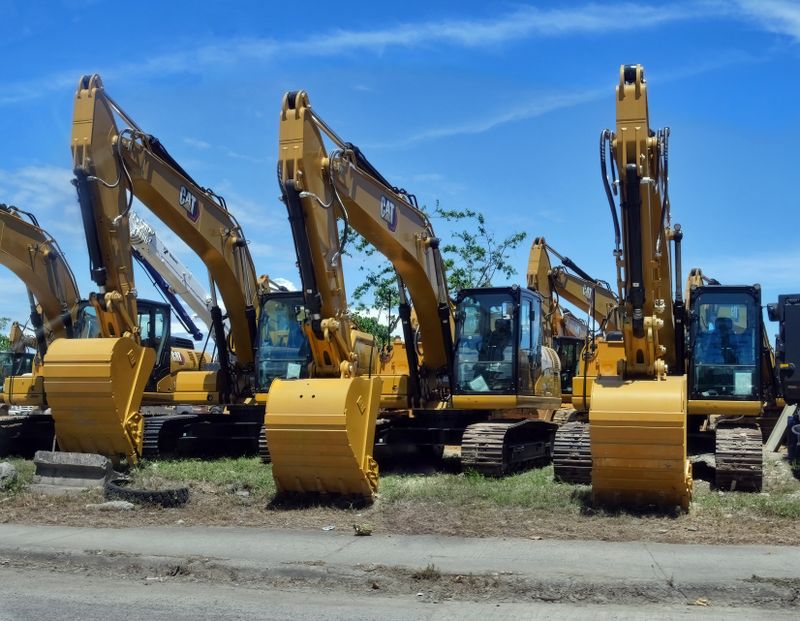
The winning bid is only one line in the cost of an auction machine. A low hammer price can become an expensive purchase after buyer fees, taxes, loading, transport, emissions work, overdue maintenance, and the first repair are added.
A disciplined buyer works backward from a maximum delivered-and-ready cost. The bid cap is what remains after every verified cost and a realistic uncertainty reserve are deducted. If the bidding passes that number, the machine belongs to someone else.
Read the sale terms before evaluating the machine
Auction formats differ. A live auction, timed online sale, reserved lot, government surplus sale, and marketplace transaction may have different inspection access, payment deadlines, title documents, assurance programs, and removal rules.
Save the terms that apply to the exact event and lot. Confirm:
- Whether the machine is sold as-is or under a stated marketplace assurance
- What the inspection report does and does not cover
- Whether onsite inspection, fluid sampling, cold starting, or functional testing is allowed
- Buyer fee, internet fee, documentation fee, taxes, and payment-method charges
- Deposit, full-payment deadline, accepted currency, and cleared-funds requirement
- Removal deadline, storage charges, site access hours, and loading assistance
- Claim process and deadline, if an assurance program applies
IronPlanet’s buying overview describes inspection reports, bidding, payment, transportation support, and a limited discrepancy-reporting process when its IronClad Assurance applies. Treat that as marketplace-specific information. It is not a universal fee schedule, a guarantee for every lot, or a substitute for reading the current sale contract.
Verify machine identity, ownership, and lien risk
Match the listing to the physical machine. Photograph the product identification number or serial plate and compare it with the listing, invoice, title or ownership document, engine information, and attachment serials.
Ask what ownership document will be delivered and when. Depending on equipment type and jurisdiction, this may be a title, manufacturer statement of origin, bill of sale, registration, or other evidence. Search the applicable stolen-equipment and lien records, and use qualified legal or title help when the ownership chain is unclear.
Stop if a plate appears altered, missing, inconsistent, or unreadable. A price discount does not cure an identity problem.
Audit the listing and inspection scope
Separate facts from omissions. A listing that says “engine started” does not prove cold-start behavior, full-temperature operation, hydraulic performance, emissions readiness, or travel under load.
Create three columns:
- Verified: supported by an allowed physical inspection, records, clear photos, or a defined report item
- Reported: stated by the seller or marketplace but not independently confirmed
- Unknown: not tested, inaccessible, missing, or excluded
Review all photos at full resolution and save the report before the sale. Compare hour-meter readings across service records and telematics where available. An auction company’s report is still governed by its own scope and terms; it should not be described as an independent warranty.
Inspect condition by cost center
When inspection is permitted, start with the same method used in a thorough used excavator inspection, then adapt it to the machine type.
Structure and attachments
Check the frame, ROPS or FOPS, boom, stick, loader arms, hitch, counterweight, articulation joint, attachment mounts, pins, bushings, welds, cracks, and evidence of collision or overload. Verify every included bucket, fork, coupler, guard, counterweight, and control is actually listed in the sale.
Engine, emissions, and fluids
Request a cold start when allowed. Look for fluid cross-contamination, leaks, abnormal smoke, blow-by, warning lamps, fault codes, overheating evidence, and improvised wiring. Review oil, coolant, fuel, hydraulic fluid, final drives, and differentials according to the machine’s inspection points.
Confirm the engine family and emissions configuration for the geography where it will work. A machine legal in one market may require documentation or may not be eligible for registration, import, government work, or operation under another area’s rules. Do not assume emissions components can be added cheaply or lawfully after purchase.
Undercarriage, tires, and brakes
On tracked equipment, measure remaining undercarriage life using the manufacturer’s wear data. On wheeled equipment, record tire size, matching, damage, tread, rim condition, and replacement availability. Test steering, service brakes, parking brake, travel, and oscillation only within the authorized inspection procedure.
Hydraulics and controls
Operate all allowed functions through their range after proper warm-up. Look for cylinder drift, leaks, chatter, weak functions, overheated oil, hose damage, and warning messages. Unknown hydraulic behavior deserves a larger reserve, not an optimistic assumption. The hydraulic maintenance guide can help identify the records and condition indicators worth requesting.
Build the complete delivered-cost worksheet
Never invent a standard percentage for auction fees. Enter the actual values from the event terms and written quotes.
| Cost line | Evidence to obtain |
|---|---|
| Hammer price | Your bid cap, before fees |
| Buyer and transaction fees | Current sale terms |
| Sales, use, import, or other tax | Auction invoice guidance and qualified tax advice |
| Payment cost | Bank, currency, card, or financing terms |
| Loading and removal | Yard policy and written loading quote |
| Transport | Carrier quote based on verified dimensions and weight |
| Permits and escorts | Route-specific transporter estimate |
| Cargo or transit insurance | Written carrier and policy confirmation |
| Immediate maintenance | OEM interval and verified service history |
| Known repairs | Parts and labor estimates |
| Repair and unknown-condition reserve | Your risk policy, adjusted for inspection access |
| Financing carrying cost | Lender’s actual terms |
Get transport pricing before bidding. Verify operating and shipping dimensions, weight, attachment disassembly, loading capability, route constraints, and delivery access. The heavy equipment transport guide explains why width, height, weight, securement, and permits can change the mobilization plan.
Set and defend the bid cap
Start with the maximum amount the machine is worth to your operation in ready-to-work condition. Support that value with comparable equipment, expected utilization, local dealer support, and the new-versus-used equipment decision.
Then subtract every non-bid cost in the worksheet, including the repair reserve. The remainder is the maximum hammer price. If an important input is unknown, either obtain it or increase the reserve. Do not remove a cost simply to make the bid cap competitive.
Arrange financing before the auction if needed. A lender’s collateral rules, appraisal, advance rate, insurance requirement, and funding time may not fit the auction’s payment deadline. Review the available heavy equipment financing structures before the clock starts.
Plan payment, removal, and delivery before winning
Pre-register, complete identity checks, confirm bidding limits, and know how cleared funds will be delivered. Give the transporter the yard’s release process, collection hours, equipment condition, loading restrictions, and attachment list.
Before the carrier leaves, photograph the machine and loose items, record meter hours, and confirm the bill of lading. At delivery, inspect for transport damage and compare the machine with the saved lot report. Follow the auction’s claim window exactly when a covered discrepancy is suspected.
The final auction checklist
Bid only when you can answer yes to these questions:
- Is the machine and every included attachment positively identified?
- Is the ownership and lien path acceptable?
- Have the sale and assurance terms been saved and understood?
- Has the condition been inspected as far as the venue permits?
- Are emissions and geography requirements verified?
- Are all fees, taxes, payment, removal, loading, transport, and insurance inputs documented?
- Is there a repair reserve for known and unknown condition?
- Can financing fund on time?
- Is the written bid cap loaded into the bidding account and visible to the decision-maker?
The best auction purchase is not the machine won furthest below someone else’s bid. It is the machine acquired within a complete, evidence-based cost cap and delivered with ownership, logistics, and repair risk already accounted for.

Ironworks Insider Editorial Team
Independent trade-focused editorial team