CAT vs. Komatsu vs. John Deere Excavators: Which Brand Wins?
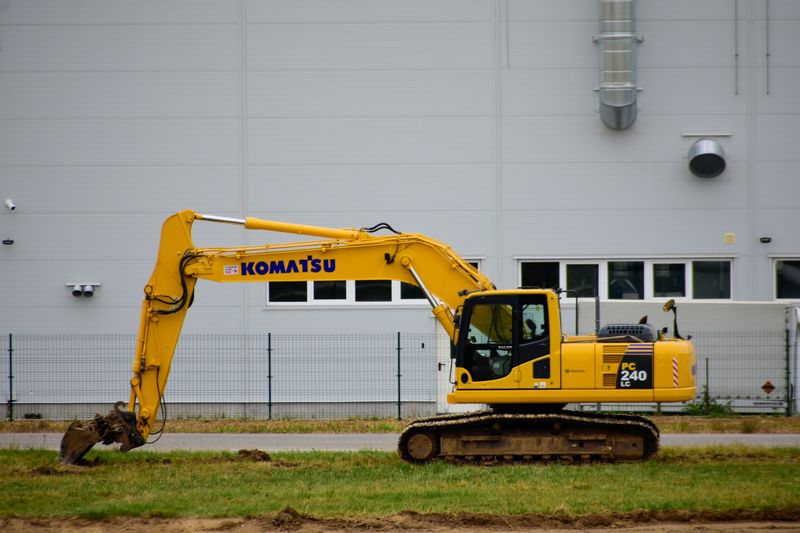
If you’re in the market for an excavator, you’ve almost certainly narrowed it down to a short list that includes at least one—and probably all three—of these names: Caterpillar (CAT), Komatsu, and John Deere. They’re the three most dominant brands in North American excavator sales, and for good reason. All three build machines that will give you decades of reliable service when properly maintained.
But “all three are good” isn’t useful when you’re writing a six-figure check. Differences in fuel consumption, dealer network density, telematics capability, resale value, and operator ergonomics add up to real money over the life of a machine.
This comparison uses the 20-ton class as the benchmark—specifically the CAT 320, Komatsu PC210, and John Deere 210G (P-tier). These are the most popular mid-size models from each brand and represent the best apples-to-apples comparison in the class.
Brand Overview
Caterpillar (CAT)
Peoria, Illinois-based Caterpillar is the most recognized heavy equipment brand in the world. CAT has the largest dealer network in North America, arguably the best parts availability, and one of the strongest resale value records in the industry. The CAT 320 is the bestselling excavator in its class in North America.
Strengths: Brand recognition, dealer network, parts availability, resale value, integrated technology ecosystem.
Considerations: Premium purchase price; some operators find the cab ergonomics less refined than Japanese competitors.
Komatsu
Komatsu is the world’s second-largest construction equipment manufacturer and CAT’s closest rival in excavators globally. The PC210 is a mature, highly refined machine with a strong reputation for fuel efficiency and hydraulic system performance. Komatsu has significant engineering depth and a robust dealer network in North America.
Strengths: Fuel efficiency, hydraulic refinement, intelligent machine control (iMC) technology, competitive pricing.
Considerations: Dealer network is dense in major markets but thinner in rural areas compared to CAT; some niche parts can have longer lead times.
John Deere
John Deere brings its agricultural heritage—deep North American dealer penetration, especially in rural markets—into the construction equipment space. The 210G P-Tier reflects Deere’s latest generation of technology integration and has made significant strides in operator comfort and telematics.
Strengths: Dealer coverage in rural/agricultural markets, strong financing options through John Deere Financial, competitive pricing, JDLink telematics.
Considerations: Historically seen as slightly behind CAT and Komatsu in excavator-specific hydraulic refinement; the gap has narrowed significantly in recent generations.
Head-to-Head Comparison
1. Build Quality and Durability
All three manufacturers build machines intended for 10,000–20,000+ hour service lives with proper maintenance. The differences are in the details.
CAT 320: The CAT 320 uses a box-section boom and arm constructed from high-strength steel. Weld quality is excellent. The 320 has a long track record—the current generation builds on decades of refinement. The undercarriage is designed for extended life, and CAT’s ENSURE undercarriage extended service option reflects their confidence in the system.
Komatsu PC210: Komatsu is known for precision in hydraulic component manufacturing—many key hydraulic components are manufactured in-house, giving them tighter quality control over tolerances and material selection than manufacturers who source from third parties. The PC210’s boom and arm geometry is well-regarded, and the machine has a strong reputation in long-hour applications like quarry and mining support work.
John Deere 210G P-Tier: Deere has upgraded frame strength and weld quality significantly over the past two generations. The P-Tier designation reflects their premium-tier construction specification. Structural durability is on par with CAT and Komatsu in most independent assessments.
Edge: Komatsu, narrowly, for hydraulic component quality. CAT and Deere are very close behind.
2. Fuel Efficiency
Fuel is one of the largest ongoing operating costs for an excavator. A 20-ton machine burns approximately 4–7 gallons per hour depending on application intensity, idle time, and machine condition. Over 10,000 hours, that’s $200,000–$500,000+ in fuel at $5/gallon diesel—a small efficiency edge compounds dramatically.
CAT 320 (Next Gen): CAT’s E-Fence, swing assist, and variable power modes contribute to real-world fuel efficiency. Independent tests and fleet reporting consistently place the Next Gen 320 at competitive fuel consumption numbers. CAT’s Smart Mode automatically matches engine and hydraulic output to the work demand, reducing fuel waste during lighter tasks.
Komatsu PC210 (LC-11): Komatsu’s KOMECO eco-guidance system and iMC technology help operators optimize fuel consumption with real-time feedback. Third-party fleet data and independent comparisons (including studies by construction equipment research firms) consistently show Komatsu among the most fuel-efficient machines in the 20-ton class. The PC210 typically benchmarks 5–10% better fuel efficiency than comparable models under similar conditions.
John Deere 210G P-Tier: Deere’s P-Tier introduced significant efficiency improvements over the G-Tier. Auto-idle, power modes, and hydraulic efficiency optimization help reduce fuel burn. Generally competitive with CAT in real-world applications; some operators report slightly higher consumption than Komatsu under sustained heavy digging cycles.
Edge: Komatsu. Consistent data across multiple sources shows a meaningful fuel efficiency advantage in the 20-ton class.
3. Technology and Telematics
All three brands offer integrated telematics—fleet management systems that report machine location, hours, fault codes, fuel consumption, and idle time remotely. But the platforms differ in depth and usability.
CAT — VisionLink / Cat App: CAT’s telematics platform is mature, widely integrated, and has the benefit of the largest dealer network to act on the data. The Cat Grade and E-Fence systems are highly regarded for precision grading applications. CAT also offers factory integration with many third-party grade control systems (Trimble, Topcon).
Komatsu — KOMTRAX / Intelligent Machine Control (iMC 2.0): Komatsu’s iMC 2.0 is arguably the most advanced integrated machine control system on the market in this class. It can automatically prevent the bucket from digging below a target grade without a separate aftermarket system—the intelligence is built into the machine’s factory control system. For grading and precision earthwork, iMC 2.0 is a genuine differentiator. KOMTRAX fleet management is robust and data-rich.
John Deere — JDLink / SmartGrade: Deere’s JDLink provides comprehensive fleet monitoring with excellent integration into John Deere’s broader agricultural/construction management ecosystem—useful for customers who already manage Deere agricultural equipment. SmartGrade machine control is available factory-integrated. The platform is strong, particularly for mixed-fleet customers who also run Deere ag equipment.
Edge: Komatsu for excavator-specific machine control technology (iMC 2.0 is best-in-class). CAT for overall ecosystem depth and third-party integration. Deere for customers in mixed agricultural/construction fleets.
4. Dealer Network and Parts Availability
When a machine goes down on an active job site, how quickly you can get a technician and the right parts defines the real cost of the breakdown.
CAT: CAT’s dealer network is the densest and most comprehensive in North America. Cat dealers carry deep parts inventories, have large field service fleets, and offer extended service contracts (Customer Support Agreements) that guarantee response times. In many markets, CAT can provide next-day or same-day parts delivery for most common service items. This is often cited as CAT’s single strongest competitive advantage.
Komatsu: Komatsu’s dealer network is strong in major urban and industrial markets but noticeably thinner in rural areas. Parts availability for common items is generally good. For less common components, lead times can be longer than CAT. Komatsu’s KOMTRAX telematics system helps mitigate downtime by giving dealers advance warning of developing issues—proactive maintenance reduces emergency part needs.
John Deere: Deere’s dealer network is exceptional in rural and agricultural markets—often better than CAT in regions where farming dominates the economy. For contractors working in agricultural areas or smaller towns, Deere’s coverage can be a decisive advantage. Urban/industrial dealer coverage is solid but generally slightly behind CAT’s urban depth.
Edge: CAT overall. Deere wins in rural/agricultural markets.
5. Resale Value
Resale value matters because it affects total cost of ownership—it’s the money you get back when you sell or trade in the machine.
CAT: CAT excavators consistently command the strongest resale values in North America. Brand recognition, large buyer base, and confidence in parts availability make used CAT machines easy to sell. At auction, CAT typically brings 5–15% more than equivalent-hour Komatsu or Deere machines in the same condition.
Komatsu: Komatsu holds resale value well—typically second to CAT in North America. In markets outside North America (Asia, Australia, parts of Europe), Komatsu can actually trade at a premium to CAT due to stronger regional brand recognition.
John Deere: Deere excavators hold decent resale value, but generally trail CAT and Komatsu in the construction equipment market. Deere’s resale advantage is more pronounced in agricultural equipment than in construction. In excavator-specific auction data, Deere typically brings somewhat less than equivalent CAT or Komatsu machines.
Edge: CAT, clearly.
6. Operator Comfort and Cab Ergonomics
Operator fatigue and comfort directly affect productivity and quality of work, especially in long shifts. A comfortable, well-designed cab keeps operators sharper longer.
CAT 320: CAT has invested heavily in cab refinement in recent generations. The Next Gen 320 cab features a 10-inch touchscreen monitor, multiple adjustable work modes, heated/ventilated seat options, and reduced noise levels. The cab design is functional and familiar to the large pool of operators trained on CAT equipment.
Komatsu PC210: Many operators and industry reviewers give Komatsu’s cab ergonomics high marks. The joystick controls are praised for smooth, precise response, and the seat geometry is comfortable for long shifts. The cab is quiet, well-insulated, and the monitor is intuitive. Komatsu’s optional heated seat and climate control are competitive with peers.
John Deere 210G P-Tier: The P-Tier generation significantly upgraded Deere’s cab. The monitor interface is well-received, and visibility is excellent. Deere specifically addresses operator comfort with premium seat options, reduced vibration mounts, and a quieter cab environment in the P-Tier. Many operators who came up on agricultural Deere equipment find the cab layout intuitive.
Edge: Komatsu, slightly, for hydraulic control feel and smoothness. Very subjective—operators with strong brand loyalty often rate their preferred brand highest here.
Summary Comparison Table
| Category | CAT 320 | Komatsu PC210 | John Deere 210G |
|---|---|---|---|
| Build Quality | Excellent | Excellent | Very Good |
| Fuel Efficiency | Very Good | Best in class | Very Good |
| Technology (Machine Control) | Very Good | Best in class (iMC 2.0) | Very Good |
| Dealer Network (National) | Best in class | Very Good | Very Good (rural) |
| Parts Availability | Best in class | Very Good | Very Good |
| Resale Value | Best in class | Very Good | Good |
| Operator Comfort | Very Good | Excellent | Very Good |
| Purchase Price (New) | Premium | Mid-premium | Competitive |
Which Brand Should You Choose?
Choose CAT if:
- Parts availability and dealer response time are your top priorities
- You need to maximize resale value (trading machines every 3–5 years)
- You’re operating in markets where CAT is the dominant brand and most operators are trained on CAT
- You want the deepest third-party grade control integration ecosystem
Choose Komatsu if:
- Fuel efficiency is a major operating cost concern (high-hour, intensive applications)
- You want factory-integrated machine control without aftermarket add-ons
- Your operation is in a market with strong Komatsu dealer coverage
- Hydraulic smoothness and precision is important for your work type
Choose John Deere if:
- You operate primarily in rural or agricultural markets where Deere coverage is strongest
- You already have a relationship with a Deere dealer for agricultural equipment
- You’re price-sensitive and want competitive financing through Deere Financial
- Your operators are already familiar with Deere equipment
The Bottom Line
In the 20-ton class, no brand is a bad choice. The real question is which set of advantages matters most for your specific operation, geography, and financial situation.
For contractors in major metro markets running high-hour operations and prioritizing resale, CAT is the safe bet. For operations where fuel burn and technology drive profitability, Komatsu is hard to beat. For contractors with strong Deere relationships and rural footprints, John Deere delivers competitive value.
The best decision includes a visit to your local dealers for each brand, a test operation in a machine representative of your target spec, and a total cost of ownership analysis that includes purchase price, projected maintenance costs, fuel, and likely resale value.
The machine you’ll use most confidently, maintain most diligently, and support most easily with your local dealer is the right machine for you.

Ironworks Insider Editorial Team
Independent trade-focused editorial team