Concrete Equipment Guide: Mixers, Pumps, Vibrators, and Finishers
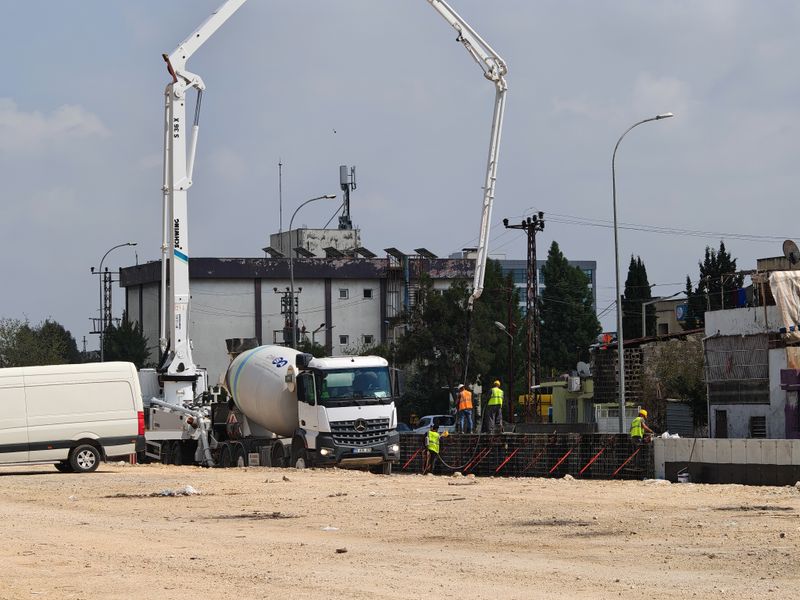
Concrete is the backbone of the built world — foundations, slabs, bridges, walls, and structures of every kind depend on it. Getting concrete placed, consolidated, and finished correctly is a time-sensitive operation where the right equipment makes the difference between a perfect pour and an expensive failure.
Whether you’re a contractor managing a major commercial pour, a smaller operator doing residential slabs, or an owner-builder pouring your own foundation, understanding the equipment chain — from the mixer to the finisher — helps you work faster, waste less, and produce better results.
This guide covers every major category of concrete equipment in the construction workflow.
The Concrete Equipment Chain
Concrete moves through a predictable sequence of equipment:
- Batching and mixing — concrete is proportioned and mixed
- Transport — mixed concrete is moved to the pour location
- Placement — concrete is delivered into the form
- Consolidation — vibration removes air pockets and ensures dense concrete
- Screeding — excess concrete is struck off to the desired elevation
- Finishing — surface is floated and troweled to final texture and smoothness
- Curing — moisture is retained for proper hydration
Each step has its own equipment category. Skipping or shortcutting any step degrades the final product.
1. Concrete Mixers
Drum Mixers (Transit Mixer Trucks)
The most common method for large pours is ready-mix concrete delivered by transit mixer trucks (barrel trucks). Ready-mix plants batch and load concrete in 8–10 cubic yard loads; the truck’s rotating drum keeps the concrete in motion during transport, preventing premature set.
For contractors: Ordering ready-mix is the standard for pours larger than 1–2 cubic yards. Set your pour windows carefully — once concrete is batched, you typically have 1.5 hours before it must be placed (per ASTM C94). In hot weather, that window shrinks.
Key logistics:
- Coordinate truck delivery intervals to match your pour rate — trucks arriving too fast back up the operation; too slow allows partial pours to take initial set
- Verify site access for a 40,000+ lb loaded mixer truck before the pour day
- Have your pump or chute positioned before the first truck arrives
Portable/Towable Mixers (3.5–12 cubic foot capacity)
For small to medium pours where ready-mix isn’t practical — footings, posts, patches, steps — portable mixers are the right tool.
Electric mixers (3.5–6 cu ft): 120V or 240V; suitable for garage, shop, and small site work. Common brands: Kushlan Products, Imer, Klutch.
Gas-powered towable mixers (6–12 cu ft): Gasoline engine, tow-hitch mounted. Suitable for remote sites without power. Can handle larger footings and small slab areas. Common brands: Belle Group (Altrad), Crown Construction, Multiquip.
Volumetric mixers (continuous): Mobile volumetric mixers carry cement, aggregates, water, and admixtures separately and mix on-demand at the point of placement. No wasted concrete; mix design can be adjusted mid-pour. Used for large remote jobs and specialty mixes.
Paddle Mixers and Mortar Mixers
Different from drum mixers — paddle mixers use a horizontal paddle shaft to blend mortar, stucco, GFRC, and specialty concrete mixes. Not suitable for standard aggregate concrete (the paddles can’t handle coarse aggregate). Common for grout and patching applications.
2. Concrete Pumps
Pumping concrete eliminates the need for workers to physically carry or wheelbarrow concrete to its placement location. For elevated pours, large floor slabs, and tight-access locations, a concrete pump is often essential.
Truck-Mounted Boom Pumps
Large pump trucks with folding articulated booms (typically 28–65 meters of reach) can place concrete precisely anywhere within the boom’s radius. Standard for commercial pours — high-rise foundations, parking structures, bridge decks, and large slab-on-grade.
Rental rates: $1,200–$3,500 per day plus pump yardage charge ($2–$6/yard) depending on boom size and market.
Operating considerations:
- Requires a separate operator — pump truck operators are skilled specialists
- Boom placement requires adequate clearance for boom movement
- Minimum pour quantities typically apply (most pump companies require 25–50 yards minimum to mobilize)
Line Pumps (Trailer-Mounted Pumps)
Smaller, towable pumps that use flexible hose rather than a boom to deliver concrete. Less reach and volume than a boom pump, but more flexible for tight sites and smaller pours.
Output: 20–80 cubic yards per hour depending on pump size Hose reach: 100–300 feet of flexible hose typical Best for: Residential foundations, slabs under 200 yards, specialty placements in tight locations
Common brands: Putzmeister, Schwing, Concord, Reed Manufacturing
Placing Booms (Static)
For high-rise construction, a fixed placing boom (sometimes called a static boom or climbing boom) mounts on the building structure and provides concrete placement at elevation without a truck. Used for multi-story construction where truck access to upper levels is impossible.
3. Concrete Vibrators
Consolidation is non-negotiable. Air voids in concrete reduce strength, durability, and appearance — a concrete surface full of bug holes from inadequate vibration is both ugly and structurally inferior. Vibrators are the most important piece of concrete equipment after the mixer itself.
Internal (Pencil) Vibrators
The standard consolidation tool. An internal vibrator consists of:
- Head (stinger): The vibrating element, typically 1–2.5 inches diameter for standard work; larger heads (up to 4 inches) for mass concrete
- Flexible shaft: Transmits vibration from the motor to the head
- Power unit: Electric motor or gas/pneumatic drive
Electric vibrators (1.5–2HP motors) are standard for most job sites with power access. Gas-powered vibrators work on remote sites.
Vibrator insertion technique:
- Insert vertically, not at an angle
- Space insertions approximately 1.5 times the head radius (about 18 inches for a 2-inch head, 24 inches for a 2.5-inch head)
- Penetrate into the previously placed lift by 6 inches to knit the lifts together
- Vibrate until air bubbles stop rising at the surface (typically 5–15 seconds per insertion)
- Withdraw slowly — 3 inches per second — to allow the hole to close without leaving a void
Under-vibration leaves voids; over-vibration causes segregation (heavy aggregate sinks, cement paste rises). Both damage concrete quality.
Recommended brands: Vibco, Wacker Neuson, Enarco (OZTEC), Minnich Manufacturing
External (Form) Vibrators
Attach to formwork to vibrate from outside the form. Used in precast, tunnel lining, and wall forms where internal vibration access is impossible. Less effective than internal vibration for most applications.
Vibrating Screeds
Motorized screeds that combine strike-off and vibration. The screed rod vibrates as it moves across the surface, providing some consolidation while screeding. Not a replacement for internal vibration on thick or reinforced slabs but useful on thin slabs (2–4 inches).
4. Screeds
Screeding strikes off excess concrete and brings the surface to the desired elevation. For flatwork (slabs, floors, sidewalks), screeding is the critical step that determines the final surface profile.
Manual (Board) Screeds
The simplest tool — a straight 2x4, aluminum bar, or specialized screed board dragged across screed rails or form edges. Works for small pours where two people can reach across the slab. Low cost, but labor-intensive and limited by reach.
Vibrating Strike-Off (Manual)
A motorized vibrating blade on a manual screed — provides vibration across the surface while workers pull the screed. Better consolidation than a board screed; still limited by reach and speed.
Motorized Roller Screeds
A rotating drum driven by a motor rolls across screed rails, providing aggressive strike-off and surface leveling. Faster than manual screeds for wider slabs. Common for residential and light commercial flatwork.
Power Screeds (Vibrating Beam Screeds)
Aluminum or magnesium truss beam with a vibrating electric or gas motor. Spans wider widths (8–24 feet) than manual boards. Standard for commercial flatwork and residential slabs wider than 12 feet.
Common brands: Allen Engineering, Multiquip, Wacker Neuson
Laser Screeds
For large commercial and industrial floors requiring very flat surfaces (F-numbers), a laser screed uses laser grade control to automatically adjust the screed head elevation while traveling across the slab. A single laser screed with one operator can screed 10,000+ square feet per shift to very tight tolerances.
Rental rates: $1,500–$3,000 per day Best for: Warehouse floors, data centers, industrial facilities requiring FF/FL specifications
Common brands: Somero (dominant brand — S-485, S-848), Ligchine International
5. Finishing Equipment
After screeding, concrete requires floating and troweling to produce the final surface texture.
Bull Floats and Fresno Floats
Long-handled float tools (typically 48–72-inch blades on 4–16-foot handles) that provide the first pass over a screeded slab. Pushing and pulling the float knocks down screeding marks, embeds coarse aggregate, and brings bleed water and cement paste to the surface.
Bull floats (flat, flexible): Standard for most residential flatwork. Fresno floats (more rigid, slightly curved): Provide better control for larger pours.
Walk-Behind Power Trowels
A rotating disk or blades powered by a gas engine, walked by an operator. Standard for finishing floors 400–2,000 square feet. Run in the pan (disk) position first to float the surface, then switch to trowel blades for burnishing.
Blade sizes: Most walk-behind trowels use 24–36 inch blade diameter. Common brands: Multiquip, Wacker Neuson, Allen Engineering, Whiteman (Bartell Morrison)
Operating timing: The most common finishing mistake is troweling too early — pressing trowel blades into concrete that hasn’t reached adequate stiffness causes surface defects, delamination, and dusting. Wait until bleed water has evaporated and the concrete supports foot pressure without leaving a 1/4-inch-deep impression.
Ride-On Power Trowels
Large, operator-ride finishers for commercial floors. Two-rotor machines cover 4–6 feet of width per pass and can finish 10,000–40,000 square feet per shift. Most large commercial floor contractors own or rent ride-on trowels for production work.
Rental rates: $300–$800 per day depending on machine size. Common brands: Multiquip (MQ Pro Series), Whiteman, Allen Engineering
Edgers and Groovers (Hand Tools)
Hand tools for creating control joints, finished edges, and curb/gutter profiles. Not powered equipment, but essential in the finishing kit.
Broom Finishers
For exterior slabs, sidewalks, and driveways, a broom finish provides the required slip resistance. A stiff-bristled concrete broom is dragged across the troweled surface to create a textured profile. Done immediately after power floating while the surface is still workable.
6. Curing Equipment
Properly cured concrete is dramatically stronger and more durable than inadequately cured concrete. The goal is to maintain moisture and temperature for a minimum of 7 days after placement (28 days for full design strength, though most projects call for 7-day minimum moist curing).
Curing Compounds
Spray-applied liquid membranes that reduce moisture evaporation. Standard for exterior flatwork and large slabs. Applied immediately after finishing — before the surface dries.
Common products: Dayton Superior W-10, Prosoco Cure & Seal, Euclid Chemical Kurez DR
Curing Blankets
Insulated blankets placed over fresh concrete to retain heat and moisture. Critical in cold weather — concrete that freezes before it reaches 500 PSI compressive strength is permanently damaged. Also used in hot, dry, or windy conditions to prevent plastic shrinkage cracking.
Required when: Ambient temperature is below 40°F during the first 24 hours, or when evaporation rate exceeds 0.20 lbs/ft²/hr.
Evaporation Retarders
Spray-on products that slow surface evaporation during placement and finishing in hot, dry, or windy conditions. Applied to the fresh concrete surface before troweling. Monomeric aliphatic alcohol-based sprays (Confilm, Eucobar) are common.
Equipment Selection by Pour Type
| Pour Type | Key Equipment |
|---|---|
| Small footing / post (< 0.5 yd³) | Portable mixer, manual vibrator, hand tools |
| Residential slab (< 100 yd³) | Ready-mix truck, line pump or chute, internal vibrator, roller screed, walk-behind trowel |
| Commercial slab (100–1,000 yd³) | Boom pump, high-capacity vibrators, power screed or laser screed, ride-on trowel |
| High-rise / structural pour | Boom pump or static placing boom, form vibrators, platform vibrators |
| Wall / column | Ready-mix truck, pump, pencil vibrators with 1.5-2” heads, form vibrators for narrow sections |
| Bridge deck / elevated | Boom pump, high-frequency vibrators, laser screed or truss screed, curing blankets |
Recommended Products for Concrete Crews
Vibrators:
- OZTEC 2.5RFG (ENARCO) — reliable 1.5HP electric vibrator with 2.5” head; workhorse for residential and commercial flatwork
- Wacker Neuson IREN 45/042/5 (Internal Vibrator) — high-frequency electric vibrator; lightweight with excellent head geometry for tight rebar spacing
Finishing:
- Multiquip MTX60HH Walk-Behind Power Trowel — 6HP Honda, 24-inch blades, reliable entry-level finisher for residential contractors
- Allen Engineering Magnesium Bull Float (48”) — premium tool handle with dual-pivot attachment; industry standard for professional finishing crews
Curing:
- Kraft Tool CF051 Concrete Curing Blanket (6’x25’) — quilted woven geotextile; reusable, machine washable, rated to 20°F protection against frost
Bottom Line
Concrete work is fundamentally equipment-intensive. From the moment the mix leaves the transit truck to the final trowel pass, the equipment chain controls how long you have to work with the material and what the finished product looks like. Invest in quality vibrators — they’re cheap insurance against costly voids. Plan your pump carefully — the right pump placement saves hours of manual handling. And time your troweling to the concrete, not the clock.
Experienced concrete crews know their equipment as well as they know their mix designs. When both are dialed in, every pour finishes clean.

Ironworks Insider Editorial Team
Independent trade-focused editorial team