Confined Space Entry: Permits, Testing, and Safety Protocols
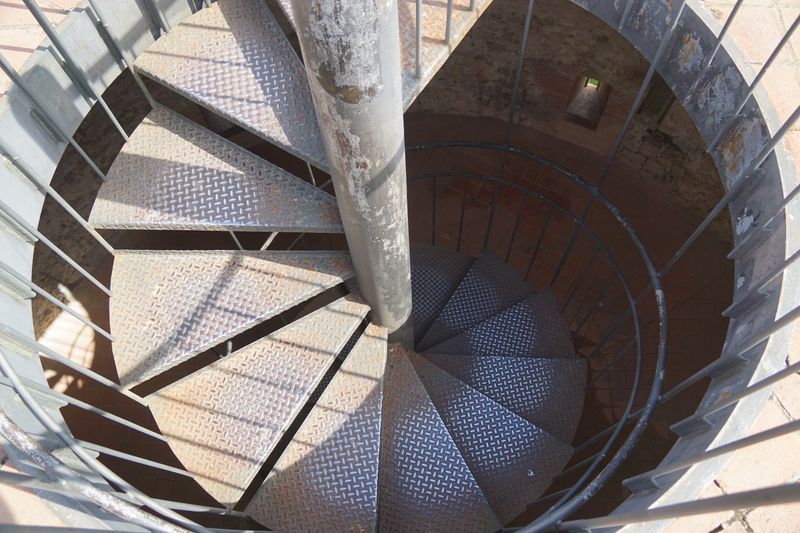
Confined space incidents kill workers every year — and many of those deaths happen not to the original victim, but to would-be rescuers who entered the space without proper equipment or preparation. The pattern is tragically common: a worker is overcome by an atmospheric hazard, a coworker rushes in to help without testing the air, and two people are dead instead of one.
OSHA’s 29 CFR 1910.146 (general industry) and 29 CFR 1926 Subpart AA (construction) exist specifically to interrupt this deadly pattern. Understanding these standards — the definitions, the permit system, the testing requirements, and the rescue protocols — is essential for anyone who works in or around confined spaces on a job site.
What Is a Confined Space?
A confined space has all three of the following characteristics (per OSHA 1910.146):
- Large enough for an employee to enter fully and perform assigned work
- Limited or restricted means of entry or exit (ladders, small openings, crawl-through passages)
- Not designed for continuous employee occupancy
Common examples on construction and industrial sites:
- Underground utility vaults
- Manholes and storm sewers
- Storage tanks and silos
- Boilers and pressure vessels
- Tunnels and pipe sections
- Pits, wells, and sumps
- Crawl spaces beneath structures
If a space meets these three criteria, it is at minimum a confined space and requires further evaluation.
Permit-Required vs. Non-Permit Confined Spaces
Not all confined spaces pose the same level of hazard. OSHA divides them into two categories:
Non-Permit Confined Space
A confined space that does not contain (or have a reasonable potential to contain) any serious safety or health hazards. A shallow utility pull box in a dry, well-ventilated area might qualify as non-permit.
Non-permit confined space entry still requires awareness and basic precautions, but does not require the full permit system described below.
Permit-Required Confined Space (PRCS)
A confined space that contains or has the potential to contain a serious hazard:
- Hazardous atmosphere (oxygen deficient, oxygen enriched, flammable, or toxic)
- Material that could engulf an entrant (grain, sand, liquid, flowable solids)
- Internal configuration that could trap or asphyxiate (inwardly converging walls, sloped floor draining to a smaller cross-section)
- Any other recognized serious safety or health hazard (electrical, mechanical, thermal)
If a confined space is permit-required, a full written entry permit must be completed and posted at the entry point before any worker enters.
Hazard Identification
Before classifying a space, employers must identify potential hazards. The three primary hazard categories for confined spaces are:
1. Atmospheric Hazards
The most common and most immediately deadly confined space hazards:
- Oxygen deficiency: Below 19.5% oxygen. Normal atmosphere is ~20.9%. As oxygen drops, workers experience disorientation (16%), loss of coordination (14%), loss of consciousness (below 10%), and death. Oxygen is displaced by CO2, methane, nitrogen, or argon.
- Oxygen enrichment: Above 23.5% oxygen. Dramatically increases fire and explosion risk.
- Flammable/explosive atmosphere: Combustible gas or vapor concentration above 10% of the Lower Explosive Limit (LEL). Natural gas, propane, methane from decomposition, and solvent vapors are common sources.
- Toxic contaminants: Hydrogen sulfide (H2S) from sewage or organic decay, carbon monoxide (CO) from engines or combustion, and benzene or other VOCs from industrial residues.
2. Engulfment Hazards
Materials that can surround and compress a worker — grain, sand, gravel, liquid, or industrial powders. Engulfment in grain or other flowable solids creates a suction effect that makes it nearly impossible to self-rescue.
3. Entrapment and Configuration Hazards
Spaces with internal geometry that can trap a worker — converging walls, augers, conveyors, internal agitators, or sloped floors that drain to a small opening.
The Permit System
The entry permit is a written authorization that documents the conditions under which entry is authorized, the measures taken to protect workers, and the personnel involved. OSHA 1910.146(f) specifies what must be included.
Required Elements of an Entry Permit
- Identification of the space to be entered
- Purpose of entry and date (permits expire at shift end or when conditions change)
- Authorized entrants — by name or by job title/role
- Authorized attendant(s)
- Entry supervisor (who authorizes and signs the permit)
- Hazards identified in the space
- Measures used to isolate the space and eliminate or control hazards (lockout/tagout, line blanking, purging, ventilation)
- Acceptable entry conditions (atmospheric readings, equipment status)
- Results of atmospheric tests: who conducted them, when, and what the readings were
- Rescue and emergency services available and how to summon them
- Communication procedures between entrant(s) and attendant
- Required equipment (atmospheric monitors, communication equipment, retrieval equipment, lighting)
- Any other required information (specific hazards, procedures for atypical conditions)
Sample Permit Checklist
Before signing the permit, the entry supervisor should verify:
- Space identified, isolated, and energy-controlled per LOTO procedure
- All lines that could introduce hazardous materials have been blanked, blinded, or double-blocked
- Atmosphere tested with calibrated equipment in the last [timeframe per program]
- O2 level: 19.5%–23.5% ✓
- LEL: below 10% of LEL ✓
- CO: below 35 ppm (PEL) ✓
- H2S: below 1 ppm (action level) ✓
- Continuous ventilation in place (if required)
- Retrieval system rigged and in place (tripod or equivalent)
- Attendant in place, equipped, and briefed
- Communication system tested
- Rescue plan reviewed with all personnel
- Permit posted at entry point
- Entry supervisor signature obtained
Atmospheric Testing
Atmospheric testing must be conducted before entry and continuously (or at regular intervals) during entry. Testing order matters:
- Oxygen — test first, because low oxygen invalidates combustible gas meter readings (most catalytic bead LEL sensors require adequate oxygen to operate accurately)
- Combustible gases (LEL) — test second
- Toxic contaminants — CO, H2S, and other site-specific chemicals
Calibration Requirements
Atmospheric monitors must be calibrated according to manufacturer instructions — typically daily “bump tests” to verify sensor response, and full calibrations at regular intervals. An uncalibrated monitor is unreliable and potentially worse than no monitor because it creates false confidence.
Testing Protocol
- Test the top, middle, and bottom of the space before entry — gases stratify. Hydrogen sulfide is heavier than air and accumulates at the bottom. Methane is lighter and accumulates at the top.
- Use a probe or extension hose to test the space remotely before the entrant enters. Do not lean into an untested space.
- Document all readings on the permit.
Top Atmospheric Monitor Recommendations
MSA ALTAIR 4XR Multigas Detector One of the most widely used 4-gas monitors in the industry. Tests O2, LEL, CO, and H2S simultaneously. Rugged construction, long battery life, wireless connectivity options. Price range: $500–$700.
Industrial Scientific Ventis Pro5 Five-sensor capability (can add PID for organic vapor detection). Color display, built-in pump for remote sampling. Suitable for complex confined space work. Price range: $700–$1,000.
BW Technologies GasAlertMicro5 PID Combines the standard 4-gas sensors with a PID (photoionization detector) for VOC detection. Useful in industrial confined spaces with solvent residues. Price range: $800–$1,100.
Ventilation Methods
When atmospheric testing reveals hazardous conditions, or as a precautionary measure, ventilation must be established and maintained before and during entry.
Forced-air ventilation (blowers) is the most common approach. A blower moves fresh air into the space via flexible ducting. The duct should be positioned to ensure fresh air reaches the work area — not just circulate air near the entry.
Important ventilation rules:
- Never use pure oxygen for ventilation — creates an oxygen-enriched (fire hazard) atmosphere
- Verify ventilation is working continuously during entry; do not assume it is running
- In spaces where flammable gases may be present, use explosion-proof blowers
- Continuous atmospheric monitoring is required even when ventilating
Pneumatic blowers compatible with explosion-proof requirements and capable of moving 1,000–5,000 CFM are typical for utility vault and manhole work. Brands like Air Systems International and Allegro Industries produce OSHA-compliant blower systems widely used in confined space programs.
Roles: Entrant, Attendant, and Entry Supervisor
OSHA 1910.146 defines three distinct roles in permit-required confined space entry. Each has specific responsibilities and cannot be combined.
Authorized Entrant
The worker who enters the confined space. The entrant must:
- Know the hazards they may face and be able to recognize signs and symptoms of exposure
- Use proper PPE and equipment as specified on the permit
- Communicate with the attendant regularly (established intervals and method)
- Alert the attendant if a hazardous condition is detected or a warning sign is experienced
- Exit immediately upon attendant order, permit suspension, or automatic alarm
Attendant (Hole Watch)
The attendant remains outside the confined space at all times during entry. The attendant must:
- Know the hazards, understand behavioral effects, and recognize signs of exposure
- Maintain accurate count of all authorized entrants and their identities
- Keep continuous communication with all entrants
- Monitor conditions inside and outside the space that could affect entrant safety
- Order evacuation if: a prohibited condition develops, an entrant shows signs of exposure, the attendant cannot perform duties, or a situation outside the space creates a hazard
- Summon rescue services if necessary
- Not enter the space for any reason — even rescue. If rescue is needed, the attendant summons trained rescue personnel.
This last point is critical. Attendants who leave their post to attempt a rescue frequently become victims themselves.
Entry Supervisor
The entry supervisor authorizes and terminates entry operations. The supervisor must:
- Verify the permit is complete and that all required measures are in place before authorizing entry
- Verify that all personnel are trained and briefed
- Remove unauthorized individuals from the vicinity
- Terminate entry and cancel permits when the operation is complete or if prohibited conditions arise
- Ensure rescue services are available
The entry supervisor may also serve as the attendant, but may not serve as an entrant.
Rescue Planning
OSHA requires employers to develop and implement a rescue plan before entry begins. The plan must address:
Non-Entry Retrieval (Preferred Method)
OSHA strongly prefers non-entry retrieval systems that allow the attendant to extract an incapacitated entrant without entering the space. Required whenever:
- The space has a vertical entry of 5 feet or more, OR
- The space configuration makes non-entry retrieval feasible
Standard non-entry retrieval systems:
- Tripod and winch assembly positioned over the entry point
- Entrant wears a chest harness connected to the retrieval line
- The attendant or a second person can haul the entrant out using the winch
DBI-SALA Rollgliss Technical Rescue Tripod System and similar products from Petzl and Miller are commonly used. Price range for a complete tripod system with winch: $800–$2,000.
Entry Rescue
When non-entry retrieval is not feasible, entry rescue requires:
- Trained, equipped rescue team — either an in-house team or contracted rescue service
- Rescue team that has practiced confined space rescues in representative spaces at least annually
- Emergency services (fire department) are the backup; they must be informed of entry operations and given access information
Lockout/Tagout Integration
Before entry into any confined space with energy sources (electrical, pneumatic, hydraulic, mechanical, thermal, chemical), those energy sources must be isolated and de-energized under OSHA’s 1910.147 Lockout/Tagout (LOTO) standard.
LOTO requirements in the context of confined space work:
- All energy control devices must be locked out — not just tagged — before entry
- Each authorized entrant should apply their own lock to each isolation point (multi-lock hasp)
- Line blanking or blinding is required for pipes that could introduce hazardous materials
- Verification of zero energy state (using a voltmeter, pressure gauge, or block-and-bleed procedure) must be documented on the entry permit
- LOTO must remain in place for the entire duration of entry
Non-Permit Confined Space Procedures
When a confined space is reclassified as non-permit (because all hazards have been eliminated), the employer must:
- Document that the hazards have been eliminated (not merely controlled)
- Post a sign or use another means to indicate the space has been reclassified
- Verify conditions remain non-hazardous if conditions change
If at any time conditions change and hazards might be present, the space must be re-evaluated and may revert to permit-required status.
Training Requirements
OSHA requires training for all personnel involved in confined space entry:
- Entrants: Must understand hazards, proper equipment use, self-rescue, and communication with attendant
- Attendants: Must understand hazards, behavioral effects of exposure, rescue procedures, and emergency response
- Entry supervisors: Must be able to verify all entry conditions, recognize hazards, and authorize/terminate entry
Training must be completed before assignment to confined space duties and repeated:
- When a worker is assigned to a different role
- When there is reason to believe a worker lacks the required proficiency
- When procedures or hazards change
Training must be documented — the employer must be able to demonstrate who was trained, by whom, and when.
Construction Confined Spaces: 29 CFR 1926 Subpart AA
OSHA’s construction confined space standard (effective August 2015) largely mirrors 1910.146 but with some construction-specific additions:
- Coordination between employers: When multiple employers work in or around a confined space, the controlling contractor must coordinate with all subcontractors and share hazard information
- Continuous atmospheric monitoring is required for permit spaces
- Reclassification procedures are more explicitly defined
- Construction-specific spaces (excavations deep enough to qualify, forms, caissons) are addressed
The key takeaway for construction: the general industry confined space standard and the construction standard are substantively similar, but anyone managing confined space entry on a construction site should review Subpart AA specifically.
Final Thoughts
Confined space entry is one of the highest-stakes activities in industrial and construction work. The hazards are invisible, the consequences are immediate, and the margin for error is essentially zero. The OSHA permit system — atmospheric testing, role separation between entrant and attendant, non-entry rescue capability, and LOTO integration — exists because every one of those requirements was forged from a specific type of incident that claimed workers’ lives.
The permit system is not paperwork for its own sake. It is a deliberate pause before entry that forces everyone involved to verify that the space is safe to enter and that a plan exists if something goes wrong.
Do not skip the permit. Do not rush the atmospheric test. Do not let the attendant enter the space. These rules are simple, well-understood, and frequently ignored — which is why people keep dying in confined spaces that were entirely possible to enter safely.

Ironworks Insider Editorial Team
Independent trade-focused editorial team