Diesel Engine Maintenance Guide for Heavy Equipment
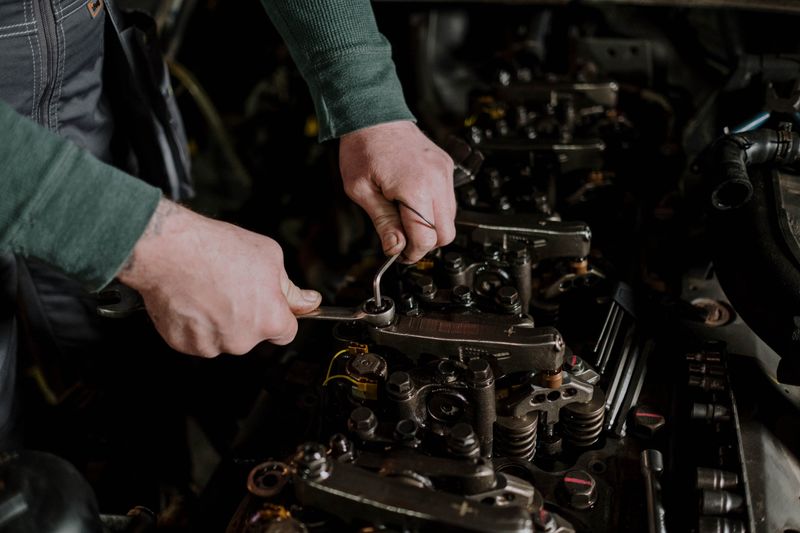
The diesel engine in your heavy equipment is engineered to be extraordinarily durable. A well-maintained machine-grade diesel can reach 15,000 to 20,000 hours before a major overhaul is needed. But “well-maintained” is doing a lot of work in that sentence. The difference between an engine that hits those milestones and one that grenades at 6,000 hours almost always comes down to how consistently the service intervals were followed.
This guide walks through every major system in a heavy equipment diesel engine — from oil and filters to Tier 4 emissions components — and gives you a clear picture of what needs to happen and when.
Oil Change Intervals and Viscosity Selection
Engine oil is the single most important consumable in your diesel engine. It lubricates moving parts, carries heat away from critical components, neutralizes acids formed during combustion, and suspends contaminants until they can be removed by the filter or at the next oil change.
Choosing the Right Viscosity
Heavy equipment OEMs publish viscosity recommendations based on ambient temperature ranges. The most common specifications you’ll encounter:
- 15W-40 — The workhorse of heavy equipment engine oils. Suitable for most construction equipment operating above 0°F (-18°C). This is what the vast majority of machines run year-round in moderate climates.
- 10W-30 — A lighter cold-weather alternative that provides better cold-start protection while still protecting at operating temperatures. Commonly recommended by Caterpillar and Komatsu for cold climate operations.
- 5W-40 full synthetic — Premium option for extreme cold, extended drain intervals, or high-performance turbocharged engines. Often required for Tier 4 Final engines with extended drain recommendations.
- 0W-40 — Used only in severe arctic conditions (below -25°F / -32°C)
Always consult your OEM service manual for approved viscosity grades. Some manufacturers void warranty claims if the wrong viscosity is used, particularly on newer Tier 4 Final machines.
API and ACEA Ratings
Look for oils meeting the current API CK-4 or FA-4 specification. CK-4 replaced CJ-4 as the current heavy-duty diesel standard and is backward compatible. FA-4 is a lower-viscosity spec designed specifically for fuel economy on newer engines — do not use FA-4 in older engines unless explicitly approved by the OEM.
Change Intervals
Standard change intervals vary by OEM and application, but general benchmarks are:
| Engine Type | Typical Interval |
|---|---|
| Older Tier 1–2 engines | 250–500 hours |
| Tier 3 / Tier 4 Interim | 500 hours |
| Tier 4 Final (with oil analysis) | 500–750 hours |
| Extended-drain programs (oil analysis required) | Up to 1,000 hours |
Oil analysis is the most reliable way to extend drain intervals safely. Without analysis, stick to the OEM-specified interval regardless of how good the oil looks.
Oil Filter and Fuel Filter Replacement
Oil Filters
Change the oil filter at every oil change — no exceptions. A loaded oil filter in bypass mode is providing zero filtration to your engine. Most heavy equipment uses spin-on or cartridge-style filters rated at 10–20 microns.
When installing a new spin-on filter, pre-fill it with clean oil before threading it on. This reduces the dry-start period before pressurized oil reaches critical components.
Recommended product: WIX Filters and Baldwin Filters are two of the most trusted aftermarket brands for heavy equipment applications, often used by fleet maintenance departments as direct OEM replacements.
Fuel Filters
Most heavy equipment diesel systems use a two-stage fuel filtration setup: a primary (pre-filter/water separator) and a secondary (final filter) rated at 2–10 microns.
- Primary fuel filter/water separator — Change every 500 hours or when the water-in-fuel warning light illuminates. Always drain accumulated water weekly during wet seasons.
- Secondary fuel filter — Change every 500 hours on most machines, or more frequently in dusty or dirty fuel environments.
Modern common rail injection systems operating at pressures of 20,000–30,000 PSI are particularly sensitive to fuel contamination. Even small particles can score injector components. Never skip fuel filter changes on common rail engines.
Air Filter Service
The air filter protects the engine from abrasive particles entering the intake. On a construction site, an engine can ingest enormous volumes of dusty air. A plugged air filter restricts airflow, richens the fuel mixture, increases fuel consumption, raises exhaust temperatures, and can cause turbocharger surge.
Service Indicators
Most modern heavy equipment uses a restriction indicator (a yellow/red visual gauge or electronic sensor) on the air intake. Service the air filter when the indicator trips — not on a calendar schedule. In dusty conditions this may be every few days; in clean environments it could be months.
Servicing Procedures
- Remove the primary filter element carefully — do not knock it against the housing
- Inspect the element for holes, tears, or compromised seals — a damaged filter provides no protection
- Compressed air cleaning: blow from the inside out at no more than 30 PSI to avoid rupturing the element. This is acceptable for one additional service interval, not indefinite reuse.
- Replace the element with a new OEM or quality aftermarket part
- Wipe the inside of the air cleaner housing clean before installing the new element
- Check the safety/secondary element — replace it every third primary element change or if the primary was ever holed
Never operate without an air filter installed, even briefly. A few seconds of unfiltered operation during a dusty condition can score cylinder walls.
Coolant System Maintenance
Coolant Types and Flush Intervals
Heavy equipment engines use either ethylene glycol (EG) or, less commonly, propylene glycol (PG) based coolant. EG provides better heat transfer; PG is less toxic and preferred in food processing or environmentally sensitive environments.
Coolant additive technology falls into two main categories:
- IAT (Inorganic Additive Technology) — Older green-dye coolants; typically require full replacement every 1,000–2,000 hours and Supplemental Coolant Additive (SCA) top-ups every 500 hours
- OAT/HOAT (Organic Acid Technology / Hybrid OAT) — Extended-life coolants (ELC) that last 4,000–6,000 hours or up to 6 years. No SCA required, but test strips should confirm additive levels annually.
Mixing OAT and IAT coolants destroys the extended-life properties of OAT and can lead to silicate dropout and gel formation. Always flush completely when switching types.
Cooling System Checks
- Check coolant concentration (freeze protection) with a refractometer — not a cheap float-ball tester — every 500 hours
- Inspect hoses for soft spots, cracks, or hardening at connections
- Check the pressure cap for correct seating and pressure rating
- Inspect the radiator exterior and oil cooler for debris buildup; clean with low-pressure water or compressed air from the engine side out
Tier 4 Emissions Systems: DPF and SCR
Tier 4 Interim and Tier 4 Final engines (required since 2011–2015 depending on horsepower class) introduced aftertreatment systems that require their own maintenance program.
Diesel Particulate Filter (DPF)
The DPF traps soot particles from the exhaust stream. It self-cleans through passive regeneration (normal operation at sufficient exhaust temperature) and active regeneration (injecting extra fuel to raise exhaust temps and burn off accumulated soot).
Signs of DPF issues:
- Frequent active regeneration alerts
- Power derate warnings
- “Service Required” or ash load warnings
DPF ash cleaning is required approximately every 3,000–4,500 hours. This requires removal and professional cleaning using specialized equipment — it cannot be done in the field. Budget for this service interval.
Selective Catalytic Reduction (SCR) and DEF
SCR systems use Diesel Exhaust Fluid (DEF) — a solution of 32.5% urea in deionized water — to chemically reduce NOx emissions. DEF is consumed at roughly 2–3% of diesel fuel consumption rate.
- Keep the DEF tank filled; running out triggers progressive power derates and will eventually shut the engine down
- Use only ISO 22241-compliant DEF from reputable suppliers — contaminated DEF damages the SCR catalyst
- DEF freezes at 12°F (-11°C); most machines have DEF tank heaters, but storage of bulk DEF requires a heated environment
- Replace the DEF filter per OEM schedule (typically 1,000–2,000 hours)
Cold Weather Preparation
Operating diesel equipment in cold weather requires proactive preparation. Cold-related hard starts, gelled fuel, and battery failures are entirely preventable with the right measures.
Block Heaters
A coolant block heater keeps the engine block warm during cold soaks, dramatically reducing cranking time and minimizing cold-start wear. Most heavy equipment has block heater provisions from the factory — connect to shore power any time temperatures will drop below 20°F (-7°C) during storage.
Recommended product: Zerostart/Temro block heaters are OEM-quality replacement heaters for most major equipment brands, available in 120V and 240V configurations.
Winter-Grade Oil
As noted above, switching to 10W-30 or 5W-40 synthetic for winter months provides better cold-temperature pumpability and faster oil pressure buildup on cold starts. Thick oil that cannot flow immediately on startup causes the most wear a diesel engine will ever see in a single operating cycle.
Anti-Gel Fuel Additives
No. 2 diesel fuel begins to cloud and eventually gel as temperatures drop, clogging fuel filters and starving the engine of fuel. Preventive measures include:
- Use No. 1 diesel or winterized diesel blend when available (lower cloud point)
- Add an anti-gel fuel treatment to the tank before temperatures drop — not after fuel has already gelled
- Keep fuel tanks as full as possible to minimize condensation accumulation
Recommended product: Power Service Diesel 911 is a trusted re-liquefier for already-gelled fuel, while Howes Diesel Treat is an effective preventive anti-gel additive for regular use.
Fuel Injection System Care
Modern common rail and older mechanical injection systems require clean, properly lubricated fuel and protection from water contamination.
- Water contamination is the number-one enemy of injection systems. Drain water separators weekly and at every fuel fill in humid climates.
- Injector tip deposits build up over time, particularly on lower-quality fuel. A quality fuel injector cleaner added every few oil changes helps maintain spray patterns.
- If the machine sits for extended periods, treat the fuel with a biocide to prevent microbial growth in the tank (microbes thrive at the fuel-water interface and produce acids that corrode injection components).
Turbocharger Maintenance
Turbochargers spin at 100,000–150,000 RPM on a thin film of engine oil. They are reliable when properly maintained but can fail catastrophically if oil-starved.
Key Practices
- Never rev a cold engine before oil pressure has fully built — most turbocharger wear occurs in the first 30 seconds of operation
- Allow the engine to idle 3–5 minutes before shutdown after heavy operation. This lets the turbocharger cool down before oil flow stops; sudden shutdown on a hot turbo causes oil to coke in the bearing passages.
- If the machine has a turbo timer option, use it.
- Any oil leak at the turbocharger (oil in the intake tract, blue exhaust smoke) warrants immediate inspection — catching a sealing issue early avoids a full replacement
Diagnostic Codes Overview
Modern electronic engines communicate problems through diagnostic trouble codes (DTCs) displayed on the machine monitor or accessible via a diagnostic laptop.
Code Categories
- Informational codes — System is operating outside normal parameters but no action required immediately
- Amber/Warning codes — Service required soon; schedule maintenance
- Red/Derate codes — Engine is in protective derate mode; reduce load and service immediately
- Shutdown codes — Engine will shut down to prevent damage
Do not dismiss warning codes. Even a code that appears to clear on its own should be recorded and investigated. Intermittent faults often precede full failures by hours or days.
Invest in a diagnostic communication adapter compatible with your equipment brand. Caterpillar machines use Cat ET (Electronic Technician), Komatsu uses KOMTRAX and EMST, Deere uses Service ADVISOR.
Recommended product: Inline 7 adapters from NEXIQ Technologies support multiple engine protocols and can be used with third-party diagnostic software — a worthwhile investment for any multi-brand fleet.
Seasonal Maintenance Tips
Spring Start-Up
- Change oil and filters if the machine was stored over winter with old oil (acids in used oil corrode bearings during storage)
- Inspect all coolant hoses after thermal cycling from winter temperatures
- Check DPF ash load if hours are approaching service interval
- Verify block heater cord and thermostat are functioning for next winter
Summer Operation
- Check coolant concentration — not just freeze protection, but also boiling point protection (a properly mixed coolant raises the boiling point significantly)
- Clean the radiator and intercooler weekly in dusty conditions
- Monitor operating temperatures closely during high-ambient temperature operation; consider reducing duty cycles on days above 100°F
Fall Preparation
- Perform a full fuel system inspection and filter change before winter season begins
- Add anti-gel treatment to the first cold-weather fill
- Verify block heater function
- Switch to winter-grade oil if operating in consistently cold climates
Diesel Engine Maintenance Schedule Summary
Every 10 Hours / Daily
- Check engine oil level
- Check coolant level
- Inspect air restriction indicator
- Check DEF level (Tier 4 machines)
Every 250 Hours
- Change engine oil and filter (older engines or per OEM)
- Drain water separator
Every 500 Hours
- Change engine oil and filter (Tier 3/4 machines)
- Change primary and secondary fuel filters
- Check coolant SCA concentration (IAT systems)
- Service air filter per restriction indicator
Every 1,000–2,000 Hours
- Coolant flush (IAT/conventional coolant systems)
- Clean or replace EGR cooler (if equipped)
- Replace DEF filter
- Valve adjustment inspection
Every 3,000–4,500 Hours
- DPF ash cleaning
- Inspect turbocharger bearings and seals
- Fuel tank cleaning/inspection
Final Thoughts
A heavy equipment diesel engine is one of the most capable machines ever built, but it is not invincible. Every hour of neglected maintenance shortens engine life and raises the cost per hour of ownership. The service intervals in this guide are your roadmap to an engine that starts on the first crank at -10°F, pulls full load in midsummer heat, and reaches its full service life without a major failure.
Build a maintenance log, track your hours, and never skip a filter.

Ironworks Insider Editorial Team
Independent trade-focused editorial team