Electric and Hybrid Heavy Equipment: Current Models and TCO vs. Diesel
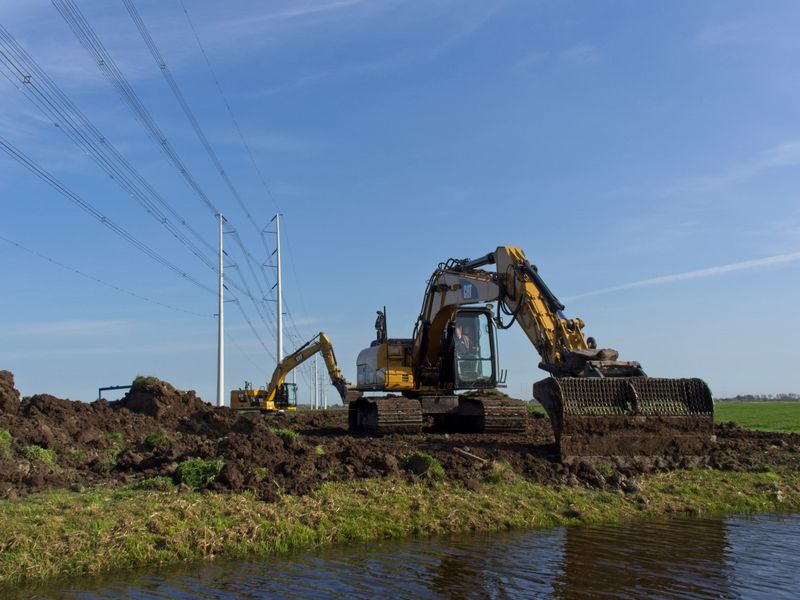
The conversation around electric heavy equipment has shifted from “someday” to “right now.” Electric excavators are working on jobsites in California and Europe. Battery-powered compact track loaders are logging real hours. Hybrid excavators have been in production for over a decade. The technology is no longer conceptual — but it’s also not right for every application yet.
This guide covers the current state of the market, honest performance comparisons with diesel, total cost of ownership analysis, and a realistic look at where the industry is headed over the next five years.
Why the Industry Is Moving Toward Electric
Several forces are pushing electrification:
- Regulatory pressure — California’s Air Resources Board (CARB) has mandated zero-emission off-road equipment targets. The EU’s Stage V emissions standards are tightening further. Urban jobsite restrictions in cities like Amsterdam, Oslo, and London are already limiting diesel equipment.
- Total cost of ownership — fuel and maintenance costs for electric equipment are genuinely lower over the machine’s life, and that gap widens as diesel prices rise.
- Contractor differentiation — some project owners (universities, hospitals, municipalities) are specifying or preferring zero-emission construction.
- Technology maturity — battery energy density has improved dramatically, and charging infrastructure is catching up.
Current Electric Heavy Equipment Models
Full Electric Excavators
Volvo EC230 Electric — Volvo’s 23-ton electric excavator is the most significant full-size electric machine currently available. Powered by an 800V architecture with swappable battery packs, the EC230 claims equivalent performance to its diesel counterpart in most applications. Battery capacity supports approximately 8 hours of moderate work. Volvo offers a “battery swap” system for sites where downtime for charging isn’t acceptable.
Caterpillar 301.9 Electric Mini Excavator — Cat’s entry into electric is a compact 1-ton mini excavator powered by lithium-ion batteries. Designed for indoor demolition, urban work, and confined jobsites where zero emissions are required. Run time is approximately 4–6 hours depending on work intensity.
Bobcat E10e — Bobcat’s 1-ton electric mini excavator, aimed at indoor and noise-sensitive applications. Well-suited for landscaping contractors and rental fleets serving urban markets.
Hyundai R55E — A 5.5-ton electric excavator from Hyundai Construction Equipment, positioned between compact and standard classes. Targeted at European urban markets with a focus on low noise and zero emissions for night work.
Liebherr LH 26 M Electric — Liebherr has offered electric-powered material handlers and cranes for years, particularly for port and scrap applications where facility power is available. These plug-in electric machines (cable-connected) have demonstrated the durability of electric drive in heavy-cycle applications.
Electric Compact Equipment
Bobcat T7X — Perhaps the most talked-about electric machine of the past few years, the T7X compact track loader replaces not just the diesel engine but also the hydraulic system with electric linear actuators for the lift and tilt functions. Fully electric drive and fully electric implements. Run time is approximately 4 hours, which fits a half-day shift before a 2-hour recharge.
Wacker Neuson EZ17e, EW65, and Zero Emission Line — Wacker Neuson has one of the broadest lines of electric compact equipment, including zero-emission mini excavators, wheel loaders, and dumpers. Their electric dumper lineup is particularly strong for indoor and tunnel applications.
Manitou ME 415 — An electric telehandler for indoor use, part of a growing category of electric material handling equipment for warehousing and enclosed jobsites.
Hybrid Heavy Equipment
Hybrid systems capture energy from deceleration, swing braking, or engine load reduction to supplement power with stored electrical energy. They don’t eliminate diesel dependency but meaningfully reduce fuel consumption and emissions.
CAT 336 E-Hybrid Excavator
The Cat 336 is available with Cat’s E-Hybrid system, which uses a swing motor/generator to recover energy during swing deceleration and store it in an ultracapacitor system. The stored energy supplements the hydraulic system during peak demand (arm curl, bucket). Cat claims 10–25% fuel reduction in typical duty cycles. The hybrid system adds cost but reduces the machine’s carbon footprint without changing the operator’s workflow.
Komatsu PC210LCi and Hybrid Systems
Komatsu pioneered hybrid excavators with their PC200-8 Hybrid introduced in 2008 — one of the industry’s first commercial hybrid excavators. Their current lineup uses a parallel hybrid system combining a diesel engine with an electric swing motor and capacitor storage. Fuel savings of 15–25% have been documented in real-world applications.
Hitachi Zaxis Hybrid
Hitachi’s Zaxis ZH210-6 hybrid excavator uses a similar energy recovery approach, capturing swing energy and using it to assist the engine during loading cycles.
Performance Comparison: Electric vs. Diesel
Power and Productivity
For small machines (under 6 tons), current electric equipment is generally at parity with diesel in terms of breakout force and cycle times. Electric motors deliver full torque immediately, which can actually feel more responsive than diesel in certain operations.
For mid-range machines (6–25 tons), the performance gap narrows but battery capacity becomes the primary constraint. The Volvo EC230 Electric performs comparably to the diesel EC220 in most digging applications, but battery management becomes a workflow consideration.
Run Time and Battery Capacity
This is the honest limitation of current electric equipment. Most battery-electric machines offer 4–8 hours of run time under typical operating conditions. For contractors working single shifts with access to charging infrastructure, this is manageable. For contractors running double shifts, remote sites, or applications with continuous high-demand cycles, current battery capacity is a constraint.
Battery performance also degrades in cold weather — operators in northern climates report 20–30% reduced run time in temperatures below 20°F.
Noise and Vibration
Electric equipment is significantly quieter — typically 10–15 dB lower than comparable diesel machines. This is a genuine operational advantage for:
- Night work
- Work near hospitals, schools, or residential areas
- Indoor demolition and renovation
- Tunnel and underground construction
Lower vibration levels also reduce operator fatigue over long shifts.
Charging Infrastructure Challenges
This is where the transition gets complicated. Electric equipment requires:
- On-site power — most jobsites don’t have 480V three-phase service readily available
- Charging time — even fast-charging systems require 1–3 hours for a significant charge; full charges can take 6–8 hours
- Charging equipment — Level 2 and DC fast chargers for industrial equipment are not cheap ($5,000–$30,000 per station)
- Utility coordination — upgrading site electrical service may require permits and utility work that takes months
Some contractors are using mobile charging trailers (diesel-powered generator rigs that charge batteries) as an interim solution for remote sites — though this partially offsets the emissions benefits.
For urban contractors or those with permanent yards where equipment charges overnight, the infrastructure challenge is much more manageable.
Total Cost of Ownership: Electric vs. Diesel
Upfront Cost Premium
Electric machines currently carry a 20–50% price premium over equivalent diesel models. A conventional diesel mini excavator in the 1–2 ton class runs $15,000–$30,000. The electric equivalents are currently $25,000–$50,000. At the larger end, the Volvo EC230 Electric carries a premium of roughly $60,000–$100,000 over the diesel EC220.
Battery replacement is a future cost to factor in — lithium-ion battery packs in heavy equipment are expected to last 5,000–8,000 charge cycles or 8–12 years under typical use, but replacement costs are significant.
Operating Cost Advantages
Fuel savings are the primary financial driver. A mid-size diesel excavator burns approximately 4–7 gallons per hour. At $4/gallon diesel, that’s $16–$28/hour in fuel costs. An equivalent electric machine running on grid power at $0.12/kWh costs roughly $3–$6/hour in electricity — a savings of $10–$20 per hour.
At 1,500 working hours per year and a $12/hour average fuel savings, that’s $18,000/year in fuel savings on a single machine.
Maintenance savings are the second major advantage. Electric machines have fewer moving parts:
- No oil changes (no engine oil)
- No fuel filters, air filters, coolant service
- No DPF regeneration or DEF system
- No belt or hose replacements at typical intervals
- Fewer hydraulic components (especially on fully-electric machines like the T7X)
Manufacturers estimate 30–50% lower maintenance costs for electric equipment versus diesel equivalents.
10-Year TCO Comparison (Mid-Size Excavator Estimate)
| Cost Category | Diesel | Electric |
|---|---|---|
| Purchase price | $250,000 | $330,000 |
| Fuel (10 yr @ $18k/yr savings) | $280,000 | $100,000 |
| Maintenance (10 yr) | $100,000 | $55,000 |
| Battery replacement (1x) | — | $40,000 |
| Total 10-Year TCO | $630,000 | $525,000 |
This analysis is illustrative and highly sensitive to fuel prices, utilization rates, and financing costs — but it demonstrates that over a 10-year ownership horizon, the higher upfront cost can be overcome by lower operating costs.
Regulatory Drivers
California
CARB’s In-Use Off-Road Diesel Vehicle Regulation and proposed zero-emission equipment rules are the most aggressive in North America. California contractors should anticipate requirements to transition certain equipment categories to zero-emission technology within the next 10–15 years, with incentive programs (like CORE funds) available now to offset transition costs.
European Union
EU Stage V emissions regulations have already pushed diesel equipment to very low emissions levels, and several EU cities have banned diesel construction equipment outright in certain zones. The EU’s Fit for 55 climate package will continue to tighten requirements through the decade.
Incentives
Federal Section 48C tax credits and IRA clean energy provisions may apply to qualifying electric equipment purchases. State-level incentive programs (particularly in California, New York, and New Jersey) can offset 20–40% of the purchase price premium. Consult with your accountant and check your state’s clean fleet incentive programs.
5-Year Outlook
By 2031, expect:
- Electric compact equipment (under 6 tons) to be mainstream — the price premium will compress as battery costs fall, and the performance gap will close further
- Hybrid standard on mid-size excavators — similar to how automotive hybrids became standard, hydraulic energy recovery will be included in most 20–35 ton excavators
- Hydrogen fuel cell equipment entering commercial deployment — particularly for high-cycle applications where battery weight is a constraint (large excavators, ADTs)
- Charging infrastructure as a standard jobsite utility — similar to how portable offices and temporary power panels are standard today
- Battery leasing models to lower upfront cost and transfer battery degradation risk to manufacturers
The construction equipment industry is not going to fully electrify in five years. But for smart contractors, the question isn’t whether to transition — it’s how to phase it strategically to capture incentives, manage cash flow, and build operational competency before the transition becomes mandatory.
Is Electric Equipment Right for Your Operation?
Strong candidates for early adoption:
- Urban contractors working in dense areas with noise/emission restrictions
- Contractors doing significant interior or enclosed space work
- Single-shift operations with yard-based overnight charging
- California contractors managing CARB compliance
- Operations where fuel cost is a major budget pressure
Less suited for near-term electric transition:
- Multi-shift, high-utilization operations
- Remote jobsites without electrical infrastructure
- Applications requiring maximum machine weight (battery packs are heavy)
- Cold-climate operations
The technology is real, the economics work in the right context, and the regulatory direction is clear. Understanding the options now puts you ahead of the curve — and in a position to make the transition on your terms rather than under deadline pressure.

Ironworks Insider Editorial Team
Independent trade-focused editorial team