Forklift Safety: Top 10 OSHA Violations and How to Avoid Them
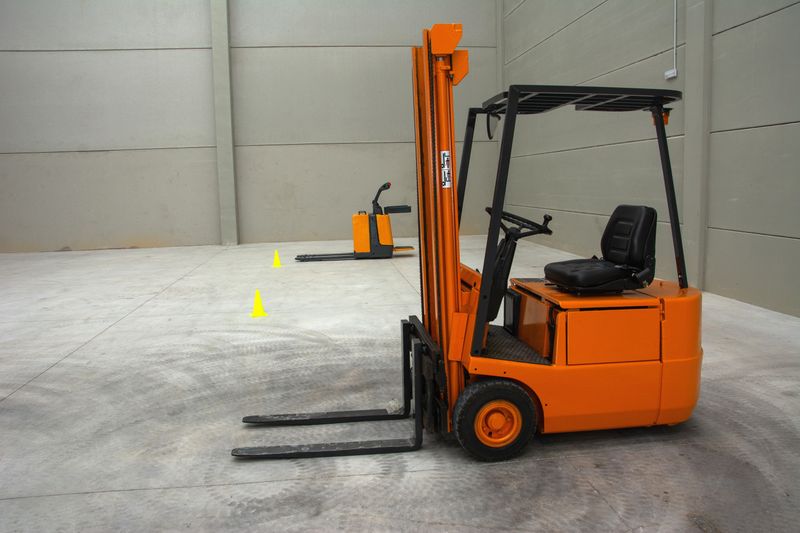
Forklifts are involved in approximately 85 fatal accidents and nearly 35,000 serious injuries every year in the United States, according to OSHA data. Despite being one of the most common pieces of powered industrial equipment in warehouses, distribution centers, and construction sites, forklifts are consistently among the top sources of OSHA citations — and the violations are almost always preventable.
The primary standard governing forklift safety is 29 CFR 1910.178 (Powered Industrial Trucks). Violations of this standard can result in fines ranging from a few thousand dollars to over $156,000 per willful or repeat violation. More importantly, each violation represents a real risk of killing or maiming someone on your team.
Here are the ten most common forklift safety violations, why they happen, and what to do about them.
Violation #1: Inadequate Operator Training and Certification
Standard: 29 CFR 1910.178(l)
This is the single most cited forklift violation year after year. OSHA requires that every powered industrial truck operator be trained and evaluated before operating a forklift. Training must cover:
- Operating instructions and warnings specific to the type of truck being used
- Truck-specific hazards (stability triangle, load limits, visibility)
- Workplace-specific conditions (narrow aisles, ramps, pedestrian traffic)
- Hands-on evaluation by a qualified trainer
Why it happens: Operators are put on forklifts without formal training, or training records are lost. Warehouses often assume an experienced operator from a previous job doesn’t need re-evaluation.
How to avoid it:
- Certify every operator before they operate any forklift — no exceptions
- Conduct recertification every 3 years, or immediately after an accident, near-miss, or observed unsafe operation
- Keep signed training records for each operator and each truck type
- When operators move to a different type of forklift (sit-down counterbalance vs. reach truck vs. order picker), re-train for the new type
Violation #2: Failure to Conduct Pre-Shift Inspections
Standard: 29 CFR 1910.178(q)(1)
Before each shift, operators must inspect their forklift. If defects are found that affect safe operation, the truck must be taken out of service until repaired.
Required pre-shift checks include:
- Tires (wear, inflation, damage)
- Forks (cracks, bends, wear on heel)
- Fluid levels (hydraulic, engine oil, coolant, fuel)
- Battery charge and electrolyte levels (electric trucks)
- Overhead guard and backrest extension
- Lights, horn, and warning devices
- Brakes and steering
- Mast, chains, and carriage
Why it happens: Operators skip inspections when they’re rushed, or no inspection checklist exists.
How to avoid it:
- Use a written pre-shift checklist and require signatures
- Display the checklist in the cab or at the charging station
- Establish a clear out-of-service protocol so operators aren’t pressured to run defective equipment
- Supervisors should spot-check randomly and verify records
Violation #3: Speeding and Unsafe Travel Speed
Standard: 29 CFR 1910.178(n)(8)
OSHA requires forklifts to travel at a safe speed for the conditions — considering floor surface, visibility, load, and pedestrian presence. While OSHA doesn’t specify a numeric speed limit, violations are cited when speed clearly exceeds what is safe for the environment.
Why it happens: Operators rush to meet productivity targets. Supervisors and managers turn a blind eye.
How to avoid it:
- Post facility-specific speed limits (typically 5 mph in pedestrian areas, 10–15 mph in open aisles)
- Use floor markings, speed bumps, and mirrors at intersections
- Modern forklifts from Toyota, Crown, and Raymond offer telematics that flag over-speed events and generate operator reports
- Enforce consequences consistently — speed-related near-misses must be treated as serious incidents, not minor infractions
Violation #4: Traveling with an Elevated Load
Standard: 29 CFR 1910.178(n)(1) and (n)(4)
Forks must be lowered to the travel position (4–6 inches above the floor) when traveling. Operators who travel with raised loads dramatically increase the risk of tip-over and reduced forward visibility.
Why it happens: Operators elevate loads to “save time” by traveling and positioning simultaneously.
How to avoid it:
- Enforce the travel height rule as a zero-tolerance policy
- Use warning alarms on newer forklifts that trigger when the mast is raised while in motion
- Retrain operators who are observed traveling with elevated loads
Violation #5: Improper Load Handling
Standard: 29 CFR 1910.178(n)(1)–(n)(4) and (o)
This broad category covers multiple related violations:
- Exceeding the rated load capacity printed on the data plate
- Carrying unstable, improperly stacked, or unsecured loads
- Transporting personnel on forks or loads (never permitted)
- Failing to ensure loads are properly positioned on forks before lifting
Why it happens: Operators attempt to “make it work” with one trip rather than breaking down oversized loads. Data plates are ignored or obscured.
How to avoid it:
- Post the load capacity data plate prominently and ensure it’s readable on every truck
- Train operators to calculate load centers — heavier or longer loads reduce effective capacity
- Establish a rule: if you’re not sure the load is within capacity, it goes to a supervisor before lifting
- Prohibit riding on loads or forks — this is a fireable offense at most responsible companies
Violation #6: Unsecured Loads on Ramps and Inclines
Standard: 29 CFR 1910.178(n)(7)
When traveling on ramps or inclines, forklifts must travel with the load upgrades (load on the uphill side) regardless of direction. On steep grades, loads can shift and cause tip-overs or dropped loads.
Why it happens: Operators take shortcuts on routes with grades, or don’t understand the stability physics involved.
How to avoid it:
- Mark all ramps with directional travel requirements
- Brief operators on the stability triangle: the forklift’s center of gravity must stay within the three-point suspension formed by the front axle and rear pivot point
- Never exceed the rated grade for the specific forklift — this is published in the operator’s manual
Violation #7: Pedestrian/Forklift Segregation Failures
Standard: 29 CFR 1910.178(e) and general duty clause
OSHA expects employers to separate pedestrian and forklift traffic where feasible. Shared travel paths are a leading cause of struck-by fatalities.
Why it happens: Facilities grow organically and pedestrian paths are never formalized. Operators don’t yield at intersections.
How to avoid it:
- Use floor markings (yellow striping) to define forklift lanes and pedestrian lanes
- Install physical barriers (guardrails, bollards) in high-traffic pedestrian zones
- At intersections, require forklifts to stop and sound the horn before proceeding
- Pedestrians should never assume a forklift operator can see them — maintain situational awareness and eye contact before entering a forklift travel zone
- Blue safety lights projected on the floor ahead of the forklift warn pedestrians of approach around blind corners
Violation #8: Failure to Wear Seatbelts
Standard: 29 CFR 1910.178(e)(1) — manufacturer requirements
If the forklift is equipped with an operator restraint system (seatbelt or lap bar), its use is mandatory. In a tip-over event, operators who stay in the cab fare dramatically better than those who attempt to jump clear. Jumping out is the primary cause of crush injuries in forklift tip-overs.
Why it happens: Operators claim the belt is uncomfortable, that they’re “just moving it a few feet,” or that they’ve always operated without one.
How to avoid it:
- Make seatbelt use a non-negotiable condition of employment
- Modern forklifts from Crown, Toyota, and Hyster-Yale include presence systems that disable travel when the belt is unfastened
- Address the “just a short move” culture immediately — most forklift accidents happen during short, routine moves
Violation #9: Blocked or Obstructed Vision While Traveling
Standard: 29 CFR 1910.178(n)(6)
When carrying a load that blocks forward vision, operators must travel in reverse (looking in the direction of travel) or use a spotter. Traveling forward with an obstructed view is a direct violation.
Why it happens: Operators are in a hurry, or spotters are not available.
How to avoid it:
- Establish a written rule: if you can’t see over or around the load, you travel in reverse
- Spotters must be trained and must maintain safe positioning (never in the path of travel)
- Consider installing cameras on high-obstruction loads — aftermarket forklift cameras are widely available
Violation #10: Fueling and Charging Hazards
Standard: 29 CFR 1910.178(f) and (g)
LP gas, diesel, and battery-electric forklifts each have specific refueling and charging requirements:
LP (propane) forklifts:
- Tank changes must occur in designated areas away from ignition sources
- Operators must be trained on tank handling and leak detection
- Tanks must be inspected for damage before installation
Battery-electric forklifts:
- Charging must occur in designated charging areas with ventilation (hydrogen gas is released during charging)
- No smoking or open flames in the charging area
- Eye-wash stations required within 10 seconds of battery handling areas (for lead-acid batteries)
- Battery changes require trained personnel and appropriate lifting equipment
Why it happens: Fueling and charging happen quickly and routinely — hazards become normalized.
How to avoid it:
- Mark charging and fueling areas clearly
- Post procedures visibly at each station
- Audit the areas regularly for ignition sources, ventilation, and PPE compliance
OSHA Penalty Structure
Understanding the financial stakes helps reinforce why compliance matters:
| Violation Type | Maximum Penalty (2024) |
|---|---|
| Serious | $16,131 per violation |
| Other-than-serious | $16,131 per violation |
| Willful or Repeat | $161,323 per violation |
| Failure to Abate | $16,131 per day beyond abatement date |
A single OSHA inspection that uncovers multiple violations can result in six-figure penalties — before factoring in injury liability, workers’ compensation claims, and reputational damage.
Building a Forklift Safety Culture
Individual compliance items matter, but the most effective forklift safety programs go beyond checklists:
-
Make safety visible. Post incident and near-miss data where operators see it every day. When numbers go up, explain why. When they go down, celebrate it.
-
Investigate near-misses as seriously as accidents. Near-misses are accidents that didn’t happen yet. Every one of them reveals a system failure.
-
Hold supervisors accountable. Most forklift safety failures are management failures. If a supervisor looks the other way when an operator speeds or skips an inspection, the program doesn’t work.
-
Refresh training regularly. Annual refreshers — even informal ones — keep safety habits sharp. New hires should shadow experienced operators before solo operation.
-
Maintain equipment proactively. A forklift with worn tires, a drifting mast, or a faulty horn is a liability. Budget for maintenance instead of running equipment to failure.
Essential Forklift Safety Products
For operators:
- Pyramex Ridgeline Full Brim Hard Hat — ANSI Class E, vented, comfortable for all-day wear in warehouse or outdoor environments
- Ergodyne ProFlex 7500 Anti-Vibration Gloves — reduces hand fatigue from extended forklift operation
- Caterpillar Excavator Work Boot — steel toe, slip-resistant, ASTM F2413 rated
For facilities:
- Vestil LED Blue Forklift Safety Light — projects a blue dot 6–8 feet ahead of the forklift to alert pedestrians around blind corners
- Checkers Industrial Safety Mirrors — convex safety mirrors for intersections and blind spots
- Rite-In-The-Rain Pre-Shift Inspection Booklet — waterproof, durable, pen-compatible; keeps inspection records intact in tough environments
Bottom Line
Forklift injuries and deaths are preventable. Every fatality and serious injury involves at least one of these ten violations — often more. The good news is that the solutions aren’t complicated or expensive: train your operators, inspect your equipment, separate pedestrians from traffic, and enforce your rules consistently.
OSHA compliance isn’t just about avoiding fines. It’s about making sure every operator goes home at the end of the shift.

Ironworks Insider Editorial Team
Independent trade-focused editorial team