Forklift vs. Telehandler vs. Skid Steer: Which Lifting Machine Is Right?
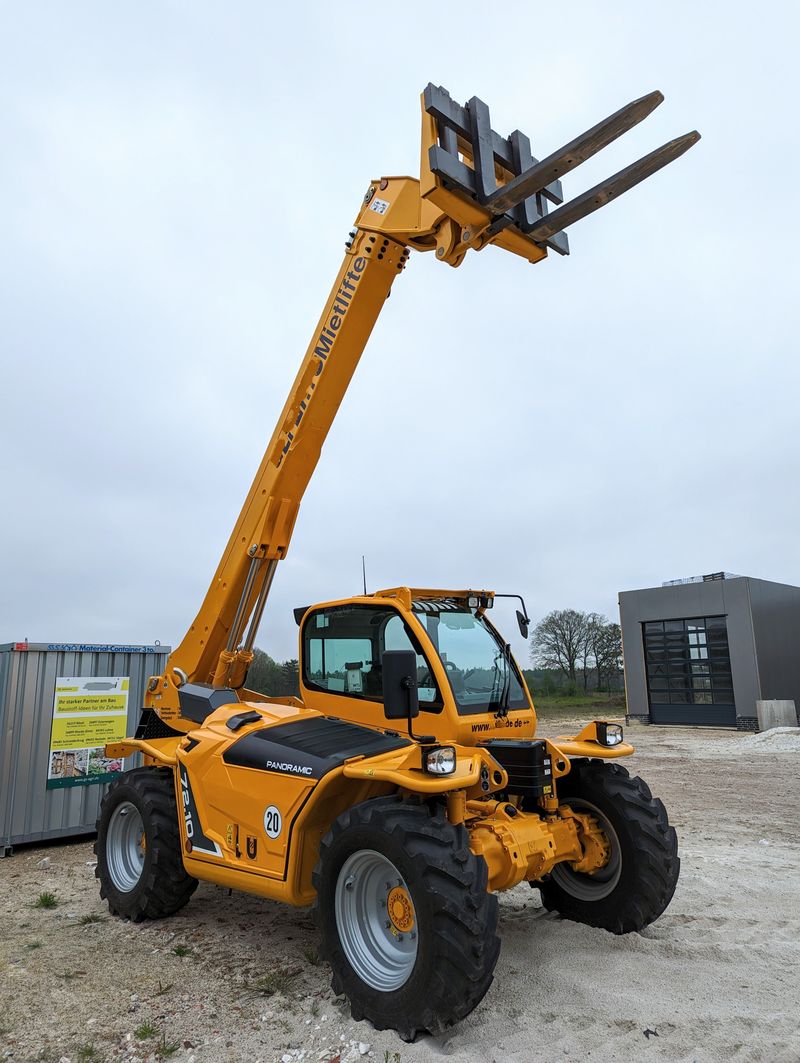
Three of the most common lifting machines on construction sites and in industrial facilities — forklifts, telehandlers, and skid steers — are often confused with each other, and sometimes used interchangeably when they shouldn’t be. Each machine has a distinct design philosophy, a sweet spot where it excels, and real limitations that make it the wrong tool for certain jobs.
Choosing the wrong machine doesn’t just hurt productivity — it creates safety hazards and drives up costs. This guide gives you a clear, side-by-side understanding of all three so you can make the right choice every time.
Quick Overview: What Each Machine Is Designed to Do
Before getting into the details, it helps to understand the core purpose of each machine:
- Forklifts are purpose-built materials handling machines designed for efficient, high-cycle lifting and moving of palletized loads — primarily in warehouses, distribution centers, and manufacturing environments.
- Telehandlers (telescopic handlers) are versatile construction machines that combine the reach of a crane with the mobility of a rough terrain vehicle. They’re designed to place materials at height and distance on outdoor construction sites.
- Skid steers with fork attachments are compact, highly maneuverable multi-purpose machines that can perform a wide range of tasks using interchangeable attachments. They’re not specialist lifters — they’re generalist workhorses.
Forklifts: The Warehouse and Manufacturing Specialist
How Forklifts Work
A counterbalance forklift uses the machine’s own weight (plus a heavy counterweight in the rear) to balance the load on the forks. The forks attach to a mast assembly that telescopes vertically. The operator drives forward into the load, lifts it, and carries it with the load positioned close to the mast.
Most forklifts are optimized for indoor use on smooth, level concrete floors — though rough terrain models exist for outdoor use.
Forklift Specifications
- Max lift height: Standard counterbalance forklifts typically lift to 15–20 feet (4.5–6 m). High-mast warehouse forklifts can reach 20–30 feet (6–9 m) or more with specialized masts.
- Rated capacity: Light-duty models start at 3,000–5,000 lb (1.4–2.3 t). Heavy-duty models range from 10,000 to 80,000 lb (4.5–36 t). Most common warehouse units are 4,000–8,000 lb rated.
- Travel speed: Typically 8–12 mph (13–19 km/h) on smooth floors — fast enough for high-cycle warehouse operations.
- Turning radius: Counterbalance forklifts steer with the rear wheels, creating a wide turning radius. Reach trucks and order pickers are designed for narrow aisles.
Where Forklifts Excel
- High-cycle warehouse operations: Forklifts are designed for continuous duty. Pick a pallet, move it, set it down, repeat — all day.
- High-rack storage: With a triple-stage mast, a forklift can place loads into racking up to 30 feet high.
- Load precision: The vertical mast provides precise, controlled placement — critical for stacking unstable loads or placing into tight rack positions.
- Indoor environments: Cushion-tire electric forklifts produce zero emissions and minimal noise — ideal for food processing, cold storage, and indoor distribution.
Forklift Limitations
- Terrain: Standard cushion-tire forklifts cannot operate on soft ground, gravel, or uneven terrain. Rough terrain forklifts exist but have less capacity and are much less common.
- Reach: A counterbalance forklift can only lift directly in front of it. It cannot place a load on a scaffold platform 10 feet away from where it’s standing — that’s what a telehandler does.
- Outdoor versatility: Forklifts have limited use on active construction sites where terrain varies and loads need to be placed at height and at distance.
Forklift Accessories Worth Having
- Fork extension sleeves: Extend the usable fork length for handling oversized pallets or long material — an inexpensive but practical tool.
- Forklift safety lights and blue safety lights: LED warning lights that project a beam in front of or behind the forklift, warning pedestrians at blind corners.
- Forklift safety mirrors: Convex mirrors mounted at intersections or on the machine to eliminate blind spots.
Telehandlers: The Construction Site Reach Machine
How Telehandlers Work
A telehandler (also called a telescopic handler or reach forklift) uses an extendable telescoping boom instead of a vertical mast. The boom raises and extends simultaneously, allowing the machine to place loads at height and at a significant horizontal distance forward.
Telehandlers are equipped with a quick-attach system at the boom tip that accepts a wide range of attachments — forks, buckets, work platforms, lifting hooks, and more.
Telehandler Specifications
- Max lift height: Most construction telehandlers reach 19–56 feet (5.8–17 m). High-reach models push to 60+ feet.
- Max forward reach: 12–45+ feet (3.7–13.7 m), depending on model.
- Rated capacity: 5,500 to 12,000 lb (2.5–5.4 t) at rated capacity — with capacity decreasing significantly at full extension (load chart applies, just as with a crane).
- Tires: Large pneumatic tires with 4-wheel drive on most construction models. Some models have 4-wheel steering for tight maneuvering.
- Travel speed: 15–22 mph (24–35 km/h) — faster than most construction equipment, allowing site mobility.
Where Telehandlers Excel
- Placing materials at height on construction sites: Lifting block pallets, lumber bundles, or steel to elevated work platforms or floors under construction.
- Rough terrain: The combination of high ground clearance, large pneumatic tires, and 4WD allows telehandlers to operate on muddy, uneven, or gravel-covered sites where a standard forklift would be stuck.
- Multiple attachment capability: Swap forks for a concrete bucket, lifting hook, or personnel work platform in minutes — turning one machine into many.
- Reach over obstacles: A telehandler can place a load 20 feet ahead of where it’s standing — over a parked vehicle, across a ditch, or onto an elevated platform.
Telehandler Limitations
- Capacity drops with reach: At full extension, a telehandler that’s rated for 10,000 lb at close range might only handle 3,000–4,000 lb. Always reference the load chart for extended reach lifts.
- Indoor use: Most construction telehandlers are diesel-powered and too large for indoor warehouse operations. Smaller electric models exist but are far less common.
- High-cycle efficiency: Telehandlers are not designed for rapid pallet-moving cycles. They’re slower to cycle than a warehouse forklift.
- Operator training: Extended-reach lifts require understanding of the load chart — the same concept as a crane.
Telehandler Accessories Worth Having
- Telehandler work platform / personnel basket: Allows the telehandler to function as an elevated work platform for maintenance and construction tasks — must be rated and engineered for personnel use.
- Telehandler lifting hook / rigging attachment: Converts the telehandler for vertical lifting tasks, extending its versatility on construction sites.
Skid Steers with Fork Attachments: The Versatile Generalist
How Skid Steers Work
A skid steer loader steers by differentially driving its left and right tracks or wheels — the wheels on one side spin faster than the other to create a turn. This gives skid steers an extremely tight turning radius (they can spin in their own footprint), making them valuable in confined areas.
Fork attachments mount to the skid steer’s universal quick-attach plate, replacing the standard bucket. When equipped with forks, a skid steer can move palletized materials and lift loads within its rated capacity.
Skid Steer Specifications (with Forks)
- Max lift height: Typically 6–12 feet (1.8–3.7 m) for standard skid steers. Vertical-lift path machines push toward 10–12 feet. Well below a telehandler or high-mast forklift.
- Rated capacity: 1,300–5,000 lb (590–2,270 kg), depending on tipping load and model. Most common machines are in the 1,500–2,500 lb range.
- Tires: Rubber tires or rubber tracks (CTL — compact track loader). Tracks offer far better flotation and traction on soft ground.
- Travel speed: 7–12 mph (11–19 km/h) on tracks; faster on tires.
- Footprint: Extremely compact — typically under 6 feet wide — allowing access through doorways and into areas no forklift or telehandler can reach.
Where Skid Steers (with Forks) Excel
- Tight, confined spaces: The compact footprint and zero-radius turning make skid steers indispensable in areas too small for a telehandler or forklift.
- Attachment versatility: No machine on this list comes close to the attachment library available for skid steers — augers, trenchers, mulchers, cold planers, concrete mixers, hydraulic breakers, and dozens more. If you need a multi-purpose machine, the skid steer wins.
- Soft ground with tracks: A compact track loader (CTL) with forks can work in muddy conditions that would stop a wheeled forklift.
- Light material handling on construction sites: Moving pallets of block, bags of concrete, or light material around a site where a telehandler would be overkill.
Skid Steer Limitations
- Capacity: Even the largest skid steers max out around 5,000 lb. A standard warehouse forklift handles 8,000 lb. A telehandler handles 10,000+. For heavier loads, a skid steer isn’t the answer.
- Lift height: Maxing out at 10–12 feet means a skid steer cannot place materials on elevated floors, scaffold decks above 10 feet, or high storage racks.
- No reach: Unlike a telehandler, a skid steer with forks is purely vertical — the load must be directly in front of the machine.
- Operator visibility with forks: With a load on the forks, the operator’s forward view is partially obstructed. Skid steers require careful awareness of surroundings.
- Not suitable for warehousing: Too slow, too rough, and too imprecise for high-cycle pallet operations in a distribution center.
Skid Steer Accessories Worth Having
- Pallet fork attachment for skid steer: Standard 48” or 60” pallet forks; make sure they’re rated for your machine’s hydraulic quick-attach.
- Skid steer ROPS canopy: For outdoor use; protects the operator from falling objects and weather.
Side-by-Side Comparison Table
| Feature | Forklift | Telehandler | Skid Steer (w/ Forks) |
|---|---|---|---|
| Max lift height | 15–30 ft (standard) | 19–60 ft | 6–12 ft |
| Rated capacity | 3,000–80,000 lb | 5,500–12,000 lb | 1,300–5,000 lb |
| Forward reach | None | 12–45+ ft | None |
| Indoor use | Excellent (electric) | Poor (diesel/size) | Limited |
| Rough terrain | Poor–Fair | Excellent | Good–Excellent (tracks) |
| High-cycle efficiency | Excellent | Fair | Poor |
| Attachment versatility | Low | Medium | Very High |
| Typical purchase price (new) | $25,000–$150,000+ | $60,000–$150,000+ | $40,000–$100,000+ |
| Operator certification required | Yes (OSHA 1910.178) | Yes (OSHA 1926.602) | Yes |
| Best environment | Warehouse/manufacturing | Construction sites | Construction/tight spaces |
Use-Case Decision Matrix
Use this decision matrix to identify the right machine for common scenarios:
Scenario 1: Moving pallets of product in a warehouse with racking up to 25 feet
Choose: Forklift — High-mast counterbalance or reach truck. A telehandler is too large and imprecise for rack operations.
Scenario 2: Lifting wall panels to the third floor of a building under construction
Choose: Telehandler — Reach height and forward extension make the telehandler the only practical option. A skid steer can’t reach, and a forklift can’t drive on the site terrain.
Scenario 3: Moving 5 or 6 pallets of concrete block around a tight residential construction site
Choose: Skid steer or telehandler — A skid steer handles lighter loads in tight spaces; a telehandler is better if loads are heavier or need to be placed at height.
Scenario 4: Loading and unloading a flatbed truck on a gravel yard
Choose: Rough terrain forklift or telehandler — A standard warehouse forklift will struggle on gravel. A telehandler or rough terrain forklift handles this well.
Scenario 5: Placing a material bundle on a scaffold deck 18 feet up
Choose: Telehandler — The combination of height and forward reach is exactly what a telehandler is designed for.
Scenario 6: Digging a trench, moving pallets, and mixing concrete on the same small site
Choose: Skid steer with attachments — No other machine offers this attachment versatility in a compact form factor.
Scenario 7: Cold storage distribution center with narrow aisles and sensitive floors
Choose: Electric counterbalance forklift or reach truck — Zero emissions, precise placement, no hydraulic fluid risk to sealed floors.
Cost of Ownership Considerations
Purchase Price
Forklifts have the widest price range — a basic electric warehouse forklift starts around $25,000 new, while a large IC rough terrain forklift can exceed $100,000. Telehandlers typically run $60,000–$150,000 new for construction-grade machines. Compact skid steers start around $40,000 and top out near $80,000–$100,000 for larger models with tracks.
Rental Rates
For projects or situations where purchase isn’t justified:
- Forklift rental: $400–$900/month for a standard warehouse unit
- Telehandler rental: $2,000–$4,500/month depending on lift height
- Skid steer rental: $1,500–$3,500/month (tracks typically cost more)
Operating Costs
- Electric forklifts have lower fuel costs but require battery infrastructure and a charging program.
- Diesel telehandlers and rough terrain forklifts have higher fuel costs but are simpler to refuel.
- Skid steers have relatively low maintenance costs, but high attachment utilization can increase hydraulic system wear.
Final Recommendation
There is no single “best” machine — the right choice depends entirely on your application:
- Warehouse and manufacturing? A counterbalance forklift or reach truck is almost always the right answer.
- Construction site with elevated material placement? A telehandler is the specialist you need.
- Tight spaces, multiple attachment needs, or soft ground? A compact track loader with forks (and other attachments) delivers the most versatility.
Many well-equipped construction companies and industrial facilities own or rent all three at different points in a project lifecycle — using each machine where it excels rather than forcing a single machine to do everything poorly.
Know your lift heights, your capacity requirements, your terrain, and your cycle requirements — and the right machine will be obvious.

Ironworks Insider Editorial Team
Independent trade-focused editorial team