Heavy Equipment Battery Maintenance: Complete Guide
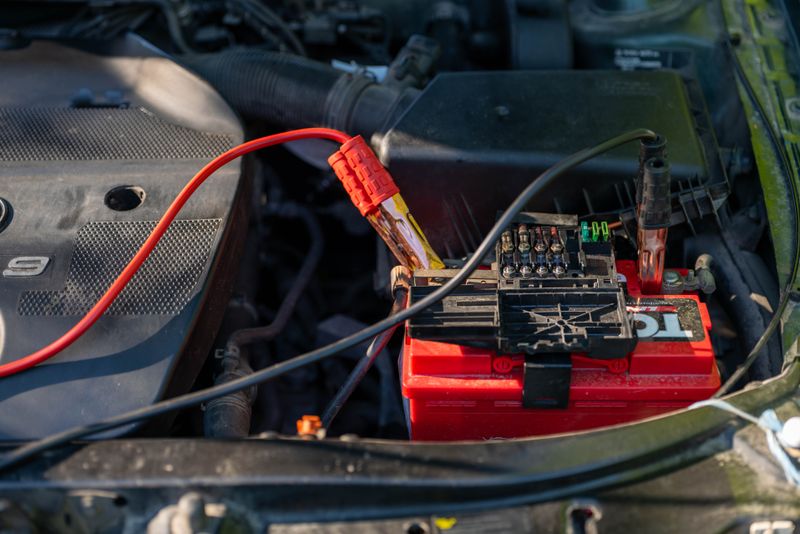
A dead battery on a job site costs far more than just the price of a new battery. When an excavator, bulldozer, or crane won’t start, you lose a machine, delay a crew, and potentially blow a deadline. In cold weather, battery failures spike — and they almost always happen at the worst possible time.
The good news is that most heavy equipment battery failures are preventable. Proper maintenance, regular testing, and smart charging practices can double or triple battery life. This guide covers everything you need to know — from the basics of lead-acid chemistry to modern AGM systems and the first wave of lithium batteries entering the heavy equipment market.
Understanding Heavy Equipment Battery Types
Flooded Lead-Acid (FLA)
The most common battery type in conventional diesel-powered heavy equipment. Flooded lead-acid batteries contain liquid electrolyte (a dilute sulfuric acid solution) between lead plates. They are inexpensive, proven, and widely available.
Downsides: Require periodic electrolyte top-offs with distilled water, can spill acid if tipped, and off-gas hydrogen during charging (ventilation required). Sensitive to vibration over time.
Common applications: Excavators, bulldozers, backhoes, cranes, motor graders — essentially any machine not specifically designed for sealed battery service.
Absorbed Glass Mat (AGM)
AGM batteries use a fiberglass mat to hold the electrolyte in place rather than letting it pool freely. The result is a maintenance-free, spill-proof battery that handles vibration and deep discharge better than flooded units.
Advantages: No water top-off required, sealed (no off-gassing), higher cold cranking amps (CCA) for the size, longer cycle life, better recovery from deep discharge.
Downsides: Higher initial cost (typically 2–3x flooded). Sensitive to overcharging — a standard flooded battery charger can damage an AGM battery if not adjusted.
Common applications: Premium OEM installations on newer Komatsu, CAT, and Volvo machines; cold-climate fleets; machines that sit for extended periods.
Lithium Iron Phosphate (LiFePO4)
Lithium batteries are beginning to appear in new electric and hybrid heavy equipment (CAT 308 CR, Volvo ECR18 Electric, Bobcat TL26.60). In conventional diesel machines, aftermarket lithium starting batteries are available as drop-in replacements.
Advantages: Very long cycle life (2,000–5,000 cycles vs. 300–500 for lead-acid), lighter weight, faster charging, no off-gassing, performs well in cold weather.
Downsides: Expensive (4–8x the cost of flooded). Requires a compatible BMS (Battery Management System) — incompatible chargers can damage or destroy a lithium pack. Not all machines support lithium drop-in replacements without electrical system modification.
Battery Sizing: Getting It Right
Heavy equipment batteries are sized by Cold Cranking Amps (CCA) and Reserve Capacity (RC). Always replace with a battery that meets or exceeds OEM specifications — never downgrade to save money.
Cold Cranking Amps: The number of amps a battery can deliver at 0°F for 30 seconds while maintaining at least 7.2 volts. Diesel engines have high compression and require substantial cranking power, especially in cold weather. A large excavator may require 1,000+ CCA.
Reserve Capacity: The number of minutes a fully charged battery can supply 25 amps at 80°F before dropping below 10.5 volts. This matters for machines that idle with accessories running.
Group size (BCI group number) refers to physical dimensions and terminal placement. Always verify physical fit before ordering.
Pre-Season and Pre-Shift Battery Inspection
Build these checks into your maintenance routine:
Visual Inspection
- Case condition: Look for cracks, bulging, or swelling. A bulging case indicates overcharging or internal failure — replace immediately.
- Terminal corrosion: White or blue powdery buildup on terminals increases resistance and reduces starting power. Clean immediately (see below).
- Cable condition: Check for frayed insulation, loose connections, and corrosion at both battery ends and ground points.
- Hold-down hardware: The battery must be firmly secured. Vibration is the leading cause of plate damage in mobile equipment.
Electrolyte Level (Flooded Batteries Only)
Remove the vent caps and check that the electrolyte covers the plates by approximately 1/2 inch. Top off with distilled water only — never tap water (mineral deposits degrade the battery) and never add acid unless you’re reconstituting a completely dry cell (which requires specific training).
Check electrolyte after charging, not before, since charging expands the fluid slightly. Do not overfill — expansion room is required.
Testing Battery Health
Hydrometer Test (Flooded Batteries)
A battery hydrometer measures specific gravity of the electrolyte — a proxy for charge state and battery health. A fully charged cell reads 1.265–1.280 SG at 77°F. Readings below 1.200 in a charged battery suggest a weak or sulfated cell.
Compare readings across all cells. A variation of more than 0.050 SG between cells indicates a failing cell — replace the battery.
Voltage Test
Use a digital voltmeter to measure open-circuit voltage with the battery at rest (no charging, no load) for at least 2 hours:
| Open-Circuit Voltage | State of Charge |
|---|---|
| 12.6V or higher | 100% charged |
| 12.4V | ~75% charged |
| 12.2V | ~50% charged |
| 12.0V | ~25% charged |
| Below 12.0V | Discharged / potentially damaged |
A battery that reads 12.6V at rest but drops dramatically under load is failing internally — voltage alone doesn’t tell the full story.
Load Test
A battery load tester applies a controlled current draw (typically half the CCA rating) and measures voltage under load. A healthy battery should maintain above 9.6V for 15 seconds during a load test at room temperature. If voltage drops below this threshold, replace the battery.
Load testers range from basic analog units (~$30–$50) to digital conductance testers ($150–$400) that provide more accurate assessments without fully discharging the battery. The NOCO Genius Pro and Midtronics MDX series are popular professional options.
Cleaning Corroded Terminals
Terminal corrosion increases electrical resistance, reduces cranking power, and can damage battery cables. Clean terminals whenever you see white, blue, or green deposits.
Required tools:
- Safety glasses and chemical-resistant gloves
- Baking soda (bicarbonate of soda)
- Water
- Wire brush or terminal cleaning tool
- Petroleum jelly or battery terminal grease
Steps:
- Disconnect the negative (−) cable first, then the positive (+) cable.
- Mix a tablespoon of baking soda in a cup of water.
- Apply the solution to terminals and cable ends with a brush — it will fizz as it neutralizes the acid deposits.
- Scrub with a wire brush or battery terminal cleaning tool until metal surfaces are bright.
- Rinse with clean water and dry completely.
- Apply a light coat of petroleum jelly or dedicated terminal protector spray to both terminals before reconnecting.
- Reconnect positive (+) first, then negative (−).
Charging Best Practices
Match the Charger to the Battery Type
- Flooded lead-acid: Standard constant-current/constant-voltage charger; typical 2-stage profile (bulk + absorption)
- AGM: Use a charger with a specific AGM mode or one with adjustable charge voltage (14.4–14.6V for AGM vs. 14.7–15.0V for flooded). Overcharging an AGM accelerates plate damage.
- Lithium: Requires a lithium-compatible charger with the correct charge profile. Never charge lithium batteries with a standard lead-acid charger.
Avoid Fast Charging When Possible
Slow, low-amp charging (trickle or smart maintenance charging) is gentler on plates and extends battery life. Fast charging generates heat, which accelerates plate corrosion and separator degradation.
Don’t Charge a Frozen Battery
If a battery is completely discharged in freezing temperatures, the electrolyte can freeze and crack the case. Never charge a frozen battery — bring it to room temperature first. A fully charged battery resists freezing to approximately −75°F; a discharged battery can freeze at 20°F.
Smart Chargers and Battery Maintainers
For equipment that sits for extended periods (seasonal machines, standby equipment), use a smart battery maintainer that monitors voltage and applies a float charge only when needed. The NOCO Genius 10, Battery Tender Plus, and Optimate 6 are reliable options that won’t overcharge.
Cold Weather Battery Performance
Cold temperatures dramatically reduce battery capacity and increase the cranking demands of cold diesel engines. At 0°F, a lead-acid battery delivers only about 40% of its rated capacity — while the engine may need 2–3 times its normal cranking power due to thickened oil and cold-start enrichment.
Cold-Weather Strategies
Block heaters: Engine block heaters maintain coolant temperature overnight, dramatically reducing cold-start cranking demands. This is the single most effective way to extend battery life in cold climates.
Battery blankets: Insulated battery blankets maintain battery temperature and significantly improve cold-morning performance. Available from Kats Heaters, Kat’s Enterprises, and OEM suppliers for most equipment brands.
Dual battery systems: Many OEM machines come with dual-battery configurations for cold-start assist. If your machine has a single battery and struggles in cold weather, a dual-battery upgrade kit may be available from your dealer.
Boost packs: Keep a commercial-grade jump starter or boost pack on the job site for emergency starts. The NOCO Boost Pro GB150 or Schumacher DSR131 are rated for diesel engines with high CCA demands.
Recognizing Battery Failure Modes
| Symptom | Likely Cause |
|---|---|
| Slow or labored cranking | Low charge, weak battery, or cable corrosion |
| Battery won’t hold charge | Sulfation, failed cell, or internal short |
| Frequent dead batteries | Parasitic drain (electrical fault) or alternator failure |
| Battery overheats during charging | Shorted cell, overcharge, or wrong charger type |
| Electrolyte boiling | Overcharging |
| Swollen or cracked case | Overcharging, internal short, or freezing damage |
| Sulfur (rotten egg) smell | Overcharging or failed cell |
Battery Replacement: When to Pull the Trigger
Most heavy equipment batteries last 3–5 years under normal conditions. In severe-duty applications (high vibration, extreme temperatures, frequent deep discharges), expect 2–3 years.
Replace the battery when:
- Load test fails (voltage drops below 9.6V under load)
- Hydrometer shows a bad cell (SG variation > 0.050)
- The battery requires jump-starting more than once per week
- The case is cracked, swollen, or leaking
- The battery is more than 5 years old and showing symptoms
Pro tip: Replace batteries before they fail, not after. A failure on the job site costs far more in downtime and logistics than the price of a proactive replacement. Build battery replacement into your scheduled maintenance intervals.
Recommended Products
For testing and maintenance:
- Clore Automotive SOLAR BA9 Digital Battery Tester — accurate conductance testing, works on 6V and 12V systems including AGM
- OTC 3182 Battery Hydrometer — temperature-compensating, clear float with SG scale
- WD-40 Specialist Battery Terminal Protector — spray-on corrosion prevention, red/green color for polarity
For charging:
- NOCO Genius 10 Smart Charger — 10A, charges and maintains 12V lead-acid and lithium batteries, repair mode for sulfated batteries
- Battery Tender Plus 12V/1.25A — reliable float charger for seasonal storage; powers down automatically at full charge
For cold weather:
- Kats 17100 Battery Blanket — fits most group 31 and 4D batteries common in heavy equipment
- NOCO Boost Pro GB150 — 3,000A diesel-grade jump starter, handles up to 10L diesel engines
Bottom Line
Battery maintenance is one of the cheapest, highest-return maintenance activities in a heavy equipment fleet. A $15 hydrometer, a $60 smart charger, and 10 minutes of inspection per battery can prevent a $400+ battery replacement — and more importantly, prevent the downtime and cost of a failed start on a live job site.
Make battery checks a formal part of your pre-season and pre-shift routines, match your charging equipment to your battery type, and never ignore early warning signs. The battery that starts reliably in January on a frozen construction site is the one that’s been cared for all year.

Ironworks Insider Editorial Team
Independent trade-focused editorial team