Heavy Equipment Operator Salary: What You Can Earn in 2025
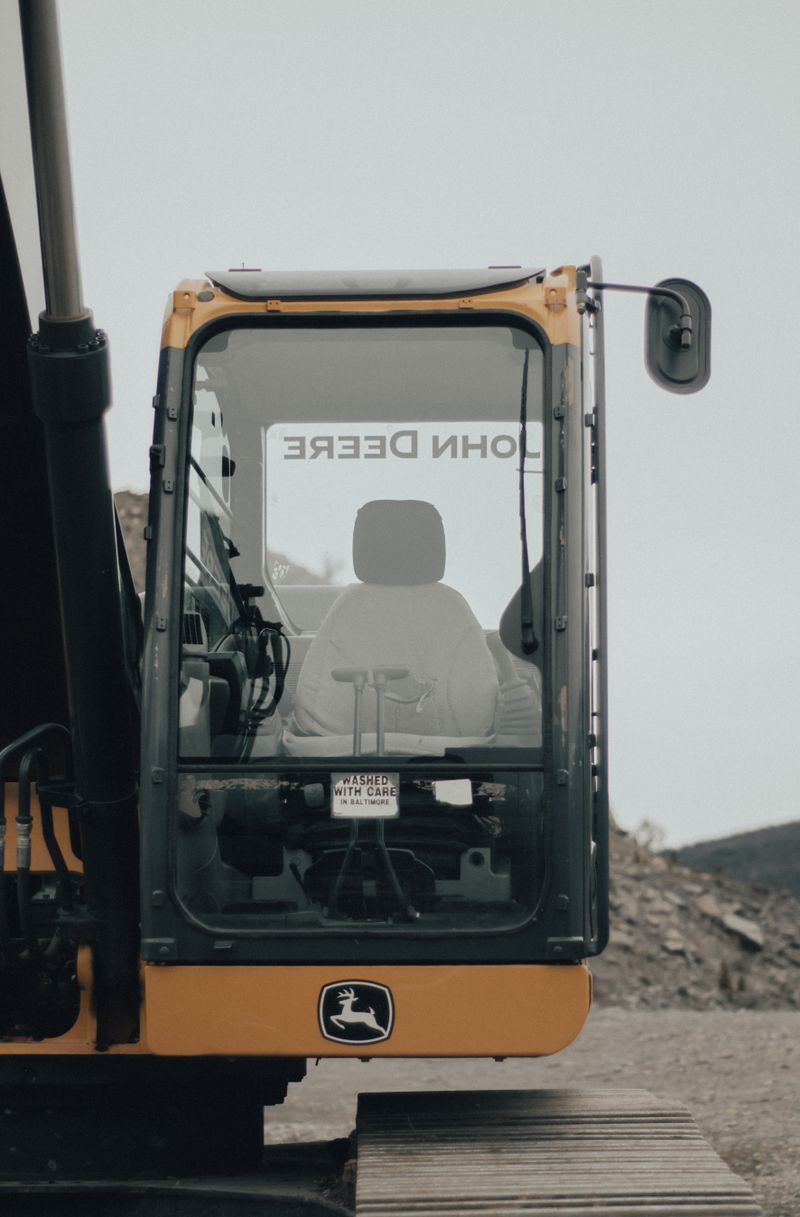
Heavy equipment operators run some of the most valuable machinery on any job site — machines that cost $100,000 to $500,000 or more and generate thousands of dollars of production value every hour they run. It’s physically demanding, technically skilled work that keeps infrastructure moving and construction progressing. So what does it pay?
The answer depends significantly on specialty, geography, experience, and whether you’re working union or non-union. This guide breaks down the real numbers — and what you can do to move up the scale.
National Salary Overview (2024–2025)
According to the Bureau of Labor Statistics (BLS) Occupational Employment Statistics for SOC code 53-7021 (Construction Equipment Operators), the national wage data for the United States:
| Percentile | Annual Salary | Hourly Rate |
|---|---|---|
| 10th percentile | ~$38,000 | ~$18.25 |
| 25th percentile | ~$48,000 | ~$23.00 |
| Median (50th) | ~$61,000 | ~$29.30 |
| 75th percentile | ~$79,000 | ~$38.00 |
| 90th percentile | ~$98,000 | ~$47.00 |
The median annual salary of approximately $61,000 positions heavy equipment operation solidly in the middle class — comparable to many skilled trades, and above the national median income for full-time workers. The upper range of $98,000+ reflects experienced operators in high-demand specialties and markets.
Important note: These are wage numbers only. Union operators often receive additional compensation through pension contributions, health benefits, and annuity fund contributions that can add $10,000–$25,000+ annually in total compensation value above the base wage.
Salary by Specialty
Not all heavy equipment operators are paid the same. Specialty significantly affects pay:
Crane Operators
Median annual wage: $78,000–$100,000+
Crane operators sit at the top of the heavy equipment pay scale. Operating tower cranes, crawler cranes, and mobile all-terrain cranes requires specialized certification, significant training, and carries high liability. In major urban markets with strong union presence, crane operators earning $120,000–$150,000 annually in total compensation are not unusual.
Required certifications: NCCCO (National Commission for the Certification of Crane Operators) mobile crane certification is the national standard. Tower crane requires a separate NCCCO specialty certification. Some states have additional licensing requirements.
Piledriver Operators
Median annual wage: $72,000–$95,000
Piledriver operators are a specialty classification in many union halls (IUOE Local work). This is particularly strong in coastal markets (Seattle, New York, New Orleans) where marine construction and foundation work is common.
Excavator Operators (Production Grade)
Median annual wage: $55,000–$85,000
Experienced excavator operators on large civil and infrastructure projects — highway, bridge, mass excavation — earn at the upper end of this range. Entry-level operators on smaller sites start in the $40,000–$50,000 range.
Bulldozer / Dozer Operators
Median annual wage: $52,000–$78,000
Dozer operators are in strong demand for site development, land clearing, and mining operations. Operators skilled in GPS-guided machine control command premium wages.
Grader Operators
Median annual wage: $55,000–$80,000
Motor grader operation is a high-skill specialty. Precision road work and fine grading operators who can work to grade control specs are consistently in demand and earn at the upper end of the range.
Paving and Asphalt Equipment Operators
Median annual wage: $48,000–$72,000
Asphalt paver operators and screed operators work in a specialized niche tied strongly to state DOT contract work. In northern states, this is highly seasonal work, compressing annual hours.
Skid Steer / Compact Equipment Operators
Median annual wage: $38,000–$55,000
The most common entry point for new operators. Skid steer and compact equipment operation is widely available, but also the most competitive and lowest-paid specialty. Operators who start here typically advance to larger machines over time.
Salary by Region
Geography has a dramatic effect on heavy equipment operator wages. The highest-paying states combine high construction activity with strong union density and high cost of living.
Highest-Paying States (Annual Median)
| State | Median Annual Wage | Notes |
|---|---|---|
| Alaska | $90,000–$110,000 | Remote project premium, strong IUOE presence |
| Hawaii | $85,000–$105,000 | High cost of living, strong union density |
| Washington | $78,000–$95,000 | Major infrastructure and construction market |
| New York | $75,000–$100,000+ | NYC metro especially strong for crane/pile work |
| Massachusetts | $72,000–$90,000 | Boston market drives demand |
| Nevada | $68,000–$85,000 | Las Vegas construction and mining |
| California | $65,000–$90,000 | Wide variation; Bay Area and LA at the top |
| Illinois | $65,000–$88,000 | Chicago metro; strong IUOE Local 150 presence |
Mid-Range States (Annual Median)
Colorado, Texas, Minnesota, Oregon, Michigan, and Pennsylvania typically range from $55,000–$75,000 median for experienced operators, with urban markets (Denver, Houston, Minneapolis, Portland) at the top of those ranges.
Lower-Paying States (Annual Median)
Mississippi, West Virginia, Arkansas, and parts of the rural South and Appalachia range from $38,000–$52,000 median. Lower wages reflect lower cost of living, less union density, and lower construction volumes compared to major urban markets.
Union vs. Non-Union: The Compensation Difference
The impact of union membership on operator compensation is significant and well-documented.
IUOE (International Union of Operating Engineers)
The IUOE is the primary union for heavy equipment operators in the United States and Canada. Local agreements vary significantly, but union operator packages typically include:
Wage premium: Union wages in major markets typically run 15–35% above the non-union median for comparable work. In the strongest markets (NYC, Chicago, LA), the premium can be even higher.
Health insurance: Union health and welfare fund contributions provide medical, dental, and vision coverage for the operator and often the family. Estimated value: $10,000–$18,000 per year in avoided premium costs.
Pension: Most IUOE locals have defined benefit pension plans funded by employer contributions. After 20–30 years, operators can retire with guaranteed monthly income. This is increasingly rare in the non-union sector.
Annuity: Many agreements include employer contributions to an annuity fund (a portable defined contribution account) in addition to the traditional pension.
Training: IUOE training centers (IUOE National Training Fund) provide subsidized apprenticeship and upgrading training for union members, often including simulator training on major equipment brands.
Total Compensation Example (Chicago market, experienced excavator operator):
- Base hourly wage: $52/hr ($108,000 at 2,080 hours)
- Health/welfare fund contribution: $12.50/hr employer paid ($26,000)
- Pension contribution: $8.50/hr employer paid ($17,680)
- Annuity contribution: $6.00/hr employer paid ($12,480)
- Total package: ~$164,000
The base wage alone significantly understates the total value of union operator employment.
Non-Union Employment
Non-union operators have more flexibility in employer choice and geographic mobility, but typically see lower total compensation. Benefits vary widely by employer — some large contractors offer strong non-union benefits packages; many smaller contractors offer minimal benefits.
Non-union operators can earn at the high end of the market on large industrial and energy projects (pipeline, LNG, power generation) where specialty skills command premium rates regardless of union affiliation.
Experience and Career Progression
Experience has a direct, predictable effect on wages:
| Career Stage | Typical Annual Wage Range | Notes |
|---|---|---|
| Apprentice / Entry (0–2 years) | $35,000–$50,000 | Often starting on smaller machines |
| Journeyman (3–7 years) | $55,000–$75,000 | Multi-machine capable; increasingly independent |
| Experienced (8–15 years) | $65,000–$90,000 | High-skill specialties, supervisory eligibility |
| Senior / Master (15+ years) | $80,000–$120,000+ | Crane operators, specialty certifications, superintendent-track |
Skills That Accelerate Pay
Grade control proficiency (GPS/machine control): Operators who can set up and work with 2D/3D grade control systems (Trimble, Topcon, Leica) are in significantly higher demand. This skill gap is still wide — many experienced operators haven’t learned it, giving those who have a competitive advantage.
Multiple machine certifications: An operator who runs an excavator, a crane, a grader, and a piledriver is far more valuable than a single-machine specialist. Crane certification (NCCCO) in particular unlocks some of the highest-paying work available.
Night/overtime availability: Infrastructure projects — highway work, transit, utilities — frequently require night shifts and extended overtime. Operators willing to work these schedules earn substantially more per year.
CDL Class A: While not always required for equipment operation itself, a CDL enables operators to also transport their own equipment, expand job opportunities, and earn additional income.
How to Become a Heavy Equipment Operator
IUOE Apprenticeship
The most structured path to becoming a union operator. IUOE apprenticeships typically run 3–4 years, combining paid on-the-job training with classroom instruction. Apprentices start at 60–70% of journey-level pay and step up each year. Contact your local IUOE hall or visit iuoe.org for program information.
Requirements: Typically 18+ years of age, valid driver’s license, physical fitness requirements, and passing a drug screen. Some locals require a high school diploma or GED.
Trade and Technical Schools
Private heavy equipment operator training programs typically run 4–12 weeks and provide hands-on simulator and field training. National Heavy Equipment Operator School (NHEO), Heavy Equipment College of Technology, and various regional programs offer certificates. These programs provide a foundation but are not substitutes for years of on-the-job experience.
Cost: $5,000–$20,000 depending on program length and equipment included.
Military to Civilian Transition
The U.S. Army (88N/88M, combat engineers) and Navy Seabees train heavy equipment operators as a core MOS. Military equipment operator experience is directly transferable to civilian construction and is highly valued by IUOE halls and major contractors. Veterans often receive advanced standing in apprenticeship programs.
On-the-Job (Non-Union)
Many non-union operators start as laborers or equipment helpers and work their way into equipment operation. This path is slower, pays less initially, and lacks the structured curriculum of an apprenticeship, but it’s a real path for those without direct access to a union hall.
Job Outlook and Long-Term Demand
The BLS projects 5% employment growth for construction equipment operators from 2022–2032 — roughly in line with average for all occupations. However, several factors suggest actual demand may outpace this projection:
Infrastructure investment: The 2021 Infrastructure Investment and Jobs Act allocated over $550 billion in new infrastructure spending — highways, bridges, transit, water systems, broadband. This work is still being programmed and will drive equipment demand for a decade.
Housing shortage: The severe U.S. housing shortage is driving increased residential and mixed-use construction, particularly in Sun Belt and Mountain West markets.
Energy transition: Utility-scale solar, wind, battery storage, and grid upgrades all require significant earthmoving and civil construction.
Workforce gap: The construction industry is facing an acute skilled labor shortage. Equipment operators are not immune — many experienced operators are approaching retirement age. Younger workers entering the trade have significant opportunity for rapid advancement.
Bottom Line
Heavy equipment operation is a skilled trade that provides solid middle-class wages across much of the country, with genuinely strong earning potential at the top of the specialty and experience range. Union operators in major markets who develop crane or specialty machine skills can build total compensation packages well above $100,000. Non-union operators with GPS/grade control skills and multi-machine versatility are also earning competitively in the current labor market.
The path up is clear: start on smaller machines, develop multi-machine skills, pursue formal certification (NCCCO for cranes is the highest-leverage single credential), and consider union apprenticeship if you have access to a program. The operators who commit to building their skill set and certification portfolio consistently outpace the averages — in pay, in career stability, and in the quality of work they get called for.

Ironworks Insider Editorial Team
Independent trade-focused editorial team