John Deere Backhoe Models Compared: 310SL, 410L, and 710L
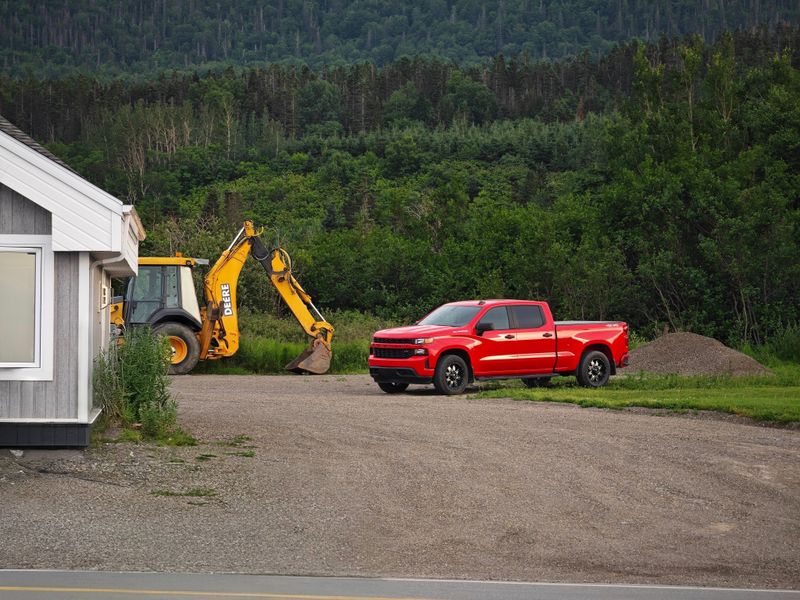
John Deere’s backhoe loader lineup spans from compact utility machines to large infrastructure-class excavators-in-disguise. The 310SL, 410L, and 710L represent three distinct tiers in that lineup — compact utility, mid-size workhorse, and large-frame production machine — and each one is designed for a specific range of work that the others handle less efficiently.
If you’re evaluating John Deere backhoe models for purchase, rental, or fleet specification, this comparison breaks down everything that distinguishes the three machines: dig depth, loader capacity, engine output, transmission options, technology integration, cab comfort, and the price tier each occupies. We finish with a detailed comparison table and a clear recommendation framework.
Why the Right Backhoe Size Matters
Buying or specifying the wrong-sized backhoe loader creates inefficiency in every direction. An undersized machine struggles on deep utilities or large bucket loads, running the engine at constant high load and slowing production. An oversized machine on a residential site has poor maneuverability, higher fuel costs, higher transport costs, and more difficulty on narrow access routes.
John Deere has engineered each of these three machines to hit a specific productivity and versatility sweet spot. Understanding those sweet spots is the key to matching the machine to your work.
John Deere 310SL: The Compact Utility Workhorse
Overview
The 310SL is John Deere’s entry-level backhoe loader aimed at utility contractors, municipalities, landscape companies, and residential construction specialists. The “SL” designation indicates it is a side-leveling machine — the rear axle has self-leveling capability to maintain level operation on sloped terrain.
The 310SL is built on the established 310 platform, which has been in production in various iterations since the 1970s. It’s a proven, widely available machine with an enormous parts and service network.
Engine and Horsepower
The current 310SL is powered by a John Deere PowerTech 4.5L diesel engine producing approximately 93 horsepower. This puts it in the standard compact backhoe class — enough power for utility trenching, residential site work, and light commercial grading, but not a machine you want fighting with heavy clay or large rock.
Tier 4 Final emissions compliance is standard, with diesel exhaust fluid (DEF) required.
Dig Depth
The 310SL offers a maximum dig depth of approximately 14 feet (with a standard stick). An optional extendahoe (extendable stick) adds reach and can push maximum dig depth to approximately 17 feet — a significant advantage for deep utility work without stepping up to a larger machine.
At full reach without the extendahoe, the 310SL covers the majority of residential and light commercial utility trenching applications — water, sewer, gas, and electrical conduit all typically fall within 6–12 feet of depth.
Loader Capacity
The 310SL’s front loader has a rated bucket capacity of approximately 1.0–1.1 cubic yards and a loader breakout force of approximately 12,000 lbs. These numbers are sufficient for moving soil, gravel, and construction debris on light to medium-duty sites.
The loader lift height is approximately 11 feet to the pivot point — adequate for loading standard dump trucks but not optimal for loading tall semi-trailers.
Transmission
The 310SL is available with PowerShift (electrohydraulic automatic) transmission — a major efficiency advantage over older torque converter designs. The PowerShift allows smooth gear changes without decelerating, keeping the operator focused on the work rather than gear management.
Technology Features
- JDLink telematics as standard equipment — remote hour tracking, location monitoring, fault code alerts, and geofence notifications accessible via desktop and mobile app
- Monitor with diagnostic readout — operators can view machine health parameters and fault codes without specialized tools
- Optional rear-view camera — improves situational awareness when backing up
- Grade Pro bucket level indicator — a simple electronic indicator showing bucket angle for consistent grading
Cab Comfort
The 310SL cab is competent for a compact machine. Key features:
- Pressurized cab with HVAC
- Suspension seat (air ride optional)
- Tilting/telescoping steering column
- Joystick loader controls (electrohydraulic)
- Standard joystick or pilot-operated backhoe controls depending on configuration
Noise levels are reasonable but slightly higher than the 410L or 710L due to the smaller cab size and less sound dampening.
Best Use Cases
- Residential utilities — water, sewer, gas laterals up to 12 feet deep
- Landscaping and land development — site prep, grading, irrigation
- Municipal maintenance — road repair, sign installation, catch basin work
- Tight access sites — the 310SL’s smaller footprint fits through residential yard gates and narrow easements
- Budget-conscious contractors — lower acquisition and operating costs than the 410L or 710L
John Deere 410L: The Mid-Size Workhorse
Overview
The 410L is John Deere’s mid-size backhoe, positioned between the compact 310SL and the large-frame 710L. It is the most popular configuration for commercial utility contractors, general earthmoving specialists, and contractors who need more dig depth and loader capacity than the 310SL offers without going full large-frame.
The 410L is often described as the “professional contractor’s backhoe” — it has the productivity to handle most commercial work and the maneuverability to access the majority of job sites.
Engine and Horsepower
The 410L runs a John Deere PowerTech 4.5L diesel at approximately 107 horsepower — a meaningful step up from the 310SL’s 93 HP. That additional power shows up in loader push-out force, faster cycle times in heavy material, and the ability to sustain productivity in dense clay or rocky soil that loads the hydraulic system.
Dig Depth
The 410L offers maximum dig depths of approximately 15.5 feet standard or 18 feet with the optional extendahoe. This opens the machine to deeper utility work — most commercial water mains, storm sewers, and gas transmission lines fall within this depth range.
The additional reach compared to the 310SL also means less machine repositioning per trench run, improving cycle times on longer trenches.
Loader Capacity
The 410L’s loader steps up significantly:
- Rated bucket capacity: Approximately 1.3–1.4 cubic yards
- Loader breakout force: Approximately 14,000 lbs
- Maximum lift height: Approximately 12.5 feet to pivot
The higher lift height is a practical advantage for loading semi-trailers and elevated hoppers that the 310SL cannot reach effectively.
Transmission
Like the 310SL, the 410L uses PowerShift transmission — the same smooth, operator-friendly electrohydraulic shifting. The 410L benefits from a heavier transmission rated for the increased horsepower and loader forces.
Technology Features
The 410L adds several technology upgrades over the 310SL:
- JDLink Ultimate telematics package (enhanced data logging, remote diagnostics, dealer connectivity)
- CommandView cab with larger display and expanded information readout
- Load-sensing hydraulic system — automatically adjusts pump output to match demand, improving fuel efficiency versus fixed-displacement systems
- Optional Auto-Idle — reduces engine speed when no hydraulic activity is detected, cutting fuel consumption by 10–20% on a typical shift
- Optional Grade Pro with more sophisticated display
Cab Comfort
The 410L cab represents a notable improvement over the 310SL:
- Standard air-ride suspension seat
- Quieter cab with improved sound dampening
- Larger glass area for improved visibility
- Optional heated seat and premium HVAC
- Ergonomically positioned joysticks and controls
Operators who switch from the 310SL to the 410L consistently note the improved cab quality as a significant day-to-day improvement on long shifts.
Best Use Cases
- Commercial utility contracting — sewer, water main, gas distribution, electrical duct bank
- Commercial site preparation — foundation excavation, storm water management
- Highway and municipal projects — drainage work, shoulder repair, medium excavation
- Contractors who load trucks regularly — the higher lift height and bucket capacity make truck-loading more efficient
- Mixed residential and commercial portfolios — the 410L handles both without compromise
John Deere 710L: The Large-Frame Production Machine
Overview
The 710L is the top of John Deere’s backhoe lineup — a large-frame machine that competes with dedicated excavators on deep, high-volume excavation projects. The 710L is not a standard residential or light commercial backhoe; it’s a specialized machine for contractors who need maximum dig depth, heavy loader capacity, and sustained production on demanding projects.
Engine and Horsepower
The 710L is powered by a John Deere PowerTech 6.8L diesel producing approximately 148 horsepower — 60% more power than the 310SL and 38% more than the 410L. That power is necessary because the 710L’s larger hydraulic system, heavier bucket, and greater stick forces demand it.
Fuel consumption is proportionally higher — expect 5–7 gallons per hour at moderate load versus 3–5 for the 310SL.
Dig Depth
The 710L’s maximum dig depth is approximately 18.5 feet standard, with optional configurations pushing beyond 21 feet. This is excavator-class dig depth in a backhoe loader package — capable of reaching most transmission main, storm interceptor, and deep foundation work without switching machine types.
At this depth, the 710L competes with 10–13-ton excavators on pure dig depth while retaining the backhoe loader’s front-end loader and mobility advantages.
Loader Capacity
The 710L delivers large-loader performance:
- Rated bucket capacity: Approximately 1.7–2.0 cubic yards
- Loader breakout force: Approximately 20,000+ lbs
- Maximum lift height: Approximately 13.5+ feet to pivot
These numbers allow the 710L to compete with small wheel loaders on material handling tasks, adding value when a second machine would otherwise be needed on site.
Transmission
The 710L uses an advanced PowerShift with 5 forward and 3 reverse speeds, matched to the high-torque 6.8L engine. The transmission management system includes enhanced clutch modulation for smooth transitions under heavy loader load.
Technology Features
The 710L receives the full range of John Deere technology:
- JDLink Ultimate with full remote diagnostics and dealer connectivity
- Dual-path load-sensing hydraulics — separate circuits for loader and hoe allow simultaneous operations without pressure loss
- Grade Pro Advanced — more sophisticated electronic bucket/blade control
- Optional 2D machine control — grade control capability approaching dedicated GPS-controlled excavators
- Service ADVISOR diagnostic integration — full electronic system access for dealers and authorized technicians
Cab Comfort
The 710L features the most refined cab in the John Deere backhoe range:
- Premium suspension seat as standard
- Enhanced sound insulation (lowest cab noise levels of the three machines)
- Climate-controlled storage
- Premium HVAC with rear vent
- Largest glass area for best-in-class visibility
- Full-color display with advanced diagnostics readout
On long-shift, multi-week commercial projects, the 710L’s cab quality significantly reduces operator fatigue.
Best Use Cases
- Deep utility work — transmission mains, interceptor sewers, large storm drainage
- Foundation excavation for commercial buildings — the high breakout force handles hard material that would bog down a 410L
- Mining and aggregate operations — where sustained high-cycle loading is required
- Contractors who want maximum machine per operator — the 710L’s productivity allows one operator to accomplish what previously required two smaller machines
- Public works and infrastructure projects — designed for the productivity demands of highway and heavy civil work
John Deere 310SL vs. 410L vs. 710L: Comparison Table
| Specification | 310SL | 410L | 710L |
|---|---|---|---|
| Engine | PowerTech 4.5L | PowerTech 4.5L | PowerTech 6.8L |
| Horsepower | ~93 HP | ~107 HP | ~148 HP |
| Max Dig Depth (standard) | ~14 ft | ~15.5 ft | ~18.5 ft |
| Max Dig Depth (extendahoe) | ~17 ft | ~18 ft | ~21+ ft |
| Loader Bucket Capacity | ~1.0–1.1 yd³ | ~1.3–1.4 yd³ | ~1.7–2.0 yd³ |
| Loader Breakout Force | ~12,000 lbs | ~14,000 lbs | ~20,000+ lbs |
| Max Lift Height | ~11 ft | ~12.5 ft | ~13.5 ft |
| Transmission | PowerShift | PowerShift | PowerShift (5F/3R) |
| Telematics | JDLink | JDLink Ultimate | JDLink Ultimate |
| Load-Sensing Hydraulics | No | Yes | Dual-path |
| Operating Weight | ~24,000 lbs | ~27,000–30,000 lbs | ~37,000–40,000 lbs |
| New Price Range (approx.) | $90,000–$120,000 | $120,000–$160,000 | $175,000–$240,000 |
| Best For | Residential/utilities | Commercial/utility | Heavy civil/deep utility |
Specifications are approximate and vary by configuration. Consult John Deere dealer for exact figures on specific configurations.
Technology Feature Deep Dive: JDLink Telematics
JDLink is John Deere’s proprietary telematics platform, and it’s one of the strongest arguments for staying within the Deere ecosystem if you’re building a fleet. Key capabilities include:
- Remote hour and location tracking — accessible via the MyJohnDeere portal or mobile app
- Fault code alerts — email/SMS notification when the machine registers a diagnostic trouble code
- Geofence notifications — alerts when a machine leaves an authorized area (theft prevention)
- Idle time reporting — identify operators or shift patterns with excessive idle, which directly impacts fuel cost
- Maintenance scheduling — automatic reminders based on hours or calendar intervals
- Dealer connectivity — John Deere dealers can access machine data remotely to pre-diagnose issues before sending a technician, reducing diagnostic time and costs
For contractors managing multiple machines across multiple sites, JDLink dramatically reduces the administrative overhead of fleet management.
Choosing the Right Model
Choose the 310SL if:
- Most of your utility work is under 14 feet
- You work primarily on residential lots and tight-access sites
- Budget is a significant constraint
- You need a secondary machine to supplement a larger fleet
- Municipal or light commercial work defines your project mix
Choose the 410L if:
- You regularly dig 12–18 feet for utilities or commercial foundations
- You load trucks as a significant part of your workflow
- You’re a full-time commercial utility contractor
- You want load-sensing hydraulics for fuel efficiency
- You need one machine to handle the widest range of commercial work
Choose the 710L if:
- Deep utility work (18+ feet) is a regular part of your business
- You need excavator-class dig depth with backhoe mobility
- Heavy civil, highway, or infrastructure projects are your market
- Loader capacity matters as much as dig depth
- You can support the higher acquisition cost with sufficient utilization
Recommended Accessories and Operator Gear
- Bucket tooth replacement kit compatible with Deere 410/710 adapters — keep spares on the service truck
- Hydraulic coupler set for quick bucket changes — speeds attachment changes on multi-task sites
- OBD diagnostic reader compatible with John Deere J1939 — for independent fault code reading
- Anti-vibration operator gloves — reduce hand fatigue on long shifts
- Safety beacon/strobe for night or road work — required for highway shoulder operations
Bottom Line
John Deere’s backhoe lineup covers three clearly distinct productivity tiers. The 310SL is the right-sized machine for residential and light utility work where access and budget are primary constraints. The 410L is the professional contractor’s machine — capable enough for demanding commercial work while remaining practical on almost any job site. The 710L is a production machine for contractors whose work consistently demands the deepest reach and highest capacity the backhoe category offers.
Match the model to your primary application depth and capacity requirements first. Then evaluate technology options and financing to maximize total value over the machine’s operating life.

Ironworks Insider Editorial Team
Independent trade-focused editorial team