PPE for Heavy Equipment Operators: The Complete Safety Gear Guide
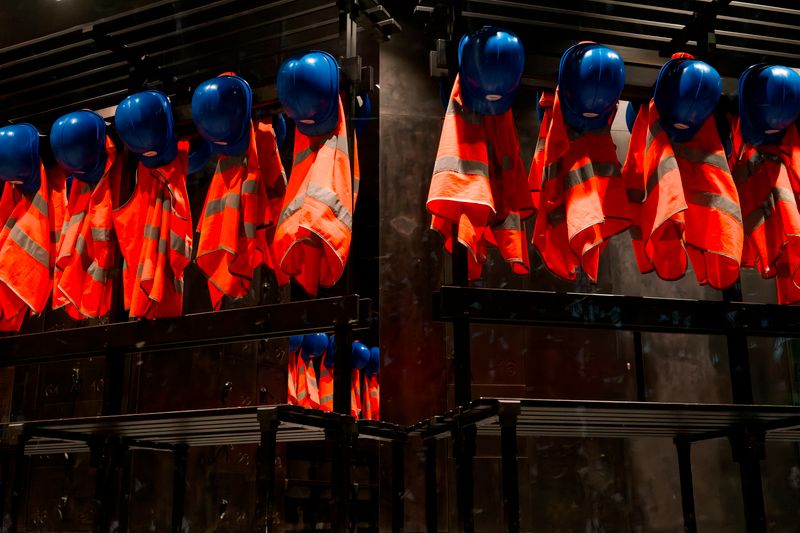
Personal protective equipment is the last line of defense between a construction worker and a life-altering injury. For heavy equipment operators, the hazards are constant and varied: falling objects, high-decibel engine noise, silica dust, UV exposure, struck-by incidents, and the ever-present risk of falls when mounting and dismounting machinery.
OSHA’s construction PPE standards (primarily 29 CFR 1926 Subpart E require employers to assess workplace hazards and provide appropriate PPE at no cost to employees. But knowing what gear is required — and what gear is actually worth wearing — are two different things.
This guide covers every major PPE category for heavy equipment operators, including OSHA requirements, what to look for in each product, and top recommendations across different budget levels.
Hard Hats
OSHA Requirements
OSHA 1926.100 requires head protection wherever there is a danger of head injury from falling objects, bumps, or electrical hazards. For equipment operators, this means hard hats are mandatory any time they are outside the cab and within the work zone.
Understanding Hard Hat Classifications
Hard hats are classified in two ways:
Type (impact protection):
- Type I: Protects only the top of the head. The most common on job sites.
- Type II: Protects the top AND sides of the head. Preferred for most construction work — better side-impact protection.
Class (electrical protection):
- Class E (Electrical): Tested to 20,000 volts. Required near power lines.
- Class G (General): Tested to 2,200 volts. Adequate for most construction.
- Class C (Conductive): No electrical protection. Not suitable near live electrical hazards.
For heavy equipment operators, Type II, Class E hard hats provide the broadest protection.
Top Product Recommendations
MSA Safety V-Gard 500 Vented Hard Hat (Type II, Class E) The MSA V-Gard line has been a job site staple for decades. The 500 model adds improved side-impact protection. Comfortable 4-point Fas-Trac suspension keeps it stable during physical activity. Price range: $30–$50.
Klein Tools 60407 Hard Hat (Type 2, Class E) Klein’s hard hat features a robust suspension system and a wide brim for additional sun and rain protection. The full-brim design is popular with operators who spend time outdoors between machine runs. Price range: $25–$45.
Pyramex Ridgeline XR7 Vented Hard Hat An excellent value Type II, Class E option with a vented design for hot weather and a comfortable ratchet suspension. Available in high-vis colors for added visibility. Price range: $20–$35.
Pro tip: Replace your hard hat every 5 years regardless of appearance, and immediately after any significant impact. UV degradation weakens the shell over time even when it looks fine externally.
High-Visibility Vests and Apparel
OSHA Requirements
OSHA does not specify a single standard for high-vis apparel in general construction (1926), but many state OSHA plans, contract specifications (especially DOT-funded projects), and MUTCD (Manual on Uniform Traffic Control Devices) requirements mandate specific ANSI/ISEA 107 classes. The American National Standard for High-Visibility Safety Apparel (ANSI/ISEA 107) is the governing standard.
Understanding ANSI 107 Classes
Class 1: Minimum visibility. Appropriate only for low-risk environments with low vehicle speeds. Not suitable for most construction.
Class 2: Intermediate visibility. Required for workers near traffic moving at speeds up to 50 mph. The minimum for most road construction projects.
Class 3: Highest visibility. Required for workers near traffic exceeding 50 mph, or in conditions of reduced visibility (rain, fog, night work). Includes full-sleeved garments with retroreflective tape on the torso, arms, and legs.
For heavy equipment operators who frequently step out of cabs onto active job sites, Class 2 minimum is strongly recommended. Class 3 is required near roadways.
Top Product Recommendations
Ergodyne GloWear 8210HL Class 2 High-Vis Safety Vest One of the bestselling vests in the industry. Lightweight mesh construction, multiple pockets for tools and documentation, and ANSI 107 compliant reflective striping. Price range: $10–$18.
Portwest Hi-Vis Class 3 Safety Jacket A full Class 3 jacket with reflective tape on sleeves and torso. Ideal for operators working near traffic or in low-visibility conditions. Includes pockets for a radio or phone. Price range: $35–$60.
PIP ANSI Class 2 Hi-Vis Safety Vest with Pockets Durable woven fabric (not mesh) for cooler weather. Multiple zippered pockets and radio loops. Sized generously to fit over heavy outerwear. Price range: $15–$25.
Safety Boots
OSHA Requirements
OSHA 1926.96 requires safety-toe footwear wherever heavy objects might roll onto or fall on feet. The governing standard for safety footwear is ASTM F2413, which specifies requirements for impact resistance, compression resistance, and optional protections.
Key ASTM F2413 Designations
- I/75 C/75: Impact resistance of 75 ft-lbs; compression resistance of 2,500 lbs. The baseline requirement.
- EH (Electrical Hazard): Provides secondary protection against electrical hazards up to 18,000 volts in dry conditions.
- PR (Puncture Resistant): Midsole protects against nail and puncture hazards. Recommended for demolition and structural work.
- MT (Metatarsal Guard): Protects the top of the foot (metatarsal bones) from impact. Especially important for equipment operators who work around swinging attachments or heavy pipes.
Steel Toe vs. Composite Toe
Steel toe boots provide reliable, time-tested protection and are generally less expensive. The drawback: they conduct cold (uncomfortable in winter) and set off metal detectors.
Composite toe boots use materials like carbon fiber, Kevlar, or fiberglass. They are lighter, do not conduct temperature, and are metal-detector-friendly. They meet the same ASTM impact/compression standards as steel.
For most heavy equipment operators, either works. If you’re working in cold climates or on secure government facilities, composite toe has the edge.
Top Product Recommendations
Timberland PRO Pit Boss Steel Toe Work Boot An industry favorite for durability and comfort. Steel toe, anti-fatigue footbed, slip-resistant outsole. Available in 6” and 8” heights. Price range: $100–$140.
Wolverine Overpass 6” Composite Toe Work Boot Lightweight composite toe, EPX anti-fatigue technology, and a contoured footbed. Full ASTM F2413-18 compliance (I/75, C/75, EH). Price range: $110–$150.
Carhartt Men’s Ground Force 8” Composite Toe Work Boot (with Metatarsal Guard) Offers MT (metatarsal guard) protection — ideal for operators who work around heavy pipe, steel, or around equipment attachments. Waterproof leather, insulated options available. Price range: $150–$185.
Keen Utility Pittsburgh 6” Steel Toe Boot Known for wide toe boxes and exceptional comfort for all-day wear. Asymmetrical steel toe, EH rated. A great choice for operators who struggle to find comfortable work boots. Price range: $130–$160.
Work Gloves
OSHA Requirements
OSHA 1926.28 requires employers to provide hand protection where employees are exposed to hazards — cuts, abrasions, chemical burns, or temperature extremes. For equipment operators handling wire rope, chains, rigging hardware, or tools, gloves are essential.
Types of Gloves for Equipment Operators
Cut-Resistant Gloves: Rated on the ANSI/ISEA 105 scale (A1–A9, with A9 being highest cut resistance). A4 or higher is appropriate for handling wire rope, chain, or sharp steel edges.
Impact-Resistant Gloves: Feature TPR (thermoplastic rubber) or foam padding on the back of the hand and fingers. Critical for operators who use hammers, work with rigging hardware, or handle pipe.
Anti-Vibration Gloves: Designed to reduce vibration transmission to the hands and wrists. Relevant for operators who frequently run jackhammers, plate compactors, or other high-vibration equipment as supplemental tasks.
General-Purpose Work Gloves: Leather or synthetic palm gloves for general gripping, handling equipment, and daily wear in the cab.
Top Product Recommendations
Mechanix Wear M-Pact Gloves The gold standard for impact-resistant work gloves. TPR knuckle protection, padded palm, and excellent dexterity. A near-universal choice on construction sites. Price range: $25–$40.
Ironclad General Utility Work Gloves Durable synthetic leather palm, machine washable, OSHA compliant for general construction. Great all-day wear for operators who handle tools between equipment runs. Price range: $15–$25.
Portwest A745 Cut-Resistant Impact Gloves (A4 Cut Level) Combines cut resistance (ANSI A4) with dorsal impact protection. Ideal when handling rigging chains, wire rope, or steel components. Price range: $20–$35.
Eye Protection
OSHA Requirements
OSHA 1926.102 requires eye and face protection where workers are exposed to flying particles, liquid chemicals, acids, caustic liquids, chemical gases, vapors, or potentially injurious light. Construction generates all of these hazards.
Safety eyewear must meet ANSI Z87.1 standards. Look for the Z87+ marking on the lens and frame — the ”+” indicates compliance with the higher-impact “high velocity” standard.
Safety Glasses vs. Face Shields
Safety glasses provide primary protection against flying debris, dust, and sparks. Wraparound styles with side shields provide the best protection. Polarized options are available for operators working in bright outdoor conditions.
Face shields cover the full face and are required when there is a risk of splashing liquids, grinding sparks, or other hazards that glasses alone won’t stop. Face shields must be used in combination with safety glasses — they are a secondary, not primary, form of protection.
Top Product Recommendations
DeWalt DPG82-21C Safety Glasses (Clear Anti-Fog) Wraparound design, scratch-resistant, anti-fog lens coating. ANSI Z87.1 compliant. Comfortable for all-day wear. Price range: $10–$15.
Uvex Stealth Safety Goggles Indirect-vent sealed goggles for dusty or chemical-spray environments. Anti-fog coating, soft face seal, compatible with prescription eyewear. Price range: $20–$30.
Pyramex Ridgeline Safety Glasses (Polarized) Polarized gray lens significantly reduces glare for operators working in direct sun. Meets ANSI Z87.1. A great upgrade from standard clear safety glasses. Price range: $12–$20.
Hearing Protection
OSHA Requirements
OSHA requires hearing protection under 1926.52 when workers are exposed to noise at or above 90 dBA as an 8-hour time-weighted average (TWA). Heavy equipment routinely generates noise levels well above this threshold:
- Bulldozer: 82–93 dBA at operator
- Excavator: 85–92 dBA
- Compactor: 83–96 dBA
- Loader: 84–93 dBA
At 8 hours, 90 dBA represents the permissible exposure limit. OSHA’s action level is 85 dBA, at which a hearing conservation program must be implemented.
Noise Reduction Rating (NRR)
The NRR indicates how many decibels of noise the protection reduces. However, the EPA requires that the listed NRR be derated for real-world use — a common practice is to divide by 2 for earplugs and subtract 7 for earmuffs.
An earplug with NRR 33 provides approximately (33-7)/2 = 13 dB of effective real-world protection.
Earplugs vs. Earmuffs
Disposable foam earplugs provide excellent NRR (29–33) when inserted correctly, are inexpensive, and are the most common choice for equipment operators inside cabs. The downside: many workers don’t insert them properly, reducing their effectiveness.
Earmuffs are easier to put on correctly and convenient when going in and out of noisy environments frequently. Some models include built-in AM/FM radio or Bluetooth, which operators appreciate for long shifts.
Top Product Recommendations
Howard Leight MAX-1 Foam Earplugs (NRR 33) — Box of 200 The highest-rated disposable earplugs available. Bell-shaped design helps with proper insertion. Excellent value for bulk purchase. Price range: $20–$30 per box of 200.
3M Peltor X4A Over-the-Head Earmuffs (NRR 27) High-attenuation earmuffs with low-profile cups that work with hard hats. Gel cushion option available for long wear. Price range: $25–$40.
3M WorkTunes Connect Earmuffs with Bluetooth (NRR 24) Bluetooth-enabled earmuffs allow phone calls and audio streaming while providing hearing protection. Popular with equipment operators on long shifts. Price range: $60–$80.
Pro tip: For extremely loud environments, combine earplugs and earmuffs for maximum protection — this provides more protection than either alone.
Respiratory Protection
OSHA Requirements
Respiratory hazards on construction sites include crystalline silica (from cutting, grinding, or drilling concrete, stone, and masonry), diesel exhaust, asphalt fumes, and general dust. OSHA’s 1926.1153 (silica in construction) became fully effective in 2017 and is one of the most aggressively enforced standards in recent years.
The permissible exposure limit (PEL) for respirable crystalline silica in construction is 50 micrograms per cubic meter as an 8-hour TWA.
Types of Respirators
Disposable filtering facepieces (dust masks):
- N95: Filters 95% of airborne particles. Adequate for general dust and nuisance contaminants. Not rated for silica in high-exposure operations without additional controls.
- P100: Filters 99.97% of airborne particles, including oil-based aerosols. Recommended where silica exposure is a concern. The “P” designation indicates oil-proof filtration.
Half-face respirators with cartridges: Reusable rubber or silicone facepiece with replaceable cartridge filters. P100 cartridges are appropriate for silica. More comfortable for extended wear.
Top Product Recommendations
3M 8233 N100 Particulate Respirator Disposable N100 (same filtration as P100 for non-oil-based particles) mask with a comfortable design and lower breathing resistance. Price range: $5–$8 per mask.
3M 6500 Series Half Facepiece Reusable Respirator + 2097 P100 Cartridges The 6500 series is lightweight and folds flat for easy storage in a pocket. Pair with 2097 P100/OV combination cartridges for silica plus organic vapor protection. Price range: $25–$35 for respirator; $15–$20 per pair of cartridges.
MSA Safety Advantage 200 LS Half-Mask Respirator A durable, comfortable reusable respirator compatible with a wide range of cartridge types. Good seal across a variety of face shapes. Price range: $20–$35.
Fall Protection for Elevated Work
OSHA Requirements
OSHA requires fall protection at 6 feet or higher in general construction (1926.502). For equipment operators, fall hazards arise most frequently when:
- Climbing onto and off large equipment (excavators, cranes, large dozers)
- Performing maintenance on elevated machine components
- Working on elevated platforms or walkways around job sites
Most modern heavy equipment includes three-point contact handholds and steps as standard safety features. Operators should always use them rather than jumping from cabs.
For maintenance work at height, full-body harnesses connected to anchor points may be required.
Top Product Recommendations
MSA Safety Workman Full Body Harness A reliable, OSHA-compliant harness with multiple attachment points (dorsal D-ring, chest D-ring, hip D-rings). Comfortable padding and quick-connect buckles. Price range: $60–$90.
3M DBI-SALA Delta Vest-Style Harness Industry-leading comfort and durability. Reflective webbing for visibility. Available in multiple sizes. Price range: $80–$120.
Werner A10-L QuikFit Full Body Harness Tool-free adjustment system makes it easy to quickly size the harness to different workers. ANSI-compliant. Price range: $55–$80.
Building Your PPE Kit: A Quick Reference
| PPE Item | Minimum Standard | Recommended Spec |
|---|---|---|
| Hard Hat | Type I, Class G | Type II, Class E |
| High-Vis Vest | ANSI 107 Class 1 | ANSI 107 Class 2 or 3 |
| Safety Boots | ASTM F2413 I/75 C/75 | Add EH, PR, or MT as needed |
| Gloves | ANSI 105 A2 cut | A4+ for rigging/rope work |
| Safety Glasses | ANSI Z87.1 | Z87+ impact rated |
| Hearing Protection | NRR 25+ | NRR 33 foam plugs or combo |
| Respirator | N95 for general dust | P100 for silica exposure |
Final Thoughts
The best PPE for heavy equipment operators is the gear that actually gets worn — which means it needs to fit well, be comfortable enough for a full shift, and be readily available on site. Investing a few extra dollars in quality gloves, a comfortable respirator, or a well-fitting hard hat pays dividends in compliance and, more importantly, in the health and safety of the people doing the work.
Employers: conduct your PPE hazard assessments in writing, provide gear at no cost to employees, and enforce its use. Operators: your PPE is not a suggestion — it’s your last line of defense on days when everything else goes wrong.

Ironworks Insider Editorial Team
Independent trade-focused editorial team