Skid Steer Tire Guide: Pneumatic, Solid, and Foam-Filled Compared
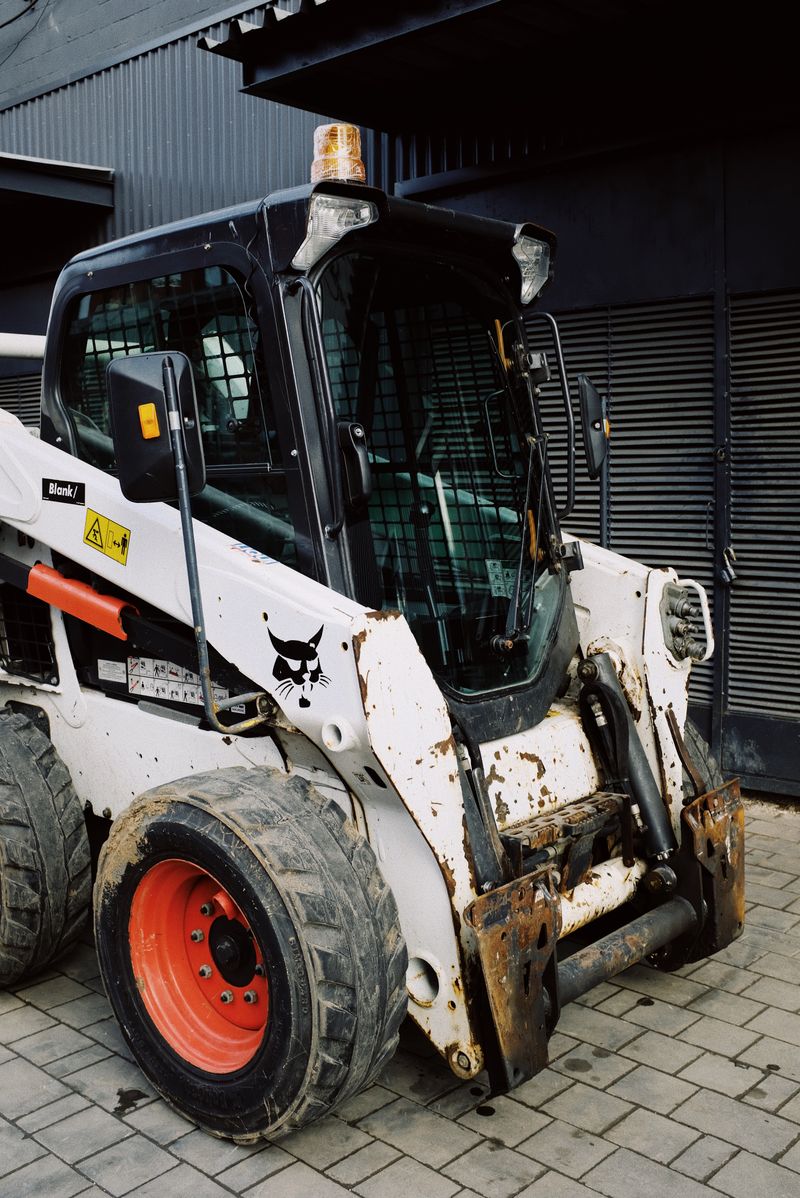
The tires on your skid steer are one of the most consequential decisions you’ll make for the machine’s productivity and operating cost. Choose the wrong tire type for your application and you’ll either tear through a set in months or beat the machine — and your body — to death on rough terrain. Choose right, and the tires become a non-issue for thousands of operating hours.
This guide covers everything you need to know about skid steer tires: the three main types, their trade-offs, tread pattern selection, how to read a tire size, when to replace, and the top brands worth your money.
The Three Main Types of Skid Steer Tires
1. Pneumatic (Air-Filled) Tires
Pneumatic tires are air-filled, just like car or truck tires. They are the standard equipment on most new skid steers from the factory and the baseline against which other tire types are evaluated.
How They Work
A pneumatic tire consists of a rubber outer casing (the tire) and an inner tube or tubeless air chamber. Air pressure — typically 50–80 PSI depending on machine weight and manufacturer recommendation — supports the load. The air cushion absorbs shock and provides a compliant, comfortable ride.
Advantages
- Best ride quality: The air cushion absorbs ground irregularities, reducing operator fatigue and vibration transmitted to the machine frame
- Lowest purchase price: $150–$350 per tire, significantly cheaper than alternatives
- Better traction on soft or uneven surfaces: Pneumatics can be aired down slightly for better flotation on soft ground
- Lightest weight option: Less rotating mass = slightly better fuel efficiency
- Easy to replace: Available from most tire dealers and often in stock locally
Disadvantages
- Puncture risk: Sharp objects — rebar, wire, rocks, nails, glass — can puncture or flat a pneumatic tire; on demolition sites or construction sites with debris, flat tires are a frequent, costly interruption
- Sidewall vulnerability: Skid steer tires are subjected to intense side forces during counter-rotation; pneumatic sidewalls can cut and fail
- Pressure maintenance required: Must be checked daily; under-inflated tires wear unevenly and overheat
- Not suitable for extremely rocky terrain: Rocks can cut the tire casing or cause sidewall blowouts
Best Applications for Pneumatic Tires
- Agricultural work (farms, fields, feedlots with minimal debris)
- Landscaping on prepared sites
- General construction where the site is clean of sharp debris
- Indoor work on smooth concrete
- Operations that prioritize ride comfort and operator endurance
Cost and Lifespan
- Cost per tire: $150–$350
- Expected lifespan: 1,500–3,000 hours under normal conditions (varies widely based on surface type, operating technique, and terrain)
- Replacement set cost: $600–$1,400 for a full set of four
2. Solid Rubber Tires
Solid rubber tires are exactly what they sound like — tires made entirely of dense, compressed rubber with no air cavity. They cannot go flat. Period.
How They Work
Solid tires are press-fit or bolted onto the wheel rim. There is no air chamber — the rubber compound itself carries the load. The rubber is formulated to balance load capacity against durability.
Advantages
- Completely flat-proof: The primary selling point — no punctures, no flats, no downtime for tire changes
- No pressure maintenance: Zero monitoring required
- Excellent durability on hard, abrasive surfaces: Solid tires resist cutting, chunking, and sidewall damage from rocks and debris
- Long service life on appropriate surfaces: Can outlast multiple sets of pneumatic tires in demolition or recycling applications
Disadvantages
- Rough, punishing ride: Without an air cushion, every bump, rock, and irregularity transmits directly to the operator and the machine frame. On rough terrain or over long shifts, this is genuinely fatiguing and contributes to machine wear (loosened bolts, cracked welds)
- Significantly heavier: A set of solid tires adds 500–1,000 lbs to the machine, increasing ground pressure and reducing fuel efficiency
- No traction adjustment: You cannot air down a solid tire for soft-ground work
- Higher cost: $400–$900 per tire
- Hard on turf and finished surfaces: The extra weight and rigidity make solid tires damaging to grass and asphalt
Best Applications for Solid Tires
- Demolition work (broken concrete, rebar, glass, sharp debris)
- Scrap metal yards and recycling facilities
- Roofing material removal
- Any environment where flat tires are a constant problem with pneumatics
- Industrial sites where ride comfort is secondary to uptime
Cost and Lifespan
- Cost per tire: $400–$900
- Expected lifespan: 2,000–4,000 hours on appropriate surfaces; significantly less if used on rough outdoor terrain
- Replacement set cost: $1,600–$3,600 for a full set of four
3. Foam-Filled Tires
Foam-filled tires bridge the gap between pneumatic and solid rubber. They start as standard pneumatic tires, then a two-part polyurethane foam is injected through the valve stem and allowed to cure. The result is a tire that looks and feels like a pneumatic but cannot go flat.
How They Work
A foam-filling service provider (or the operator with a kit) drains the air and injects uncured polyurethane foam. The foam expands to fill the entire interior cavity and cures solid within 24–48 hours. The tire is then remounted and ready for use.
New skid steers can be ordered with factory-installed foam-filled tires, or existing pneumatic tires can be converted.
Advantages
- Puncture-proof: Like solid tires, foam-filled tires cannot go flat
- Better ride than solid tires: The outer rubber casing provides some compliance that solid tires lack; ride quality is noticeably better than solid, though still rougher than pneumatic
- Same tread patterns as pneumatic: Foam fill works with any pneumatic tire, so you keep the tread design advantages of pneumatics
- Lower weight than solid tires: Lighter than equivalent solid rubber by 20–30%
- One-time conversion cost is reasonable: Converting a used tire set adds $50–$120 per tire
Disadvantages
- More expensive than pneumatic new: Foam-filled tires cost $300–$600 per tire from the factory or tire supplier
- Cannot be repaired if the casing is damaged: A badly cut foam-filled tire requires full replacement — you can’t just patch the foam
- Ride quality still rougher than pneumatic: In applications where comfort matters, the advantage over solids is real but not complete
- Heat buildup: Foam-filled tires can run warmer than pneumatics at high speed — less of a concern on most job sites since skid steers rarely travel at top speed for extended periods
Best Applications for Foam-Filled Tires
- Construction sites with occasional debris (not severe demolition)
- Landscaping on sites with roots, rocks, and hidden debris
- General contractors who want puncture protection without the full weight penalty of solid tires
- Rental fleets — foam fill eliminates downtime for flat changes
- Urban work where flat tire risk is present but ride quality still matters
Cost and Lifespan
- Cost per tire (new foam-filled): $300–$600
- Conversion cost (existing pneumatic): $50–$120 per tire for foam fill service
- Expected lifespan: 1,500–2,500 hours depending on surface type
- Replacement set cost: $1,200–$2,400 for a full set of four
Side-by-Side Comparison
| Feature | Pneumatic | Solid Rubber | Foam-Filled |
|---|---|---|---|
| Puncture risk | High | None | None |
| Ride quality | Best | Worst | Moderate |
| Machine vibration | Lowest | Highest | Moderate |
| Weight | Lightest | Heaviest | Moderate |
| Purchase price | Lowest | Highest | Mid |
| Maintenance required | Daily pressure check | None | None |
| Best surface | Clean, soft, mixed | Demolition/debris | Mixed/debris |
| Turf friendliness | Best | Worst | Moderate |
| Lifespan (hours) | 1,500–3,000 | 2,000–4,000 | 1,500–2,500 |
Tread Patterns: Choosing the Right Design
The tread pattern on your skid steer tire affects traction, wear rate, and surface compatibility. There are three main categories:
Smooth / Block Tread
Smooth or lightly patterned tires provide the best performance on hard, flat surfaces — concrete floors, asphalt, smooth warehouse floors. They minimize scrubbing wear on hard surfaces and provide consistent, predictable traction. The trade-off is reduced traction in mud or on loose material.
Best for: Indoor work, concrete, asphalt, finished surfaces
Bar Tread (R4 Style)
Bar tread tires feature large, widely spaced lugs that channel mud and debris away from the contact patch. They provide much better traction in soft, muddy, or loose conditions than smooth or block tread, while still offering reasonable performance on hard surfaces.
Bar tread is the most popular all-purpose pattern and what most new skid steers come with. It represents the best balance across mixed conditions.
Best for: Construction, landscaping, mixed terrain, general-purpose use
Deep Lug / Aggressive Tread
Deep lug tires maximize traction in the worst conditions — deep mud, sand, loose gravel, and soft terrain. The large lugs dig aggressively and self-clean well. The trade-off is faster wear on hard surfaces and more noise/vibration on pavement.
Best for: Agricultural work, muddy sites, extreme soft ground applications
Understanding Skid Steer Tire Sizing
Skid steer tires use a sizing format that is slightly different from automotive tires. Here are the most common examples:
12-16.5 — The most common skid steer tire size
- 12 = Tire section width in inches
- 16.5 = Rim diameter in inches
10-16.5 — Common on smaller machines
- 10 = Section width
- 16.5 = Rim diameter
14-17.5 — Found on larger skid steers and compact track loader configurations
- 14 = Section width
- 17.5 = Rim diameter
Ply rating is also important — skid steer tires are typically rated 10-ply or 12-ply. Higher ply rating = more cut resistance and load capacity.
To confirm the correct tire size for your machine, check:
- The sidewall of your existing tires
- The operator’s manual
- The placard inside the cab (some machines have this)
When to Replace Skid Steer Tires
Do not wait until your tires are completely worn out to think about replacement. Worn tires reduce traction, create stability hazards, and increase the risk of sudden failure. Replace tires when you see:
Tread wear indicators: Most skid steer tires have wear bars molded into the tread. When the tread surface wears down to these bars, it’s time to replace.
Tread depth below 2/32”: At this depth, wet-surface traction is seriously compromised and the tire may be near structural failure.
Sidewall damage: Cuts, bulges, or exposed cords on the sidewall are grounds for immediate replacement. A compromised sidewall can fail suddenly under the loads a skid steer generates.
Chunking: If the tread lugs are chunking off (common on aggressive terrain or with severe counter-rotation), the tire is losing structural integrity and should be replaced.
Bead damage: If you see cracking or separation near where the tire meets the rim, replace immediately.
Uneven wear: Cupping, one-sided wear, or irregular patterns indicate a problem — often improper inflation (too high or too low) or alignment issues. Diagnose the cause before replacing, or the new tires will wear the same way.
Top Skid Steer Tire Brands
Camso (formerly Solideal)
Camso is the dominant brand in the skid steer tire segment and one of the most trusted names in construction tire technology. Their SKS 732 and SKS 753 are among the most popular skid steer tires on the market. Camso offers pneumatic, solid, and foam-fill options across all major size ranges.
Camso SKS 732 Skid Steer Tire — available in 10-16.5 and 12-16.5
Galaxy Tires
Galaxy (manufactured by Alliance Tire Group) offers a well-regarded lineup of agricultural and construction tires. Their Beefy Baby III is a popular skid steer tire known for its aggressive tread pattern and strong sidewall protection. Galaxy tires are often priced slightly below Camso but deliver comparable performance for most applications.
Galaxy Beefy Baby III Skid Steer Tire
Solideal (Camso brand)
Solideal is Camso’s value-tier line, offering solid rubber and foam-filled tires at competitive price points. The Solideal SKS 732 solid tire is widely used in demolition and recycling operations.
Titan Tires
Titan is a well-known North American brand primarily serving agricultural applications but with a growing presence in construction. Their Titan Hi-Traction line offers good value for budget-conscious buyers who need dependable performance without premium pricing.
BKT (Balkrishna Industries)
BKT has rapidly expanded from India into the global construction tire market and now offers competitive pricing on skid steer tires with solid quality. They are a popular option for operators looking for OEM-quality tires at independent dealer pricing.
Maintenance Tips to Maximize Tire Life
Check pressure daily (pneumatic tires). Under-inflated tires flex excessively, generate heat, and wear the sidewalls prematurely. Over-inflated tires reduce contact patch area and cause center tread wear. Check with a quality gauge.
Recommended: JACO ElitePro Digital Tire Pressure Gauge — accurate to ±0.5 PSI
Rotate tires periodically. Front tires typically wear faster due to digging forces during forward travel. Rotating front-to-rear every 500 hours can even out wear significantly.
Minimize counter-rotation on hard surfaces. Counter-rotating (spinning in place) generates intense scrubbing forces that rapidly wear the tire’s tread. Use three-point turns when possible on asphalt and concrete.
Inspect after every shift. Quick visual inspection catches nails, embedded wire, and cuts before they become blow-outs.
Clean tires after muddy work. Mud left in the tread generates heat during subsequent use and can cause uneven wear. A pressure wash takes 5 minutes.
Store machines on a flat, clean surface. Avoid storing tires in direct sunlight or near chemicals that degrade rubber compounds.
Tire sealant for pneumatics: Products like Slime Pro-Series Tire Sealant can be added to pneumatic tires to self-seal small punctures. Not a substitute for foam fill or solid tires in high-debris environments, but useful for moderate-risk sites.
Making the Final Decision
The right tire comes down to your most common working environment:
Choose pneumatic if: You work on clean, mixed, or soft terrain and value ride quality, fuel efficiency, and the lowest upfront cost. Be prepared to manage flat tires if debris is present.
Choose solid rubber if: You work exclusively in high-debris environments (demolition, recycling, roofing) where flat tires are a constant problem and ride quality is secondary to zero-downtime operation.
Choose foam-filled if: You work in mixed or moderately debris-laden environments where you want flat protection without the full weight and ride penalty of solid tires. This is the best all-around option for most general contractors.
Many operators maintain multiple sets of tires for different job types — pneumatics for clean site work and solid or foam-filled for demolition or debris-heavy jobs. The machine swap takes less than an hour with the right equipment, and the performance optimization is worth it when you’re billing hours.

Ironworks Insider Editorial Team
Independent trade-focused editorial team