Heavy Equipment Telematics and Fleet Management: What You Need to Know
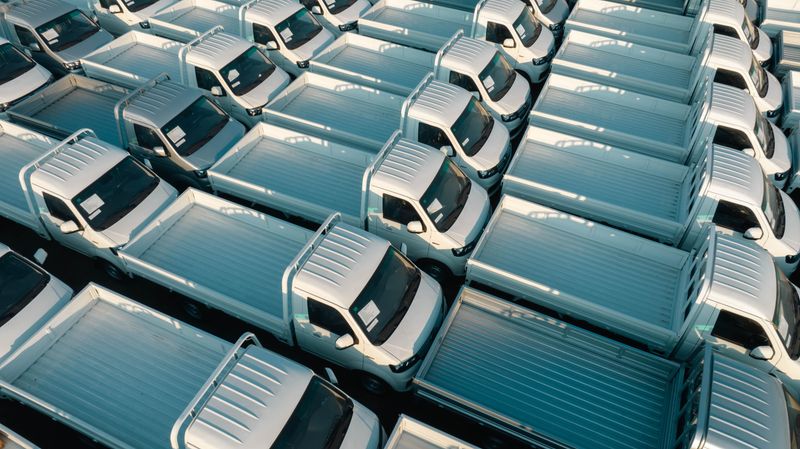
If you’re running more than a handful of machines and still managing them with paper logs, phone calls, and gut instinct, you’re leaving money on the table. Heavy equipment telematics has matured into a practical, affordable technology that gives fleet managers real-time visibility into machine location, health, utilization, and fuel consumption — and the ROI data backs it up.
This guide breaks down what telematics actually does, how OEM systems compare to third-party options, and how to make a business case for fleet management technology on your own equipment.
What Is Heavy Equipment Telematics?
Telematics combines telecommunications and informatics — it’s the technology that collects data from machines in the field and transmits it to a central platform where fleet managers can view, analyze, and act on it.
A telematics system typically consists of:
- A hardware module installed on the machine (communicates via cellular or satellite)
- Sensors integrated with machine ECMs, hydraulic systems, fuel systems, and GPS
- A cloud platform where data is aggregated and displayed
- A web or mobile dashboard for fleet managers, dispatchers, and maintenance personnel
Modern telematics modules pull data directly from the machine’s CAN bus (Controller Area Network), giving access to the same diagnostic information a dealer technician sees when they plug in a laptop.
What Data Does Telematics Collect?
Location and Movement
- Real-time GPS position — where every machine is at any moment
- Geofencing — virtual boundaries that trigger alerts when a machine enters or exits a defined area (jobsite, yard, unauthorized zone)
- Travel history — playback of machine movement over any time period
- Haul cycle tracking — on trucks and ADTs, cycle counts and route analysis
Utilization
- Engine hours — the most fundamental utilization metric for scheduling PM
- Idle time — how much of the engine’s running time is unproductive idling
- Working hours vs. idle hours — key for understanding true machine utilization
- Work mode analysis — on machines with multiple hydraulic modes, time in each mode
Fuel
- Fuel consumption — total and per-hour rates
- Idle fuel burn — quantifies the cost of excessive idling
- Fuel level monitoring — alerts when fuel drops below a threshold
- Fuel theft detection — unusual fuel consumption patterns can indicate theft
Machine Health and Diagnostics
- Fault codes — active and historical diagnostic trouble codes from the machine’s ECM
- Fluid temperatures — coolant, hydraulic, and transmission temperatures
- DEF level — diesel exhaust fluid monitoring for Tier 4 machines
- Battery voltage — early warning for electrical issues
- Filter restriction — some systems monitor air filter restriction
Operator Behavior
- Harsh operation events — hard swings, over-speeding (for wheeled machines), aggressive movements
- Seatbelt compliance — on equipped machines
- Pre-start inspection completion — when integrated with digital inspection apps
OEM Telematics Systems
Every major equipment manufacturer has its own telematics platform, typically included free for several years on new machines.
Cat Product Link / VisionLink
Cat Product Link is the hardware module installed on Cat machines. Data flows to VisionLink, Cat’s fleet management platform (now branded as Cat Central / VisionLink Productivity). VisionLink offers location, utilization, fault codes, and maintenance scheduling.
Cat’s advantage is deep integration with their machines — fault code interpretation is specific to Cat models, and the platform connects with Cat dealers for service scheduling. Covered under 3 years of free telematics on most new equipment.
Komatsu Komtrax / My Komatsu
Komtrax was one of the first OEM telematics systems and remains highly regarded. Komatsu provides lifetime free data on most models — a significant differentiator. The My Komatsu portal offers machine health, utilization reports, and fuel consumption. Komtrax has historically had strong cellular network coverage through Komatsu’s own infrastructure.
John Deere JDLink
JDLink collects location, hours, fuel, and diagnostics from JD equipment. The Operations Center platform aggregates JDLink data alongside agronomic and construction data. JD offers a free tier with basic data and subscription tiers for advanced features and longer data history.
Volvo DIGS / ActiveCare Direct
Volvo’s DIGS system provides standard telematics data. Their ActiveCare Direct service adds a monitoring layer — Volvo dealer analysts review machine fault codes and proactively contact owners about developing issues. ActiveCare Direct is available as a subscription and is particularly valuable for owners without dedicated equipment managers.
Hitachi ConSite
ConSite offers similar capabilities and integrates with Hitachi’s dealer service network for remote diagnostics and proactive maintenance alerts.
Third-Party Telematics Systems
Why Consider Third-Party?
OEM systems work well within a single-brand fleet but create visibility gaps in a mixed fleet. If you run Cat dozers, Volvo excavators, and JD motor graders, you’re logging into three separate platforms to get a complete picture — or paying for an aggregator.
Third-party telematics systems install on any machine regardless of brand and consolidate data into a single platform.
Major Third-Party Providers
Teletrac Navman — strong in mixed-fleet construction, with robust dispatching and compliance features alongside equipment tracking.
Samsara — a fast-growing platform originally built for trucking that has expanded aggressively into construction equipment. Known for a modern interface and strong mobile app.
Verizon Connect — broad platform covering trucks, trailers, and equipment with strong reporting and integration capabilities.
Trackunit — construction-focused telematics with a strong European background and growing US presence. Particularly strong on non-powered asset tracking (trailers, attachments, generators).
Tenna — purpose-built for construction companies, with strong fixed asset tracking alongside powered equipment telematics.
Third-Party vs. OEM: The Trade-Offs
| Factor | OEM Telematics | Third-Party |
|---|---|---|
| Cost | Often free or bundled | Monthly subscription ($15–$50/machine) |
| Fault code depth | Deep, model-specific | Generic or limited |
| Mixed fleet | Separate portals | Single unified view |
| Installation | Factory installed | Aftermarket install required |
| Data portability | Limited | Generally better |
For fleets of 10+ machines from multiple manufacturers, the operational benefits of a single platform typically justify third-party subscription costs.
Fleet Management Software
Telematics data is only valuable if it drives action. Fleet management software uses telematics data as an input and adds:
- Preventive maintenance scheduling — automated PM reminders based on engine hours from telematics
- Work order management — tracking repair history, parts, and labor costs
- Cost tracking — total cost of ownership per machine
- Utilization reports — identifying underutilized equipment for reallocation or disposal
- Rental vs. own analysis — data to inform equipment acquisition decisions
Platforms like B2W Maintain, HCSS Equipment360, Fleetio, and Viewpoint integrate telematics data with broader fleet management workflows.
ROI Calculation: Making the Business Case
Idle Reduction
Industry averages suggest 25–40% of engine hours are idle time on typical construction sites. Idle reduction is often the fastest payback in telematics ROI.
A concrete example: A 20-machine fleet averaging 2,000 hours/year each. If 30% is idle (600 hours/machine, 12,000 hours fleet-wide) and telematics coaching reduces idle by just 20%:
- 2,400 idle hours eliminated fleet-wide
- At $10/hour in fuel and wear costs: $24,000/year in savings
- Payback on telematics cost: typically less than one year
Theft Recovery
Equipment theft costs the construction industry an estimated $300–$400 million per year. GPS tracking dramatically improves recovery rates — most stolen equipment is recovered within 24 hours when telematics is active.
A single recovered excavator can justify years of telematics subscription fees. Geofencing alerts (machine moved outside jobsite at 2 AM) are among the most immediately valued telematics features.
PM Optimization
Scheduled maintenance based on actual engine hours (from telematics) rather than calendar time prevents both under-maintenance (missed PMs that lead to failures) and over-maintenance (unnecessary services). Studies by OEMs and fleet managers consistently show 10–15% reduction in maintenance costs with telematics-driven PM programs.
Utilization and Fleet Right-Sizing
Telematics utilization data often reveals machines running fewer than 500–600 hours per year — a threshold below which ownership often doesn’t pencil compared to renting. For a fleet of 30 machines, eliminating 3–4 underutilized units can free up hundreds of thousands in capital and reduce ownership costs by $50,000–$100,000/year.
Aggregate ROI
A conservative estimate for a 20-machine fleet:
- Idle reduction savings: $24,000/year
- PM optimization: $15,000/year
- One theft prevention or recovery event: $50,000+ avoided
- Utilization data driving 1 machine disposal: $20,000/year in ownership savings
Total estimated annual benefit: $100,000+ against telematics costs of roughly $12,000–$15,000/year for a 20-machine fleet.
Data Privacy Considerations
Telematics raises legitimate workforce relations questions. Operators may feel surveilled, particularly regarding operator behavior monitoring and location tracking.
Best practices for fleet managers:
- Communicate clearly about what data is collected and how it’s used
- Focus on machine data, not operator data in daily management — use behavior data for coaching, not punishment
- Establish a written telematics policy that employees acknowledge
- Use data to recognize good operators, not just identify poor ones
In some states and under some union contracts, there may be restrictions on how telematics data can be used in personnel decisions. Check with your labor counsel if you’re in a collectively bargained environment.
Managing a Mixed-Fleet with Telematics
The ISO 15143-3 (AEMP 2.0) standard defines a common data exchange format for telematics data. Most major OEM systems and many third-party platforms support this standard, allowing aggregator tools to pull data from multiple OEM portals into a single view.
Platforms like Trackunit Iris, Tenna, and Samsara can ingest AEMP 2.0 data from OEM systems while also collecting their own data from aftermarket hardware — giving a unified view without losing OEM-specific diagnostic depth.
For large mixed fleets, this “federated” approach — OEM telematics for deep diagnostics, third-party aggregator for fleet-wide visibility — is becoming the standard architecture.
The Future of Connected Equipment
The evolution of telematics is moving toward:
- Predictive maintenance — AI models analyzing sensor data to predict component failures before they happen. Komatsu, Cat, and Volvo all have programs in development or early deployment.
- Autonomous machine integration — telematics becomes the communication backbone for remote-operated and autonomous equipment
- 5G connectivity — higher bandwidth enabling real-time video from cabs, higher-frequency data transmission, and lower latency for semi-autonomous applications
- Equipment-to-equipment communication — machines sharing position and load data to coordinate operations without human dispatchers
Telematics is no longer a “nice to have” for professionally managed fleets — it’s the data foundation on which modern equipment management is built. Getting your fleet connected now means you’ll have historical data, trained processes, and organizational habits in place when the next wave of intelligent equipment technology arrives.
Getting Started with Telematics
Practical first steps:
- Inventory your OEM telematics — most machines purchased in the last 8–10 years have factory telematics; activate and start using it before spending on third-party hardware
- Define your use cases — theft protection? Idle reduction? PM automation? Prioritize and measure against those goals
- Start with a pilot — deploy a third-party system on 5–10 machines before a fleet-wide rollout
- Integrate with your maintenance system — telematics data only drives ROI if it feeds into your PM scheduling workflow
- Train your team — dispatchers, foremen, and mechanics all need to know how to use the data
The technology works. The question is whether your organization is ready to use the data it produces.

Ironworks Insider Editorial Team
Independent trade-focused editorial team