Crane Safety Checklist: OSHA Requirements and Best Practices
Quick answer
Crane safety depends on planning the lift, verifying ground conditions, inspecting rigging, knowing the load weight, reading the load chart, controlling the swing area, and using qualified personnel. A checklist supports planning; it does not replace site-specific lift direction.
Common questions
- What should be confirmed before a crane lift?
- Confirm load weight, radius, configuration, ground support, obstructions, weather, rigging, communication method, exclusion zone, and the roles of the operator, signal person, and lift director.
- Why are ground conditions critical for cranes?
- Weak or uneven support can reduce stability even when the load chart looks acceptable. Outriggers, mats, slopes, underground utilities, and soil conditions all matter.
Source note: Reviewed July 2026 against the article guidance and common heavy-equipment practice; manufacturer manuals, site plans, OSHA rules, and competent-person direction control field work.
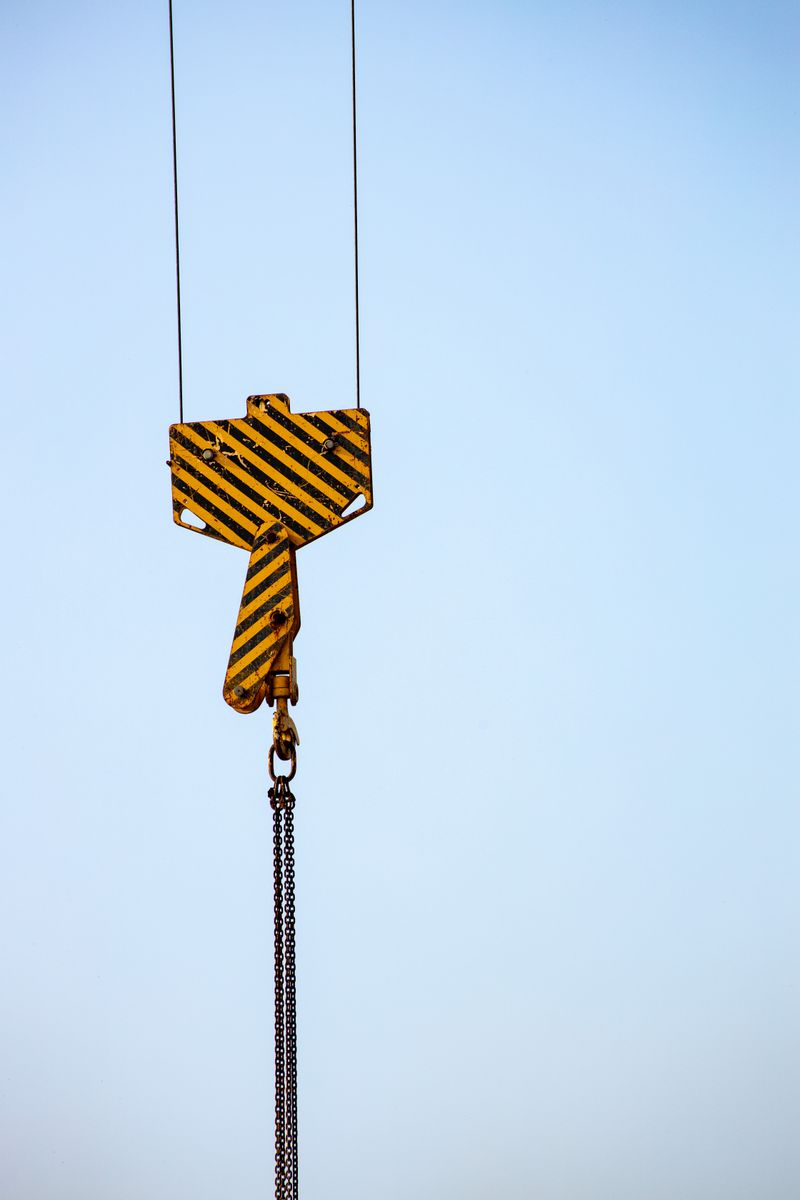
Crane accidents are among the most catastrophic events in the construction industry. According to OSHA data, cranes are involved in dozens of fatalities every year — and the overwhelming majority are preventable. Most incidents trace back to failures in planning, inspection, operator qualification, or communication.
This guide provides a comprehensive crane safety checklist aligned with OSHA’s construction crane standard (29 CFR 1926 Subpart CC) and industry best practices. Use it to protect your crew, your equipment, and your project.
OSHA 1926 Subpart CC: What You Need to Know
OSHA’s crane and derrick standard for construction — 29 CFR 1926 Subpart CC — has been in force since 2010. It covers:
- Equipment inspections (1926.1412)
- Operator qualification and certification (1926.1427)
- Signal person qualifications (1926.1428)
- Rigging (1926.1430)
- Power line safety (1926.1407–1926.1411)
- Pre-erection inspections and assembly
Key principle: The employer is ultimately responsible for ensuring that all crane operations comply with the standard. Ignorance of specific requirements is not a defense.
Pre-Lift Planning
Proper pre-lift planning is the foundation of every safe crane operation. Never attempt a lift without a documented lift plan. For complex or critical lifts, a written engineering lift plan signed by a qualified person or licensed professional engineer is required.
Site Assessment
Before the crane arrives on site:
- Identify underground utilities. Contact 811 (Call Before You Dig) and obtain utility locates. Ground disturbance for outrigger pads can strike buried lines.
- Evaluate soil bearing capacity. The ground under each outrigger must support the crane’s reaction forces. On soft or uncertain soils, use engineered crane mats. A rule of thumb is never to set outriggers on fill, near excavation edges, or over vaults without engineering review.
- Clear the work zone. Identify and mark exclusion zones before the crane arrives. Pedestrian and vehicle traffic must be controlled.
- Assess overhead hazards. Power lines, existing structures, signage, and trees must all be mapped and clearances calculated.
Load Weight Verification
Never estimate load weight. Use:
- Supplier or fabricator certified weights
- Engineering drawings with calculated weights
- A certified digital load cell or dynamometer to weigh unknown loads before committing to the lift
Always include rigging weight (hooks, slings, shackles, spreader bars, load beam) in your gross load calculation. Rigging often adds hundreds of pounds to the hook load.
Load Chart Review
Pull the actual load chart for the specific crane being used — not a generic chart for that model. Charts vary by:
- Boom length and angle
- Operating radius
- Configuration (on outriggers at full spread, on outriggers at partial spread, on rubber)
- Counterweight installed
- Jib configuration (if applicable)
Never exceed the chart capacity. A minimum 10% working safety margin below chart capacity is considered best practice on most jobsites. We cover load chart reading in depth in our companion article.
Rigging Inspection
All rigging hardware must be inspected before each use. Damaged rigging is a leading cause of dropped loads.
Wire Rope Slings
Per ANSI/ASME B30.9, remove wire rope slings from service if any of the following are present:
- Ten randomly distributed broken wires in one rope lay, or five broken wires in one strand
- Kinking, crushing, bird-caging, or any distortion
- Evidence of heat damage
- End attachments that are cracked, deformed, or worn
- Corrosion that pits or scales the wire surface
Chain Slings
- Inspect each link for cracks, gouges, nicks, or stretching
- Check hooks and master links for deformation
- Discard any sling showing more than 15% wear at the bearing point of any link
- Use a chain wear gauge to measure stretch and compare to manufacturer tolerance
Synthetic Web and Round Slings
- Look for cuts, tears, abrasion, chemical degradation, or heat damage
- Check that load rating tags are legible
- Discard any sling with the tag missing — you cannot confirm the rated capacity
Shackles and Hardware
- Verify pin is the correct size and is properly pinned or moused
- Check for cracks, deformation, or wear exceeding manufacturer limits
- Use a shackle pin go/no-go gauge to check wear on critical hardware
Operator Qualification Requirements
Under OSHA 1926.1427, crane operators must be qualified or certified to operate the specific type of equipment. Employers must ensure operators meet one of the following:
NCCCO Certification
The National Commission for the Certification of Crane Operators (NCCCO) administers the most widely recognized crane operator certification program in the U.S. Certification types include:
- Mobile Crane Operator (CCO) — available for lattice boom crawler, lattice boom truck, telescopic boom swing cab, and telescopic boom fixed cab
- Tower Crane Operator
- Overhead Crane Operator
- Rigger and Signal Person certifications
NCCCO certification involves written and practical examinations. Recertification is required every five years.
Other Acceptable Qualifications
Under OSHA 1926.1427, an operator also qualifies if:
- Certified by an accredited crane operator testing organization (equivalent to NCCCO)
- Qualified by an audited employer program
- Licensed by a state or local government (applies in states/localities with licensing requirements)
Note: Operator qualification must be specific to the equipment type. An operator certified on a telescopic boom crane is not automatically qualified on a lattice boom crawler.
Signal Person Requirements
OSHA 1926.1428 requires that any signal person directing a crane operator must be qualified. A qualified signal person must:
- Know and understand the applicable hand signal system (ASME B30.2 standard hand signals)
- Be able to give clear signals that the operator can understand
- Understand what to do if a signal is unclear or contradictory
- Pass a written or oral test AND a practical test administered by a qualified evaluator or accredited testing organization
One signal person, one operator. Only one signal person may give signals to an operator at a time. If a signal is unclear, the operator must stop and seek clarification before proceeding.
Hand Signal Reminder Cards
Laminated ASME standard hand signal cards should be posted in the crane cab and carried by signal persons. These are inexpensive, waterproof, and help eliminate miscommunication.
Power Line Safety — The Most Critical Hazard
Contact with energized power lines is one of the leading causes of crane-related fatalities. OSHA 1926.1407 through 1926.1411 establish detailed requirements.
Default Minimum Clearances (OSHA 1926.1407)
| Voltage (phase to phase) | Minimum Clearance |
|---|---|
| Up to 50 kV | 10 feet |
| Over 50 kV to 200 kV | 15 feet |
| Over 200 kV to 350 kV | 20 feet |
| Over 350 kV to 500 kV | 25 feet |
| Over 500 kV to 750 kV | 35 feet |
| Over 750 kV to 1,000 kV | 45 feet |
Before Working Near Power Lines
- Contact the utility company. Request the line voltage and, if possible, have the line de-energized and visibly grounded.
- Establish an encroachment zone. Mark or establish a physical barrier at the minimum clearance distance.
- Appoint a dedicated spotter whose sole job is to watch the crane’s position relative to the power lines.
- Use proximity alarm devices. Electronic proximity warning devices are not a substitute for proper clearances, but they add a layer of protection. Crane proximity warning systems are available as aftermarket add-ons.
- Brief the entire crew on power line locations and emergency procedures if contact occurs.
If Power Line Contact Occurs
- Operator: Stay in the cab. The cab is the safest place. Exiting can create a ground path through your body.
- Ground personnel: Stay back at least 100 feet and warn others.
- Call 911 and the utility company immediately.
- Do not attempt to touch the machine or the load until the utility confirms the line is de-energized.
Pre-Operational Inspection Checklist
OSHA 1926.1412(d) requires a shift inspection (pre-shift or during shift) before any crane is put into service. This inspection must be performed by a qualified person and must cover:
Structural and Mechanical
- Crane manufacturer’s operational aids are in place and functional (load moment indicator, anti-two-block device, boom angle indicator)
- Boom, jib, and all structural members: no visible cracks, bends, or deformation
- Outriggers or crawler pads: pins secure, no damage, pads in position
- Hook: no cracks, deformation, or hook-latch damage; safety latch functions
- Wire rope: inspect 4 feet of rope on each side of all sheaves; check for broken wires, kinks, corrosion
- Sheaves: no cracks, correct rope groove profile, rotation free
- Hydraulic systems: no visible leaks; fluid levels within operating range
- Counterweights: correctly installed per configuration; pins secure
- Brakes: swing, hoist, and travel brakes function correctly
- Swing lock / travel lock: functions as designed
Cab and Controls
- All controls labeled and function as labeled
- Dead-man controls function correctly (where applicable)
- Horn functions
- Windshield and glass: no cracks impairing visibility
- Seat and seatbelt: functional and adjusted
Fluids and Fuel
- Engine oil level
- Hydraulic fluid level
- Coolant level
- Fuel level (diesel or propane as applicable)
- No visible fluid leaks under machine
Documentation
- Load charts are in the cab, legible, and applicable to this machine’s current configuration
- Operator’s manual is in the cab
- Crane inspection and maintenance log is current
Monthly and Annual Inspection Requirements
Beyond the daily shift inspection, OSHA requires more comprehensive inspections on a scheduled basis.
Monthly Inspection (OSHA 1926.1412(e))
Must be performed by a qualified person and documented. Covers everything in the shift inspection plus:
- Full inspection of all load-bearing pins and connections
- Wire rope inspection over full length
- All sheaves and drums
- All brake and clutch systems
- Hydraulic and pneumatic hoses and fittings
Annual / Comprehensive Inspection (OSHA 1926.1412(f))
Must be performed by a qualified person at least every 12 months. Covers:
- All items in the monthly inspection
- Complete examination of structural components including welds
- Load-testing where required by manufacturer
- Documentation retained for the life of the equipment
Keep a crane logbook in the cab at all times. A dedicated crane inspection logbook that records every shift inspection, monthly inspection, and maintenance action is both an OSHA requirement and your best defense in the event of an incident investigation.
Exclusion Zones and Access Control
Any area beneath a suspended load, or within the potential swing radius of the boom and load, must be treated as an exclusion zone.
- No personnel under suspended loads. This is an absolute rule with no exceptions under OSHA 1926.1425.
- Use barrier tape or safety cones to delineate exclusion zones.
- Post exclusion zone signs at all entry points.
- Assign a designated spotter or safety monitor when the exclusion zone cannot be physically barricaded.
PPE Requirements for Crane Operations
Every worker in the crane work zone must wear appropriate PPE:
- Hard hat (ANSI Z89.1, Type I or II, Class E): Mandatory in all crane work zones
- High-visibility vest (ANSI/ISEA 107, Class 2 minimum): Required for all ground personnel and signal persons
- Safety-toed boots (ASTM F2413): Required for rigging crews
- Safety glasses or goggles: Protect against dust, debris, and wire rope whip hazards
- Leather work gloves: Protect against cuts and abrasion when handling rigging hardware
Quality PPE from trusted suppliers like 3M, Pyramex, and Ergodyne provides both ANSI compliance and all-day comfort on demanding jobsites.
Key Takeaways
Safe crane operations don’t happen by accident — they result from systematic planning, qualified personnel, and consistent inspection protocols. Here’s the core framework:
- Plan every lift. Document load weights, radii, and ground conditions before the crane arrives.
- Inspect everything. Cranes, rigging, and site conditions all require pre-shift inspection by a qualified person.
- Use qualified operators and signal persons. NCCCO certification is the gold standard.
- Power line clearances are non-negotiable. When in doubt, call the utility company.
- No one under the load, ever. Exclusion zones must be enforced, not just established.
Following this crane safety checklist keeps your crew home safe at the end of every shift — and that’s the only metric that truly matters.

Ironworks Insider Editorial Team
Independent trade-focused editorial team