Excavator final drive troubleshooting: Symptom matrix
Quick answer
Excavator final drive troubleshooting should begin with the pattern, not a replacement part. Record whether the fault is left or right, forward or reverse, cold or hot, travel-only or machine-wide, then separate four branches: track and undercarriage drag, upstream hydraulic supply or control, the hydraulic travel motor, and the planetary reduction gearbox. Stop for leaks, grinding, binding, unexpected movement, or stability concerns; pressure, case-drain, hose-swap, raised-track, and disassembly tests belong to trained service personnel using the exact machine documentation.
Common questions
- Does weak travel mean the excavator final drive is bad?
- No. Track drag, incorrect tension, a main-pump or control problem, the swivel, a brake-release or speed-control fault, and the travel motor can all imitate a failed planetary final drive. Record the pattern and obtain model-specific measurements before authorizing a replacement.
- How can I tell a travel motor problem from a final drive problem?
- A hydraulic travel motor converts oil flow into rotation; the planetary final drive reduces speed and multiplies torque. External observations can prioritize one branch, but pressure, flow, case-drain, brake-release, and gearbox inspection require trained service personnel and the exact service information.
- Can I test an excavator travel motor by lifting one track?
- Do not improvise a raised-track test. Machine support, stability, exclusion zones, oil temperature, control settings, test duration, and acceptable results are model-specific. Use a qualified technician following the exact OEM procedure.
- What information should I give a final drive repair shop?
- Provide the make, model, serial number, hours, track and travel configuration, fault codes, left or right side, cold-versus-hot behavior, forward-versus-reverse behavior, recent work, fluid records, photos, and a precise symptom timeline. Ask for the measured cause, complete scope, parts identity, total price, lead time, and warranty terms in writing.
Source note: Reviewed against Caterpillar excavator maintenance and hydraulic-analysis guidance, the Bobcat E20 maintenance schedule, Danfoss H1F motor service guidance, Safe Work Australia's plant-isolation code, and HSE maintenance guidance. The operator, maintenance, parts, and service information for the exact model, serial number, and installed drive controls every procedure and limit.
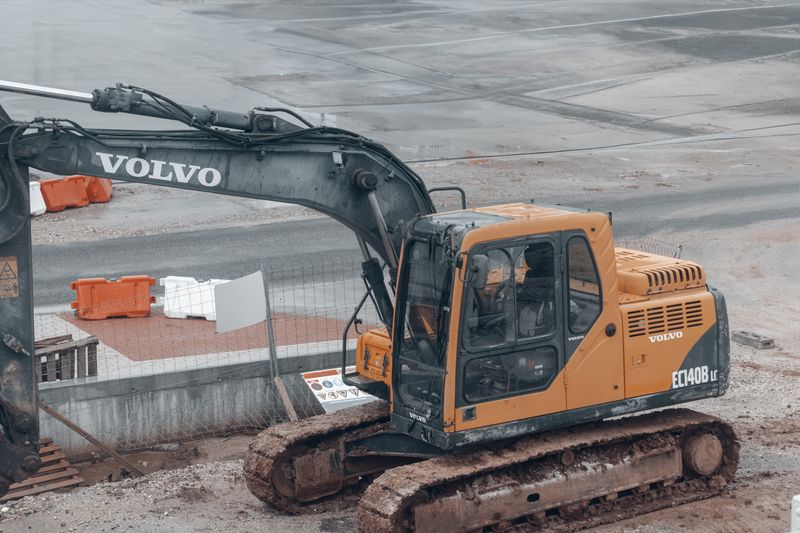
A slow, noisy, or non-driving excavator does not automatically need a final drive. The same symptom can begin at the track, main hydraulic supply, control valve or swivel, hydraulic travel motor, brake-release circuit, or planetary reduction gearbox.
Good excavator final drive troubleshooting therefore starts with what the machine does, when it does it, and which systems share the symptom. Preserve that evidence before anyone changes oil, adjusts a track, swaps a hose, clears a code, or orders an assembly.
Know which part you are diagnosing
“Final drive,” “travel motor,” and “track motor” are often used interchangeably, creating expensive scope errors.
- The hydraulic travel motor converts hydraulic flow and pressure into rotation.
- The planetary final drive is the mechanical reduction gearbox between that motor and the sprocket.
- A supplier may sell both as one travel-drive assembly.
- Upstream pumps, valves, the swivel, controls, and brake-release circuit can create similar symptoms.
- The track and undercarriage can add resistance after the drive produces torque.
Ask which meaning is included in every quote. Caterpillar’s final-drive parts description, for example, distinguishes the motor from the planetary gear set. It explains the architecture, not another machine’s specification.
Stop before the diagnosis creates another hazard
Park as the exact operator manual directs on firm, level ground, lower the attachment, apply the control lock, stop the engine, control the key, and isolate the area. Treat hydraulics, raised parts, hot fluid, track-adjuster grease, and the travel brake as stored-energy hazards.
Safe Work Australia’s plant isolation code requires identification and control of all energy sources and warns that a failed restart attempt does not prove stored energy has dissipated. HSE maintenance guidance likewise says to support raised parts and not rely on hydraulics alone.
Keep guards installed for observation. OSHA’s machine-guarding guidance notes that guard removal for maintenance requires other protection for maintenance personnel.
Keep these jobs behind the trained-service boundary:
- Raising or running a track, blocking the machine, or working beneath raised parts
- Installing test equipment, measuring case-drain flow, or deadheading a function
- Swapping hoses or valves, opening hydraulics, or defeating an interlock
- Removing guards, the sprocket, motor, gearbox cover, brake, or drive assembly
- Draining hot oil, flushing a circuit, or dismantling a drive
Caterpillar publishes a travel-cycle example for a Cat 323 in its hydraulic technical-analysis guide, but its space, temperature, control, and timing conditions are model-specific. Do not copy that test onto another excavator or improvise the raised-track alternative.
Excavator final drive symptom matrix
Use this table to choose the next diagnostic branch. It prioritizes possibilities; it does not condemn a component.
| Observation | First safe evidence to capture | Branches a technician should separate |
|---|---|---|
| One track is slow on firm, level ground | Side, direction, travel-speed mode, codes, cold/hot timing, track condition | Track drag or tension; side-specific control or swivel passage; brake release; travel motor; planetary drag |
| Both tracks are weak and other hydraulic functions are also slow | Functions affected, engine behavior, warnings, fluid temperature, recent service | Engine or main hydraulic supply; derate or control command; fluid or filter issue; not two failed drives by assumption |
| One side weakens only after warm-up | Minutes and work to onset, displayed temperature, recovery after cooling | Temperature-sensitive internal leakage or control behavior upstream or in the motor; brake drag; lubricant or gearbox condition |
| One direction is weaker than the other | Forward/reverse orientation and whether the house was rotated | Directional control, relief or compensating circuit, swivel passage, brake control, motor; mechanical drive remains possible |
| Grinding, clicking, or knocking at the drive end | Exact side, speed, direction, load, and a recording from outside the exclusion zone | Planetary gears or bearings; loose or damaged sprocket hardware; track-to-sprocket engagement; lodged debris |
| Track jumps, ratchets, or derails | Track sag by the exact manual method, debris, lugs/links, sprocket and roller condition | Undercarriage fit, wear, damage, or adjustment before blaming hydraulic output |
| Fresh oil around the hub or motor | Leak location, color only as an observation, fluid levels by approved checks, photos before cleaning | Gearbox seal or housing; hydraulic motor, fitting, or hose; contamination path between compartments |
| A drive housing appears hotter than the other | Time, duty, ambient conditions, non-contact readings only if site procedure allows | Mechanical drag, lubrication loss, brake drag, motor leakage, or unequal workload; no universal temperature limit |
| Travel stops and the engine lugs or the track binds | Stop immediately; note direction, mode, terrain, noise, and visible obstruction | Mechanical seizure, applied brake, track obstruction, or high hydraulic load |
| Fault began after drive, hose, track, or sprocket work | Part numbers, gear ratio, port routing, settings, oil used, invoices, before/after behavior | Wrong configuration, installation or cleanliness problem, unresolved root cause, or mismatched undercarriage parts |
If the track is derailing or jumping, switch to our dedicated excavator track diagnostic. If a hydraulic temperature warning appears, follow the excavator hydraulic overheating guide before continuing any function check.
Four branches to separate before buying a drive
1. Track tension and undercarriage resistance
Packed material, a damaged roller, incorrect tension, sprocket damage, or track mismatch can resist a healthy drive. After isolation, inspect only externally visible condition and use the exact manual for operator-level tension measurements.
Caterpillar’s excavator undercarriage guidance includes inspection of the sprocket on the planetary final drive and directs readers back to the Operation and Maintenance Manual. Use our undercarriage maintenance guide for the broader wear record, not for a substitute tension value.
2. Upstream hydraulic supply and control
When both tracks and other functions are weak, or the fault changes with direction, house position, mode, or temperature, evidence may point upstream. A technician may need to evaluate commands, pump output, valves, swivel passages, brake release, and fluid condition against the exact schematic.
Do not authorize a motor from a pressure reading alone. Pressure, flow, temperature, commanded displacement, and leakage must be interpreted together at the specified test point and condition. Review fluid and filter history with the hydraulic system maintenance guide.
3. Hydraulic travel-motor behavior
A travel motor can lose efficiency through internal leakage, control or displacement problems, brake-release faults, contamination, or an incorrect case-drain arrangement. These require professional testing.
The current Danfoss H1F motor service manual uses case-flow measurement to investigate internal leakage and warns technicians to secure the machine against unintended movement. It applies only to the listed Danfoss motor family, but it illustrates why “high case drain” needs a specified setup, measured result, and component-specific limit—not a guess from a video.
4. Planetary gearbox condition
A leak, drive-end grinding, metal found during scheduled service, abnormal shaft movement, or binding can prioritize the planetary branch. Do not open a plug just to investigate. Plug position, oil temperature, level method, lubricant, interval, debris criteria, and torque come from the exact documentation.
Intervals differ even within one manufacturer. Bobcat’s official E20 schedule calls for a travel-motor fluid-level check at 250 hours and replacement at 1,000 hours; that is evidence for an E20 covered by the document, not a universal excavator interval. Use the excavator maintenance schedule to organize records, then replace its generic intervals with the exact manual requirements.
Build an evidence pack before the service call
Capture facts without changing the fault:
- Record make, model, serial number, hours, track type and width, and travel-speed configuration.
- Photograph the display and save active or logged codes before clearing anything.
- Identify left or right from the seat and note forward/reverse behavior.
- Record cold/hot behavior, time to onset, mode, terrain, slope, load, and ambient conditions.
- Note whether boom, arm, bucket, swing, and both travel sides behave normally.
- Photograph leaks, sprocket, track engagement, rollers, guards, hose routing, and ID plates from outside the hazard zone.
- Gather fluid grades, dates, hours, quantities, sample results, and top-up history.
- List recent work with part numbers and invoices.
If a scheduled sample already exists, attach its full report and trend—not a single wear-metal number. Our heavy-equipment oil analysis guide explains why machine, component, oil hours, sampling point, and historical trend matter.
Final drive repair quote checklist
Ask each shop to quote the same scope in writing:
- Diagnosis: Which branch is proven, what measurements were taken, and what exact manual limits were used?
- Readings: Are left/right, forward/reverse, cold/hot, pressure, flow, temperature, case-flow, and brake-release results included?
- Assembly: Does “final drive” mean the motor, planetary gearbox, brake and valves, or the complete assembly?
- Fit: Are part number, ratio, mounting, sprocket interface, ports, speed control, brake, and case drain matched by serial number?
- Root cause: Will the shop address contamination, a restricted drain, track drag, upstream hydraulics, or an installation error before the replacement is run?
- Parts: Is the unit new, remanufactured, rebuilt, used, OEM, or aftermarket, and which components are excluded?
- Cleanliness: What flushing, filtration, oil, filter, hose, and sample work is required, and who is responsible?
- Price: Does the total include diagnosis, labor, oil, filters, supplies, freight, travel, taxes, and core charges?
- Timing: What are the diagnosis date, parts lead time, repair duration, and realistic return-to-service date?
- Warranty: What are the term, labor coverage, travel coverage, contamination exclusions, commissioning requirements, and claim evidence?
There is no honest universal replacement-cost number. Machine class, scope, parts source, access, freight, contamination cleanup, labor, and undercarriage damage all change the total. Comparable quotes need comparable written scopes.
Next step: turn the symptom into a service decision
Put the observations in the heavy equipment inspection log, attach the evidence pack, and ask the technician to return the measurements and root-cause statement with the quote.
The goal is not to prove the final drive is bad. It is to identify which part of the travel system is failing before parts are ordered. Stop when the machine binds, leaks, grinds, moves unexpectedly, or cannot be stabilized; preserve the evidence and hand the invasive testing to qualified service personnel.

Ironworks Insider Editorial Team
Independent trade-focused editorial team