Excavator tracks slow on one side: Safe diagnostic flow
Quick answer
When an excavator track is slow on one side, do not assume the travel motor or final drive has failed. First record whether the difference remains on firm, level ground; occurs in forward, reverse, straight travel, turns, low or high travel; changes from cold to warm; and affects only travel or other functions. After shutdown and isolation, look for packed material, track or undercarriage damage, unequal model-specific tension, leaks, heat warnings, and abnormal noise. Stop and arrange service or transport if travel is unpredictable or any leak, overheating, grinding, binding, or instability is present. Pressure tests, hose swaps, raised-track tests, and opening hydraulic fittings belong to qualified technicians using the exact model and serial-number service information.
Common questions
- Why is one excavator track slower than the other?
- Possible branches include packed material or undercarriage drag, unequal track condition or tension, travel-speed control, brake release, a swivel or control-valve passage, unequal pump delivery, the hydraulic travel motor, and the planetary final drive. The operating pattern helps a technician decide which branch to measure.
- Does a slow track mean the excavator travel motor is bad?
- No. A slow track can be caused upstream of the motor or by mechanical resistance after it. Do not order a motor until model-specific testing separates the undercarriage, hydraulic supply and controls, motor, brake, and planetary gearbox.
- Can I swap excavator travel hoses to find the fault?
- No operator should improvise a hose-swap test. Hydraulic lines may retain pressure after shutdown, incorrect reconnection can create unexpected movement, and cleanliness and test conditions are model-specific. This is trained service work.
- Can I keep using an excavator that tracks to one side?
- Stop using it if travel is unpredictable, the machine cannot hold a controlled path, or there is leakage, overheating, grinding, binding, a warning, or instability. Follow the operator manual and site rules, and arrange qualified service or transport rather than driving an unsafe machine.
Source note: Reviewed against current Caterpillar excavator undercarriage guidance, the Bobcat E26 service schedule, the Develon DX35z Operation and Maintenance Manual, and Safe Work Australia's plant-isolation code. The operator and service information for the exact model, serial number, undercarriage, travel controls, and attachments always controls.
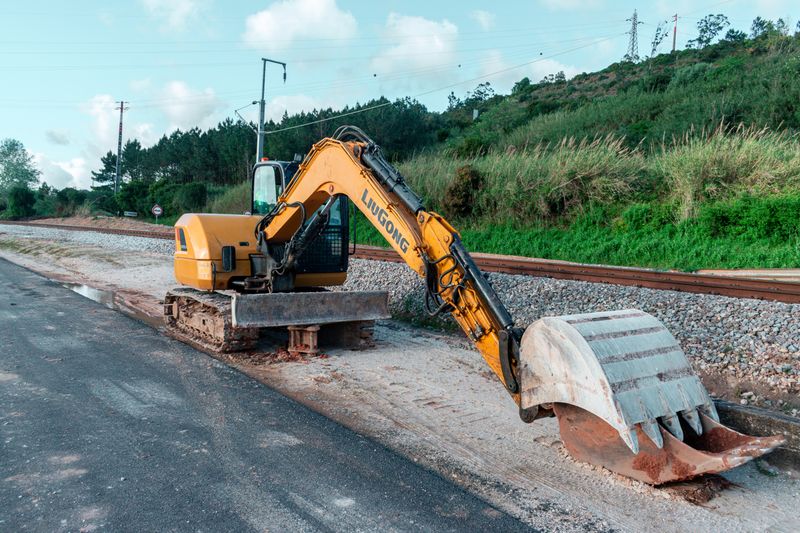
If your excavator tracks slow on one side, the slow side is a symptom—not a diagnosis. The cause may be extra track resistance, a control or hydraulic-supply problem, the travel motor or brake, or the planetary final drive.
Start by preserving the pattern. Record the side, direction, travel mode, surface, slope, load, temperature state, noise, warnings, and other affected functions before anyone adjusts, disconnects, or replaces a part.
Stop first if travel is unpredictable
Do not continue a travel comparison when the excavator pulls abruptly, will not stop or steer predictably, binds, grinds, leaks, overheats, displays a shutdown warning, or is unstable. Lower the attachment, park, isolate, and secure the machine exactly as its manual and site procedure require.
Arrange qualified service or recovery transport if the machine cannot travel under controlled conditions. Do not drive a questionable machine onto a trailer or public route; use the lift, tie-down, and recovery plan in the exact manual and our equipment transport guide.
Keep these tasks behind the trained-technician boundary:
- Lifting, blocking, or running a track off the ground
- Working beneath a raised or unsupported machine
- Defeating an interlock or operating from outside the seat
- Swapping hoses, opening fittings, or checking for pressure by loosening a connection
- Installing gauges or performing pressure, flow, case-drain, or brake-release tests
- Opening a travel motor or final drive
Safe Work Australia’s plant risk-management code treats hydraulic pressure, gravity, and unexpected movement as energy hazards that must be isolated and controlled. A stopped engine alone does not prove the machine is safe to service.
One-side slow-track diagnostic flow
Only make travel observations during normal operation when the manual permits it, the machine remains predictable, and the area is firm, level, open, and controlled. Do not create a fault condition merely to fill a checklist.
| Observation | What it helps isolate | Next safe action |
|---|---|---|
| Pull occurs only in mud, loose fill, across a slope, or with material packed on one side | Unequal footing, side load, or undercarriage resistance may be influencing the symptom | Stop on suitable ground, isolate, document the surface and visible buildup, and compare with the manual’s operating guidance |
| Pull remains during straight travel on firm, level ground | A repeatable track, control, hydraulic, brake, motor, or final-drive branch is more likely | Record which side is slow, travel mode, engine setting, and whether the path changes with normal load |
| One direction is slower than the other | Directional control, swivel passage, motor valve, brake behavior, or mechanical drag needs separation | Record forward and reverse using the machine’s travel orientation; do not infer hose routing from pedal direction |
| Machine tracks straight in low travel but pulls in high travel | The travel-speed command or one motor’s displacement-change mechanism becomes a priority | Record selected and indicated modes plus any code; technician verifies the exact control circuit |
| Difference appears mainly during turns | Track resistance, steering command, control-valve response, or motor behavior may be unequal | Record left and right turns without repeated pivot turns; inspect visible undercarriage condition after isolation |
| One side weakens as the machine warms | Temperature-sensitive internal leakage, brake drag, lubrication, or control behavior becomes more relevant | Record time to onset, displayed temperatures and warnings, and whether cooling changes the symptom |
| Both tracks become slow | A machine-wide engine, derate, fluid, cooling, pump, filter, or control issue may be more likely than two side failures | Note other functions and warnings; use the hydraulic overheating guide if temperature is involved |
| Boom, arm, bucket, or swing also changes | Shared pump, control, derate, or fluid-system branches need model-specific diagnosis | List every affected function. Use the no-swing guide only when swing is the primary symptom |
| New whine accompanies weak travel | Inlet condition, aeration, hydraulic loading, control, or pump condition needs evaluation | Stop for severe or changing noise and preserve a safe recording; see the hydraulic pump whine guide |
| Grinding, clicking, leakage, wobble, or binding is concentrated at the drive end | The track, sprocket, motor seal, brake, bearing, or planetary gearbox branch moves higher | Stop operation and follow the final-drive symptom matrix |
These patterns rank diagnostic branches; none proves a failed part. House orientation also changes which physical end is “forward,” so report the direction shown by the travel indicators and the slow side as viewed from the operator’s seat.
Inspect what is visible after isolation
With the attachment lowered and the machine isolated as the exact manual directs, inspect externally without crawling under the machine, removing guards, or touching a suspected leak.
Track and undercarriage
Look for packed mud, stone or debris; damaged shoes or rubber lugs; loose or missing hardware; a visibly damaged sprocket, idler, or roller; track-frame damage; and unequal wear. If the track is jumping, derailing, or no longer engaged correctly, use the dedicated track-keeps-coming-off diagnostic and keep the machine out of service.
Track tension is model- and configuration-specific. Record visible sag or asymmetry, but do not lift a track to measure it or substitute an online universal gap. If the exact manual’s check requires raising or supporting the machine, leave it to equipped and trained service personnel. Caterpillar’s current excavator undercarriage guidance calls for inspection of track hardware and the final-drive sprocket and directs owners back to the Operation and Maintenance Manual. The Bobcat E26 service schedule separately lists track-tension and travel-motor fluid work, showing why one observation does not identify one component.
Leaks, warnings, and sound
Photograph the location and spread of any fluid from a safe position. Do not identify a fluid by touching or smelling it, tighten a live fitting, open a hot reservoir, or remove a final-drive plug just to investigate.
Record active and logged codes before they are cleared. Note whether the sound is a hydraulic whine, squeal, clunk, click, growl, or grind; where it is strongest; and whether it changes with direction or travel mode. A phone recording made outside the machine’s movement and swing zones can help a technician.
The Develon DX35z Operation and Maintenance Manual has distinct sections for travel controls, track tension, and the travel motor. That exact-model structure illustrates the service handoff: follow the serial-number-correct manual rather than transferring a setting or procedure from another excavator.
What a technician should separate
A qualified technician can use the exact hydraulic schematic, service procedure, rated instruments, and safe supports to distinguish:
- Undercarriage resistance: track condition and adjustment, debris, rollers, idler, sprocket, alignment, and brake drag.
- Command and control: travel levers or pedals, sensors, solenoids, speed selection, pilot control, and valve response.
- Hydraulic supply: engine or derate condition, fluid and filters, pump delivery, control valve, and center swivel.
- Travel motor and brake: displacement change, internal leakage, counterbalance or relief behavior, and brake release.
- Planetary final drive: lubricant condition, seals, bearings, gears, output, and sprocket interface.
Pressure, flow, case-drain, temperature, brake-release, and track-tension limits are not universal. Ask the technician to document the test condition, readings from both sides, specification source, and conclusion rather than reporting only that pressure “looked good.”
Technician handoff checklist
Give the service provider enough evidence to reproduce the symptom without guessing:
- Make, model, serial number, hours, track type, attachments, and travel modes
- Left or right slow side from the operator’s seat
- Firm/soft surface, slope, load, weather, and ground conditions
- Straight travel, left turn, right turn, forward, reverse, low, and high travel observations already seen in normal operation
- Cold behavior, time to onset, warm behavior, and recovery after shutdown
- Whether one track, both tracks, boom, arm, bucket, blade, or swing changed
- Displayed warnings, fault codes, derates, and instrument readings
- Photos of the track, sprocket, rollers, idler, leaks, damage, and ID plates
- Noise description or recording and the exact condition when it occurs
- Recent track, final-drive, hose, pump, fluid, filter, or control work with part numbers
- Fluid, filter, oil-analysis, and maintenance records
Next step: document, isolate, and request measured findings
Put the observations in the heavy-equipment inspection log and attach the photos, codes, records, and timeline to the work order. Ask the technician which branch was confirmed, which exact manual and limits were used, and what readings support the repair.
Do not buy a travel motor or final drive from the symptom alone. A safe evidence pack turns “one track is slow” into a focused service job while keeping invasive hydraulic and raised-machine testing with the people, equipment, and documentation required to do it safely.

Ironworks Insider Editorial Team
Independent trade-focused editorial team