Forklift Certification Guide: OSHA Requirements and How to Get Certified
Quick answer
Forklift certification is employer-specific training and evaluation for the truck type and workplace conditions. It is not a one-time universal license that automatically covers every forklift, attachment, or jobsite.
Common questions
- What does forklift training usually include?
- Training generally includes formal instruction, practical operation, workplace hazards, truck-specific controls, load handling, and an operator evaluation by the employer or qualified trainer.
- When does forklift training need updating?
- Refresher training is commonly needed after unsafe operation, an incident, a new truck type, changed workplace conditions, or an evaluation showing the operator needs more instruction.
Source note: Reviewed July 2026 against the article guidance and common heavy-equipment practice; manufacturer manuals, site plans, OSHA rules, and competent-person direction control field work.
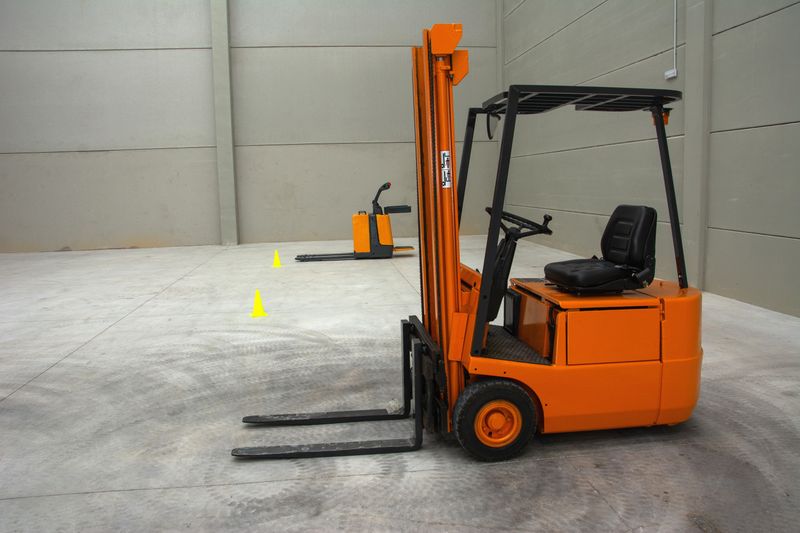
Forklifts are one of the most common and most hazardous pieces of powered industrial equipment in American workplaces. OSHA estimates that approximately 85 fatal forklift accidents and nearly 35,000 serious injuries occur every year in the United States. The vast majority involve untrained or undertrained operators.
Forklift certification is not just a legal requirement — it’s the foundation of safe operations. This guide covers everything employers, safety managers, and workers need to know about OSHA forklift training requirements and how to get certified.
The Legal Basis: OSHA 29 CFR 1910.178(l)
The federal standard governing forklift operator training is OSHA 29 CFR 1910.178(l) — commonly referred to as the “powered industrial truck operator training” standard. It applies to general industry workplaces including warehouses, manufacturing facilities, distribution centers, and construction material yards.
For construction sites, 29 CFR 1926.602 applies to rough terrain forklifts and other powered industrial trucks used in construction.
Key provisions of 1910.178(l):
- Employers must ensure all forklift operators are trained and evaluated before operating a powered industrial truck unsupervised
- Training must be specific to the type of truck the operator will use
- Training must cover workplace-specific hazards
- Refresher training and re-evaluation is required under certain conditions
- Operators must be re-evaluated at least every three years
There is no government-issued “forklift license.” Unlike a CDL, there is no state-administered exam or card from a DMV. Forklift certification is entirely employer-driven — but the employer bears full legal responsibility for ensuring training meets OSHA’s requirements.
Who Needs Forklift Certification?
Under OSHA’s standard, anyone who operates a powered industrial truck must be trained and evaluated. This includes:
- Full-time forklift operators
- Part-time operators who use forklifts only occasionally
- Workers who operate forklifts only to move equipment short distances
- Supervisors and managers who operate forklifts, even rarely
No exceptions for experience. A 20-year veteran who has operated forklifts at previous employers still needs site-specific and truck-specific training at a new employer. Prior certification at one workplace does not automatically transfer.
Types of Forklifts Covered
OSHA’s standard covers all powered industrial trucks — a category broader than just the classic counterbalance forklift. The standard identifies seven truck types (Class I through VII) based on power source and design:
Class I: Electric Motor Rider Trucks (Counterbalance Forklifts)
The most common forklift in warehouses and distribution centers. Runs on battery power, available in sit-down and stand-up configurations. Clean operation makes it ideal for indoor food-grade, pharmaceutical, and electronics environments.
Class II: Electric Motor Narrow Aisle Trucks
Includes reach trucks, order pickers, and turret trucks. Designed for narrow-aisle warehouse operations where a standard counterbalance forklift cannot fit. Order pickers elevate the operator with the forks — additional fall protection training is required.
Class III: Electric Motor Hand Trucks / Pallet Jacks
Includes walkie pallet jacks, stackers, and walkie-riders. The most common class of equipment in retail and light warehousing. While often overlooked, OSHA’s training requirement applies to these as well.
Class IV: Internal Combustion Cushion Tire Trucks
Propane or gasoline-powered counterbalance forklifts with cushion (solid) tires. Primarily for smooth indoor floors in manufacturing and warehousing.
Class V: Internal Combustion Pneumatic Tire Trucks
Propane, gasoline, or diesel-powered counterbalance forklifts with pneumatic (air-filled) tires. Common in outdoor lumberyards, building supply, and manufacturing. Higher ground clearance than Class IV.
Class VI: Electric and Internal Combustion Tractor Trucks
Tow tractors used for towing trailers and carts in warehouses and airports.
Class VII: Rough Terrain Forklift Trucks
Pneumatic tire trucks specifically designed for outdoor construction sites, rough ground, and uneven terrain. Used extensively in lumber, construction, and agricultural settings.
The Three Required Components of Forklift Training
OSHA 1910.178(l)(2) specifies that training must consist of three components:
1. Formal Instruction
Classroom, online, or written instruction covering:
- Operating instructions, warnings, and precautions for the types of trucks the operator will use
- Differences between the truck and automobile (steering, braking, load handling, visibility)
- Truck controls and instrumentation: Where they are located, what they do, and how to use them
- Engine or motor operation
- Steering and maneuvering
- Visibility — including limitations caused by load, mast, and forks
- Fork and attachment adaptation, operation, and limitations
- Vehicle capacity — how to read the data plate and understand rated capacity
- Vehicle stability — the stability triangle concept
- Vehicle inspection and maintenance
- Refueling and/or charging of batteries
- Operating limitations
- Any other operating instructions, warnings, or precautions listed in the operator’s manual
2. Practical Training
Demonstrations and practice exercises performed with the actual equipment (or equivalent equipment) in a controlled environment. Trainees must practice:
- Starting, stopping, and maneuvering the truck
- Picking up, transporting, and placing loads at various heights
- Operating on ramps and inclines
- Traveling with the load properly positioned
- Parking and shutdown procedures
3. Workplace-Specific Evaluation
An evaluation of the operator’s performance in the workplace where they will be operating. This is the most critical and most often overlooked component. It must be conducted by a qualified person — someone with the knowledge, training, and experience to evaluate forklift operators.
The workplace evaluation must address:
- Surface conditions where the truck will be operated
- Composition of loads and load stability
- Load manipulation, stacking, and unstacking
- Pedestrian traffic and pedestrian-forklift separation
- Narrow aisles and other restricted places
- Hazardous locations where the truck will operate
- Ramps and other sloped surfaces
- Closed environments and other areas where insufficient ventilation or poor lighting could make operation hazardous
Certification Documentation
OSHA does not mandate a specific certification card or certificate format. However, employers are required to maintain training records sufficient to demonstrate compliance. Best practices include documenting:
- Operator name
- Date of training and evaluation
- Name of trainer/evaluator
- Type(s) of truck for which the operator is certified
- Workplace(s) covered by the certification
Many employers issue forklift operator certification cards as a quick verification tool. While not required by OSHA, they’re a practical way to confirm who is and isn’t authorized to operate specific equipment on your site.
Certification Renewal: Every 3 Years — Plus Triggers
OSHA requires re-evaluation (and refresher training if needed) at minimum every 3 years. However, the standard also requires refresher training and re-evaluation any time:
- The operator is involved in an accident or near-miss
- The operator is observed operating the truck unsafely
- The operator receives an evaluation showing unsafe operation
- The operator is assigned to a different type of truck
- Workplace conditions change in a manner that could affect safe operation (new racking, changed traffic patterns, new loading dock, etc.)
Refresher training is not a punishment — it’s a safety tool. Many forward-thinking safety programs conduct refresher training annually rather than waiting for the 3-year minimum.
Employer Responsibilities Under OSHA
The employer — not the training provider, not the temp agency, not the third-party staffing firm — bears ultimate responsibility for ensuring all forklift operators are properly trained and evaluated. Specifically, employers must:
- Determine which employees operate powered industrial trucks and ensure all are trained before unsupervised operation
- Ensure training is conducted by a qualified person — someone with the knowledge and experience to train and evaluate operators
- Conduct the workplace-specific evaluation in the actual work environment
- Maintain training records and make them available to OSHA upon request
- Ensure refresher training when triggers occur
- Certify that each operator has been trained and evaluated — OSHA uses the word “certify” to indicate the employer’s attestation of compliance
Staffing agencies: If you use temporary workers from a staffing agency, OSHA considers both the staffing agency and the host employer to share responsibility for training. The host employer is typically best positioned to provide the workplace-specific component, while the staffing agency may provide formal instruction. Get this in writing in your staffing contract.
Training Options: Online vs. Classroom vs. On-Site
Online Forklift Training Courses
Online training is acceptable for the formal instruction component of OSHA’s three-part requirement. It cannot replace the practical training and workplace evaluation components — those must be done in person with actual equipment.
Advantages of online training:
- Self-paced, flexible scheduling
- Lower cost per employee
- Standardized content
- Certificate of completion for recordkeeping
Look for programs that cover all OSHA-required topics and issue a completion certificate. Many online platforms offer courses for $20–$75 per learner.
Forklift safety training workbooks and reference guides are a useful supplement for formal instruction — especially for facilities conducting in-house training programs.
In-Person / Classroom Training
Conducted by a certified trainer at your facility or at a training center. Often includes both classroom instruction and practical evaluation in a single session.
- Typical cost: $100–$250 per operator for third-party training
- Allows for site-specific customization
- Immediate Q&A with an experienced trainer
On-Site Training Programs
Large employers with multiple forklift operators often develop in-house training programs with their own qualified trainers. This is cost-effective at scale and ensures training is fully tailored to your specific trucks, attachments, and workplace conditions.
Essential materials for an in-house program:
- Operator training workbooks for each truck class
- Written test forms and evaluation checklists for documenting practical and workplace evaluations
- Laminated operator reference cards mounted in the cab for quick reference
How Much Does Forklift Certification Cost?
Costs vary significantly based on training format and the number of operators:
| Training Format | Cost Per Operator |
|---|---|
| Online formal instruction only | $20–$75 |
| Third-party classroom + practical | $100–$250 |
| On-site group training (10+ operators) | $50–$150/operator |
| In-house program (amortized) | $20–$60/operator |
These costs are minimal compared to the financial exposure of an untrained operator citation. OSHA can cite employers up to $16,550 per willful or repeat violation for forklift training failures — and in the event of an injury or fatality, the financial and legal exposure is vastly greater.
Common OSHA Forklift Training Violations
OSHA cites forklift-related violations among its top 10 most frequently cited standards year after year. The most common training-related violations include:
- Failure to conduct initial training before unsupervised operation
- Failure to include workplace-specific evaluation (operators trained in a classroom or online but never evaluated in their actual workplace)
- No refresher training after incidents or near-misses
- Using the same certification for different truck types without type-specific training
- No documentation of training and evaluation
PPE and Accessories for Forklift Operators
Certified operators also need proper PPE for their work environment:
- Safety-toed boots (ASTM F2413): Required in most forklift operating environments
- High-visibility vest (ANSI 107 Class 2): Especially important in shared pedestrian/forklift traffic areas
- Hard hat: Required in construction environments and areas with overhead hazards
- Hearing protection: In loud manufacturing environments where forklifts operate near equipment
Quality vests from Ergodyne and Radians offer both ANSI compliance and comfort for full-shift wear. A good pair of composite-toe work boots protects against both impact and compression hazards in forklift environments.
Key Takeaways
Forklift certification under OSHA 1910.178(l) is an employer-driven process with three required components: formal instruction, practical training, and workplace evaluation. There is no government-issued license — the employer is responsible for ensuring all operators are trained and evaluated before operating independently.
The core requirements in summary:
- Train all operators before unsupervised operation
- Training must be specific to the truck type and the actual workplace
- Re-evaluate every 3 years at minimum, plus after any incident, near-miss, or unsafe observation
- Document everything
- Assign a qualified person to conduct training and evaluations
Investing in thorough, documented forklift training is one of the highest-return safety investments any employer can make. The alternative — OSHA citations, workers’ compensation claims, litigation, and preventable injuries — costs far more in every possible dimension.

Ironworks Insider Editorial Team
Independent trade-focused editorial team