Heavy Equipment Idle Time Cost: A Fleet Measurement Guide
Quick answer
Measure idle cost with each machine's verified idle hours, machine-specific idle fuel burn, and the fleet's actual fuel price. Separate required standby and working low-idle activity from avoidable idle time before setting a target.
Common questions
- How do you calculate heavy-equipment idle fuel cost?
- Multiply verified idle hours by the machine's measured idle fuel burn, then multiply the result by the fleet's actual delivered fuel price. Separate required standby from avoidable idle before estimating an opportunity.
- Is idle percentage the same as utilization?
- No. Idle percentage normally compares idle hours with engine-on hours. Utilization may compare productive hours with scheduled, available, paid, or engine-on hours, so the denominator must be stated.
- Should operators shut down every time work pauses?
- No. The exact OEM manual, job hazards, aftertreatment state, climate, auxiliary demand, and local rules control. A policy needs documented exceptions and must never reward an unsafe shutdown.
Source note: Reviewed against Caterpillar and John Deere guidance plus EPA and DOE idle-reduction resources. OEM examples are machine-specific, and older or on-road assumptions are not transferred to unrelated equipment.
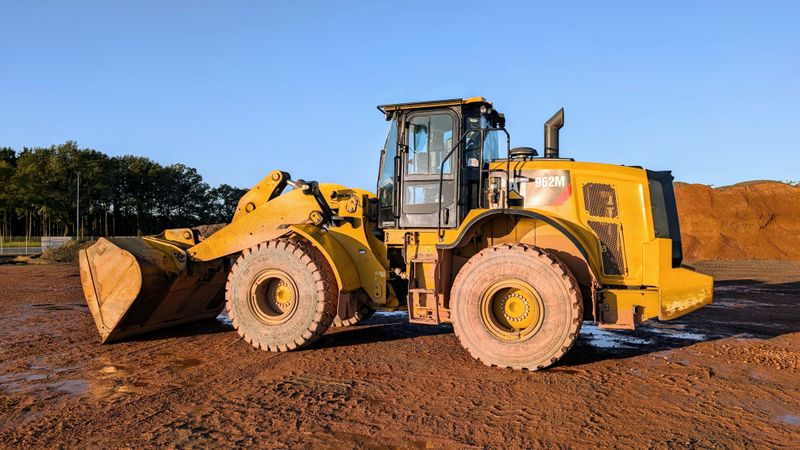
A fleet dashboard can show a high idle percentage without answering the important question: how much was necessary, and what did the avoidable portion cost? A loader waiting safely for trucks is not the same as a machine running through lunch. Use machine data to find the difference without blaming operators or imposing one shutdown rule on every machine.
Define the hours before comparing them
Write the definition and data source beside every metric because telematics platforms may label operating states differently.
| Metric | Working definition |
|---|---|
| Engine-on hours | Time the engine is running; not necessarily productive |
| Idle hours | Engine-on time classified as idle by the machine or platform |
| Productive hours | Time performing the fleet’s defined output-producing task |
| Key-on time | Ignition or electrical system energized; the engine may be off |
| Paid hours | Labor time paid to a person or crew, not machine utilization |
Required standby is engine-on time justified by the operation or a documented exception: safety readiness, traffic control, approved warm-up or cool-down, cab climate under a heat/cold plan, an auxiliary load, or an aftertreatment event. Avoidable idle is validated idle time that can be removed without compromising safety, the job, or the machine.
Use the heavy-equipment telematics guide to confirm whether the idle flag uses RPM, ground speed, hydraulic pressure, fuel rate, or another signal.
Use machine-specific inputs
For each machine or genuinely comparable group, collect:
- Engine-on hours (E) and reported idle hours (I) for the same period
- Required-idle hours (R) identified through operator review and exception codes
- Productive hours (W) using one written definition
- Idle fuel burn (B) in gallons per hour from machine-specific telematics or a controlled measurement
- Fuel price (P) from the fleet’s delivered-fuel invoice for that period
If the platform reports actual idle fuel, use it instead of I × B. Otherwise obtain a model/configuration-specific rate under representative conditions; idle speed, temperature, fan demand, HVAC, electrical load, and attachments can change it. Do not transfer Caterpillar’s example assumption or an on-road-truck rate to another machine. Treat delivery charges, taxes, rebates, and off-road fuel consistently.
Heavy-equipment idle cost formulas
Calculate these values for the same machine and date range:
- Reported idle percentage =
I ÷ E × 100 - Avoidable idle hours =
max(0, I − R) - Total idle fuel =
I × B - Total idle fuel cost =
I × B × P - Avoidable-idle fuel cost =
max(0, I − R) × B × P - Engine-on productive percentage =
W ÷ E × 100
That final percentage is not universal asset utilization. If utilization means productive hours divided by scheduled, available, or paid hours, state the denominator and do not compare unlike KPIs.
For each low/base/high annual scenario, enter avoidable idle hours per comparable workday (A), workdays (D), idle burn (B), and fuel price (P):
Annualized avoidable-idle fuel-cost scenario = A × D × B × P
This is a planning range, not promised savings. Do not add maintenance or emissions dollars unless the fleet has a documented method and relevant machine evidence.
For before/after tracking, compare avoidable idle hours per 100 engine hours and avoidable idle fuel cost per productive hour. Keep machine, job, shift, weather, payload, and exception coding comparable or explain the differences.
Find the cause before choosing the fix
| Observed pattern | Check and response |
|---|---|
| Queueing | Identify whether trucks, processing, or gates set the pace; rebalance the cycle or staging |
| Breaks | Create a safe parking and restart procedure |
| Operator habit | Explain features and exceptions; coach with operator input, not a leaderboard |
| Dispatch imbalance | Adjust fleet mix, routing, or job sequence |
| Warm-up/cool-down | Replace inherited rules of thumb with exact OEM instructions |
| Cab climate | Check the heat/cold plan; consider shade, rotations, or approved auxiliary HVAC |
| Auxiliary loads | Reclassify working time or assess a suitable auxiliary system |
| Aftertreatment event | Use the DPF regeneration decision guide and exact manual |
Queueing often points to a production-system problem, not an operator problem. Review dispatch, haul routes, truck-loader balance, material availability, and access constraints before setting an idle target.
Let the exact OEM manual control exceptions
Before enabling automatic shutdown or setting a limit, retrieve the manual for the exact model, serial range, engine, software, and attachments. Document instructions for:
- Warm-up and cool-down, including low-temperature and turbocharger conditions
- Automatic idle, automatic shutdown, restart, and override behavior
- DPF regeneration, high exhaust temperature, inhibit states, and derates
- Hydraulic, PTO, electrical, climate, and other auxiliary-system loads
- Parking, emergency readiness, visibility, lighting, and safe restart
Caterpillar’s example applies to certain 926, 930, and 938 small wheel loaders; it is not a fleet-wide procedure. Tie each decision to the diesel-engine maintenance program and check anti-idling rules for every jurisdiction and job.
Run a 30-day baseline and pilot
Days 1–7: establish the baseline
Pull engine, idle, fuel, fault, and location data without new incentives. Audit definitions against shift records and ask operators what the dashboard cannot see. Code safety standby, queue, warm-up/cool-down, climate, auxiliary work, regeneration, service, and unknown events.
Days 8–14: pilot one controllable change
Test one change with a comparable crew, site, or machine group while retaining a control or baseline. Brief operators on exceptions and let them correct misclassified events.
Days 15–21: review events and coach
Have supervisors review patterns with operators, not names and percentages alone. Investigate repeated queues, unknown codes, overrides, and aftertreatment events. Recognize correct exception use.
Days 22–30: compare and decide
Normalize results and record fuel cost, production, safety, climate, and maintenance differences. Expand only if avoidable idle falls without slowing output or creating risk.
Do not pay bonuses for shutdown counts or punish operators for documented exceptions. Those incentives can encourage hot shutdowns, disabled climate controls, missed regeneration, or unsafe restarts.
Compare idle-reduction options
| Option | Best fit | Check before rollout |
|---|---|---|
| Written policy and coaching | Definitions and behavior are inconsistent | Manuals, exceptions, local rules, supervisor capacity |
| Dispatch or job sequencing | Idle clusters around queues and handoffs | Cycle times, production constraint, staging safety |
| Auto-idle or auto-shutdown | Compatible machines have repeatable inactive periods | OEM settings, overrides, auxiliary loads, restart risk |
| Telematics alerts | Managers can review events promptly | Signal accuracy, alert fatigue, privacy, correction process |
| Auxiliary technology | Climate or electrical demand drives long standby | Duty cycle, installation approval, cost, maintenance, capacity |
DOE and AFDC describe auxiliary climate and electrical systems mainly for on-road fleets. Treat them as categories, not proof of construction-equipment fit.
Fleet-manager worksheet
| Field | Baseline | Pilot | Notes |
|---|---|---|---|
| Machine/model and work type | |||
| Engine-on hours (E) | |||
| Reported idle hours (I) | |||
| Required-idle hours (R), by code | |||
| Productive hours (W), definition | |||
| Machine-specific idle burn (B) | Source/method | ||
| Actual delivered fuel price (P) | Invoice period | ||
| Avoidable idle cost | max(0, I − R) × B × P | ||
| Avoidable idle hours per 100 engine hours | |||
| Avoidable idle cost per productive hour |
Carry verified fuel cost into the equipment ownership cost calculator and keep it separate from depreciation and resale value. This worksheet makes no maintenance or value-savings claim.
Decision checklist
Before fleet-wide rollout, confirm:
- Metric definitions and exception codes are written and understood
- Idle burn and fuel price are machine- and period-specific
- Operators reviewed the causes and can correct bad classifications
- The exact OEM manual supports each setting and exception
- Job hazards, aftertreatment, climate, auxiliary loads, and local rules are covered
- Before/after periods use comparable work and normalized metrics
- Production and safety did not deteriorate
- Any annualized range is labeled a scenario, not guaranteed savings
The useful target is not zero idle. It is less verified avoidable idle with the same or better safe production.
Primary sources and limits
- Caterpillar fuel-efficiency and idle-cost guidance covers trend tracking, jobsite setup, training, and automatic features. Its numeric assumptions are examples only.
- Caterpillar’s engine idle shutdown timer example is limited to specified small wheel loader models.
- John Deere Connected Support overview (PDF) lists fuel, idle, engine-hour, utilization, and aftertreatment data for supported equipment; availability varies.
- EPA’s 2007 construction-equipment report informs cause mapping, training, scheduling, and manual-based exceptions, but its costs and assumptions are historical.
- DOE’s idle-reduction index and AFDC idle-reduction basics primarily cover highway vehicles. Validate every machine application.

Ironworks Insider Editorial Team
Independent trade-focused editorial team