High flow vs. standard flow skid steer hydraulics
Quick answer
Choose by the attachment's complete hydraulic and carrier requirements, not the words standard flow or high flow. The machine's delivered GPM and pressure must fit the attachment's allowed range, while the case drain, return back pressure, cooling capacity, coupler, controls, protection package, and carrier approval must also match.
Common questions
- Can a high-flow attachment run on a standard-flow skid steer?
- Only when the attachment manufacturer explicitly approves the machine's flow, pressure, hydraulic connections, and carrier model. A high-flow label alone is not permission to under-supply the motor or improvise plumbing.
- Is GPM or PSI more important for a skid steer attachment?
- Both matter. Flow influences hydraulic motor speed, pressure supports torque under load, and their combination determines theoretical hydraulic horsepower. Each value must remain within the attachment manufacturer's range.
- Does every high-flow attachment need a case drain?
- No. Case-drain requirements depend on the attachment motor and plumbing design. Some require a dedicated low-pressure drain, while selected two-hose designs do not. Follow the exact attachment manual.
- Does high flow increase skid steer lifting capacity?
- Not by itself. Auxiliary hydraulic output and rated operating capacity are different specifications. Check attachment weight, load position, machine rating, tire or track setup, counterweight rules, and OEM carrier approval separately.
Source note: Reviewed against current Caterpillar loader and attachment specifications, Parker hydraulic formulas, a Blue Diamond attachment manual, Fecon case-drain guidance, and OSHA hazardous-energy guidance. The manuals for the exact machine, attachment, and serial-number configuration control.
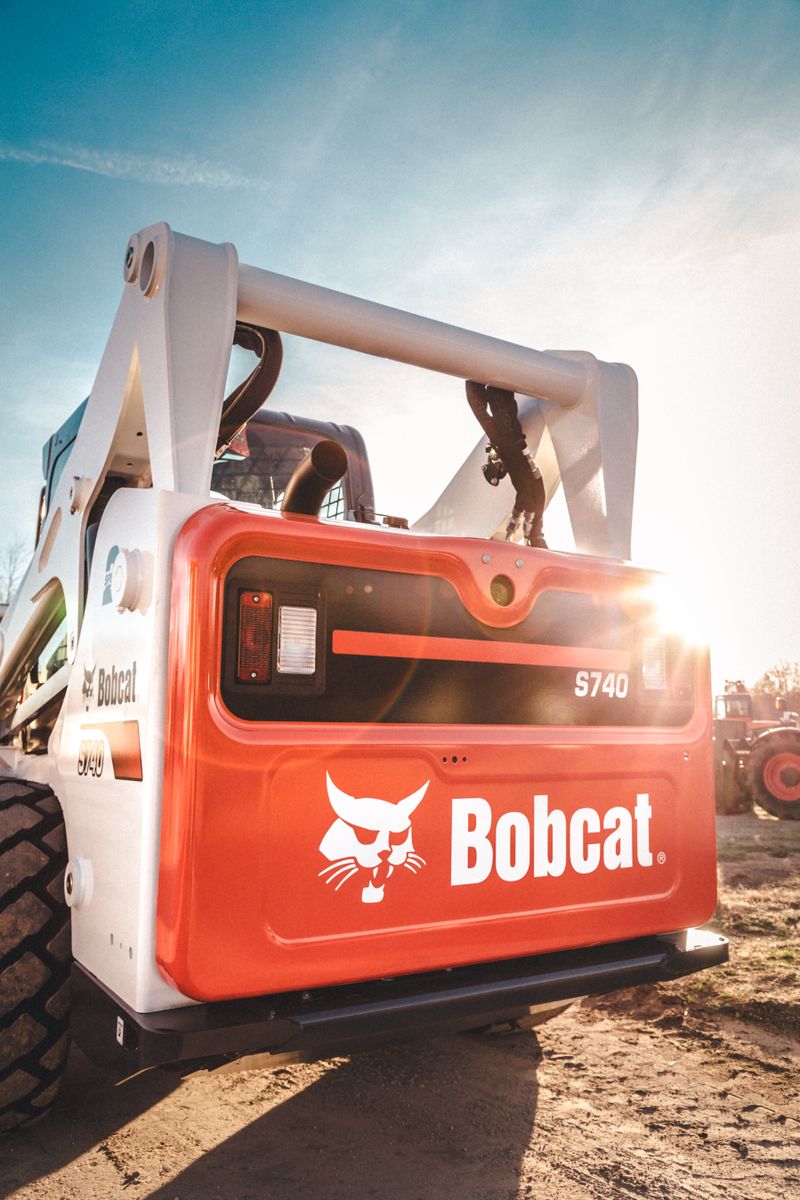
The practical difference between high flow and standard flow skid steer hydraulics is usable attachment power, not a universal GPM cutoff. Buy or rent only after the machine’s flow and pressure fit the attachment’s specified window and every supporting requirement—case drain, return back pressure, cooling, coupler, controls, guarding, and carrier approval—also checks out.
A standard-flow machine can run many buckets, grapples, augers, brooms, and even some manufacturer-approved mulchers. High flow becomes valuable when a matched cold planer, snow blower, stump grinder, or forestry head needs more oil flow to maintain motor speed under load. Browse the broader skid steer attachments guide for job types; use this page for the hydraulic decision.
High flow vs. standard flow at a glance
| Question | Standard flow | High or enhanced flow |
|---|---|---|
| What changes? | Base auxiliary circuit output | Optional circuit or machine package with more flow and sometimes more pressure |
| Best fit | Attachments whose published range includes the machine output | Attachments explicitly approved for that package and output |
| Does the label prove compatibility? | No | No |
| Does it increase lift capacity? | No automatic change | No automatic change |
| What else must match? | Pressure, motor, drain, return, coupler, controls, cooling, weight, guarding | The same complete list |
Manufacturers do not use one naming system. A listing may say standard flow, high flow, XPS, XE, super flow, or enhanced flow. Those names describe packages within a product line, not an industry conversion chart.
For example, Caterpillar’s current 270 XE skid steer specifications list 23 GPM and 3,500 PSI for standard flow, 34 GPM and 4,061 PSI for High Flow XPS, and 40 GPM and 4,496 PSI for XE. Those figures belong to that model and configuration. Record the numbers from the exact machine’s serial-number-specific manual or data plate instead of applying them to another loader.
GPM, PSI, and hydraulic horsepower are different checks
GPM (gallons per minute) is flow. For a given hydraulic motor displacement, more flow generally means more motor speed. Too little may make an attachment slow or unproductive; too much can overspeed the motor.
PSI (pounds per square inch) is pressure. For a given motor displacement, pressure supports torque when the tool meets resistance. A loader’s relief setting is a protective limit, not proof that an attachment should operate continuously at that pressure.
Hydraulic horsepower combines flow and pressure. Parker’s hydraulic formula reference gives theoretical fluid power as:
Hydraulic horsepower = GPM × PSI ÷ 1,714
That is a paper comparison. Couplers, hoses, valves, return restrictions, motor efficiency, and heat reduce power delivered at the tool. Do not multiply maximum advertised flow by maximum relief pressure and assume both are continuously available.
Machine and attachment compatibility worksheet
Complete this from the loader manual, attachment manual, motor tag, and OEM compatibility list. A blank is not a pass.
| Check | Machine or fleet record | Attachment requirement | Pass? |
|---|---|---|---|
| Auxiliary flow | ___ GPM in selected mode | Minimum ___ / maximum ___ GPM | ___ |
| Auxiliary pressure | ___ PSI operating/relief | Minimum ___ / maximum ___ PSI | ___ |
| Theoretical hydraulic hp | ___ at expected load | Required or recommended ___ | ___ |
| Case drain | Port type, size, route: ___ | Required? ___; max case pressure/flow: ___ | ___ |
| Return back pressure | OEM limit or measured result: ___ | Attachment maximum: ___ | ___ |
| Cooling and duty cycle | Ambient/temp limit, cooler package: ___ | Continuous/intermittent rules: ___ | ___ |
| Couplers and hoses | Size, type, flow rating: ___ | Required size/type/routing: ___ | ___ |
| Electrical controls | Connector, pins, software/mode: ___ | Functions required: ___ | ___ |
| Mount and carrier approval | Coupler type and approved models: ___ | Approved carrier list: ___ | ___ |
| Weight and protection | ROC, counterweight, tires/tracks, guarding: ___ | Weight, center of gravity, kit/cab rules: ___ | ___ |
Also confirm flow direction, continuous-flow control, freewheeling or anti-cavitation provisions, relief arrangement, hose routing through the full lift-and-tilt range, and hydraulic fluid compatibility. The machine must pass the physical and control checks even when the GPM and PSI columns look perfect.
Worked compatibility check: Cat 270 and HM115
This is a document review example, not field testing or blanket approval.
- Cat publishes 23 GPM and 3,500 PSI for the 270’s standard-flow circuit.
- Cat publishes 20–23 GPM, 2,900–3,336 PSI, and “Standard Flow” as the required hydraulics for the HM115 mulcher.
- Flow fits: 23 GPM is at the top of the attachment’s published optimal window.
- Pressure capability fits on paper, but the attachment’s 3,336 PSI upper figure—not the loader’s 3,500 PSI relief figure—sets the relevant attachment boundary.
- At a clearly labeled example demand of 23 GPM and 3,200 PSI, theoretical hydraulic power is about 43 hp: 23 × 3,200 ÷ 1,714. This is not a measured shaft-power claim.
- The public product pages do not complete the case-drain, back-pressure, coupler, control, cooling, guarding, or serial-number approval rows. Those remain pending, so the setup should not be connected or operated until the current OMMs and Cat work-tool compatibility information close them.
The lesson is bigger than the models: standard flow can suit a purpose-built mulcher, and a numerical overlap is still only part of a safe match.
Case drains and back pressure can decide the purchase
A case drain carries internal motor leakage through a low-pressure path. Excess case pressure can damage shaft seals or the motor, but there is no universal maximum. Blue Diamond’s 2024 severe-duty drum mulcher manual, for example, states limits for that specific motor, including a 73 PSI maximum case pressure during cold start. Do not transfer that number to another attachment.
Nor should you assume every demanding attachment needs a third line. Fecon says its selected two-hose FMX and standard-flow designs eliminate the case-drain connection. The attachment manual controls.
Record the allowable case pressure, drain flow, hose size, coupler type, and whether the line must return directly to tank. Record maximum return-line back pressure separately. A plugged coupler, undersized hose, wrong quick-connect, or improvised tee can invalidate an otherwise good flow match.
Heat, cooling, couplers, and controls
Pressure lost across restrictions becomes heat. Parker’s reference shows how pressure drop and flow translate into heat load, which is why a machine that reaches the requested GPM may still overheat during continuous work.
If a compatible attachment will not connect, does not respond, loses power, leaks, or fails only after warming up, use the skid steer auxiliary hydraulics diagnostic to follow the correct symptom branch before revisiting capacity.
Confirm the loader’s approved cooler package, ambient-temperature limits, cleaning interval, temperature warnings, and attachment duty cycle. Stop for an over-temperature warning and diagnose the cause; do not treat cooldown breaks as proof of compatibility. The hydraulic system maintenance guide covers cooler cleanliness, fluid condition, filters, and hose inspection.
Mechanical fit is not enough either. Match the coupler plate, hose and quick-coupler ratings, electrical connector, control logic, and required software or attachment-control kit. Caterpillar’s quick-attach guidance directs operators to the OMM for hose routing and to verify coupler connections. Follow the exact loader and tool procedure.
When to buy high flow—and when to rent it
Buy high flow when recurring, profitable work requires attachments that pass the full worksheet only on that package. Include the option cost, extra maintenance exposure, attachment cost, guarding, training, transport, and resale demand in the decision.
Stay with standard flow when your core tools already fit its published range. A compatible standard-flow tool can be the better fleet choice when it avoids an unnecessary machine upgrade and meets production targets.
Rent a matched machine-and-attachment package for occasional specialized work, uncertain workloads, or when your machine fails one compatibility row. Use the equipment rent-vs.-buy framework to compare utilization and ownership costs. If you are shopping used, verify the hydraulic option by serial number, then use the skid steer brand comparison to frame dealer, support, and fleet-standardization questions.
Safety boundaries before connecting hydraulics
Hot oil, stored pressure, rotating tools, and raised lift arms can cause fatal injuries. Before attachment change or service:
- Lower the attachment to the OEM-defined safe position, neutralize controls, apply the parking brake, shut down, and remove the key
- Isolate hazardous energy and dissipate or restrain stored hydraulic and mechanical energy under the employer’s procedure and the exact manuals
- Use the manufacturer’s lift-arm support when a raised arm is authorized; never rely on hydraulic pressure alone
- Let hot components cool and wear the PPE specified by the manuals and site plan
- Release auxiliary pressure by the machine’s procedure before handling couplers
- Never use a hand or any body part to find a leak; an OSHA-recorded 3,000 PSI injection incident required hospitalization, and any suspected injection needs immediate emergency medical evaluation
- Keep people clear while verifying the attachment lock, hose routing, controls, and approved function test
OSHA’s hazardous-energy guidance identifies hydraulic and thermal energy as hazards during service. Its minimal lockout procedure also requires stored energy to be dissipated or restrained. These rules set a safety floor; construction requirements, employer procedures, and OEM instructions still apply.
Next step: approve one configuration on paper
Print or copy the worksheet, attach the relevant manual pages, and have the dealer, attachment manufacturer, or qualified fleet technician resolve every blank for the exact serial-number combination. Then document the approved hydraulic mode, connections, guarding, inspection points, and operator setup.
Do not buy on “high flow” wording alone. Buy a verified machine, attachment, and job combination.

Ironworks Insider Editorial Team
Independent trade-focused editorial team