New vs. Used Heavy Equipment: A 5-Year and 10-Year Cost Comparison
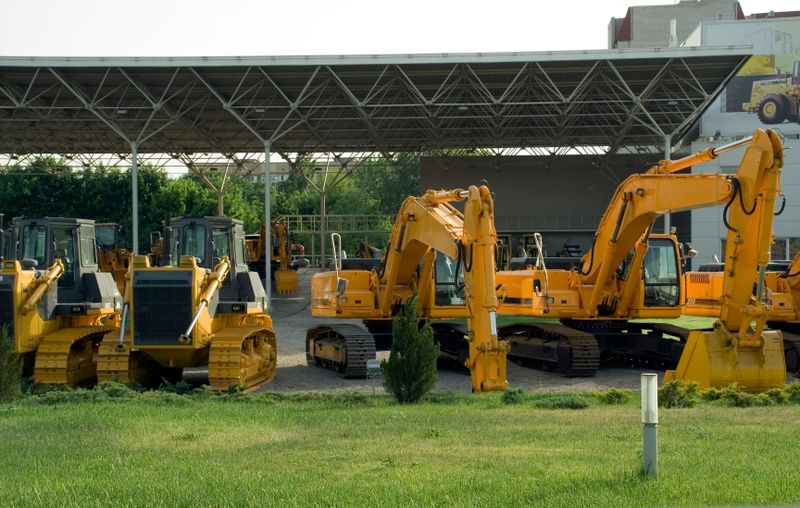
When it comes to buying heavy equipment, the sticker price is only the beginning of the conversation. Whether you’re a general contractor expanding your fleet or an owner-operator making your first major purchase, the decision between new vs. used heavy equipment can define your profitability for years to come. The smart move isn’t always the obvious one — and that’s exactly why a true total cost of ownership (TCO) analysis matters.
This guide walks you through every financial dimension of the new vs. used decision, including warranty coverage, financing rates, maintenance cost curves, technology obsolescence, and resale value projections. To make it concrete, we’ll run the numbers on a mid-size excavator — one of the most common purchases in the construction industry — over both a 5-year and 10-year horizon.
Why Sticker Price Is a Misleading Metric
Most buyers anchor to the purchase price. A new 20-ton excavator might list at $280,000, while a comparable 5-year-old unit with 4,500 hours can be had for $140,000. The $140,000 difference feels decisive. But once you fold in financing costs, expected maintenance, downtime risk, depreciation curve, and eventual resale, the gap narrows — and sometimes inverts entirely.
Total cost of ownership accounts for every dollar the machine will cost you from purchase to disposition. For heavy equipment, the key TCO components are:
- Acquisition cost (purchase price or down payment)
- Financing costs (interest over the loan term)
- Warranty and service contract costs
- Maintenance and repair costs (scheduled and unscheduled)
- Downtime costs (lost revenue while the machine is out of service)
- Fuel and operating costs
- Residual/resale value at end of ownership
Let’s examine how each of these plays out differently for new vs. used equipment.
Warranty Considerations
New Equipment Warranties
New heavy equipment typically comes with a manufacturer’s powertrain warranty of 1–3 years or a defined number of machine hours (commonly 2,000–3,000 hours). Many OEMs — Caterpillar, Komatsu, John Deere, Volvo — offer extended protection plans that cover major components for up to 5 years or 10,000 hours.
The value of a factory warranty goes beyond the direct cost of repairs it covers. It also includes:
- Reduced financial uncertainty — you know what your worst-case repair scenario looks like
- Access to OEM parts and certified technicians at no additional cost during the coverage window
- Telematics integration — newer machines often flag issues proactively through dealer-connected systems, catching small problems before they become expensive
A comprehensive extended warranty on a new excavator might add $8,000–$15,000 to the purchase price, but it effectively caps your repair exposure during the highest-value years of ownership.
Used Equipment Warranties
Used equipment is typically sold “as-is” unless purchased through a certified pre-owned (CPO) program or with a dealer-backed service contract. Some dealer CPO programs offer limited warranties of 6–12 months on specific components, but coverage is rarely as comprehensive as a new machine warranty.
Third-party extended service contracts are available for used equipment, but premiums increase significantly with machine age and hours. A 3-year service contract on a 5-year-old excavator with 4,500 hours might run $12,000–$20,000, and exclusions are common for wear items and pre-existing conditions.
The bottom line: Factor in the cost of a used equipment inspection and any service contract you purchase. If you skip warranty coverage on a used machine, you’re self-insuring against potentially large repair bills.
Financing Rate Differences
New Equipment Financing
Manufacturers offer promotional financing through their captive finance arms (Cat Financial, Komatsu Financial, John Deere Financial, etc.), particularly on new equipment. During 2024–2026, promotional rates on new heavy equipment have ranged from 0.9% to 3.9% APR for qualified buyers, with standard bank financing running 5.5%–8.5% APR depending on borrower creditworthiness and loan term.
These low promotional rates can save tens of thousands of dollars over a 5- or 7-year loan term. A $280,000 excavator at 1.9% APR over 60 months costs roughly $19,500 in total interest. The same loan at 7% APR costs approximately $53,000 in interest — a $33,500 difference.
Used Equipment Financing
Banks and credit unions are generally more conservative on used equipment loans. Rates typically run 1.5%–3% higher than new equipment rates, and lenders often limit terms on older equipment. A lender may cap a loan term at 48 months rather than 72 months on a machine that’s already 5 years old, which drives up monthly payments.
Additionally, some lenders require a larger down payment (15–25%) on used equipment, which affects your cash position at closing.
Maintenance Cost Curves: The Critical Difference
This is where the TCO analysis really diverges. Maintenance costs on heavy equipment are not linear — they follow a curve that accelerates with age and hours.
New Equipment: The Low-Cost Window
In years 1–3, a new machine’s maintenance costs are dominated by scheduled preventive maintenance — oil and filter changes, hydraulic fluid service, undercarriage inspection. For a mid-size excavator, annual scheduled maintenance might run $4,000–$7,000 per year. Major component failures are rare and covered by warranty.
Used Equipment: Living With the Curve
A used excavator with 4,000–5,000 hours is approaching the point where unscheduled repairs become a significant budget item. Common expenses include:
- Hydraulic pump rebuild or replacement: $6,000–$12,000
- Final drive replacement: $4,000–$8,000 per side
- Swing motor rebuild: $3,500–$6,000
- Track group replacement: $12,000–$20,000 for the full undercarriage
- Engine overhaul (at high hours): $20,000–$35,000
Industry rule of thumb: budget 1.5%–3% of purchase price per year for maintenance on equipment under 5,000 hours, scaling to 3%–5% per year beyond that threshold.
5-Year Cost Scenario: Mid-Size Excavator
Let’s run a concrete comparison. Our baseline machine: a 20-ton excavator, with an estimated 1,000 hours of annual use.
Scenario A: New Excavator
| Cost Category | Year 1 | Year 2 | Year 3 | Year 4 | Year 5 | Total |
|---|---|---|---|---|---|---|
| Purchase price | $280,000 | — | — | — | — | $280,000 |
| Financing (2.9% APR, 60 mo) | $9,200 | $7,800 | $6,400 | $4,900 | $3,300 | $31,600 |
| Scheduled maintenance | $5,500 | $6,000 | $6,500 | $7,000 | $7,500 | $32,500 |
| Unscheduled repairs | $1,000 | $1,500 | $2,500 | $4,000 | $5,500 | $14,500 |
| Gross cost | $358,600 | |||||
| Resale value at year 5 | -$112,000 | |||||
| Net 5-Year TCO | $246,600 |
Scenario B: Used Excavator (5 years old, 4,500 hours)
| Cost Category | Year 1 | Year 2 | Year 3 | Year 4 | Year 5 | Total |
|---|---|---|---|---|---|---|
| Purchase price | $140,000 | — | — | — | — | $140,000 |
| Inspection & initial service | $3,500 | — | — | — | — | $3,500 |
| Financing (7.5% APR, 48 mo) | $9,500 | $8,200 | $6,700 | $3,900 | — | $28,300 |
| Scheduled maintenance | $7,000 | $7,500 | $8,000 | $8,500 | $9,000 | $40,000 |
| Unscheduled repairs | $6,000 | $8,000 | $10,000 | $12,000 | $14,000 | $50,000 |
| Gross cost | $261,800 | |||||
| Resale value at year 5 | -$35,000 | |||||
| Net 5-Year TCO | $226,800 |
5-Year Verdict: Used equipment has a slight TCO edge ($226,800 vs. $246,600), but the margin is narrower than the $140,000 price difference suggests. The higher maintenance and financing costs on the used machine close most of the gap — and the used machine carries significantly more downtime risk, which isn’t fully priced into these numbers.
10-Year Cost Scenario: The Long Game
The 10-year picture shifts the analysis more meaningfully.
New Excavator (Years 1–10)
By year 10, the new excavator purchased in year 1 now has ~10,000 hours and is approaching the same maintenance cost territory as the used machine. Key differences:
- The machine was fully paid off by year 5, so no ongoing financing costs in years 6–10
- Years 1–5 benefited from lower, more predictable maintenance costs
- Resale value at year 10: approximately $45,000–$65,000
Estimated 10-year gross cost (new): $480,000–$520,000 Estimated 10-year net TCO (after resale): $415,000–$475,000
Used Excavator (Years 1–10)
By year 10, the used excavator has 14,500+ hours — deep into high-maintenance territory. Major component overhauls are likely, and some buyers will find themselves deciding between a costly rebuild and another purchase around years 7–8.
- Resale value at year 10: approximately $10,000–$20,000 (if still operable)
- Major component overhaul during ownership likely: add $30,000–$60,000
- Higher cumulative downtime: potentially 15–25% more lost revenue days
Estimated 10-year gross cost (used): $460,000–$530,000 Estimated 10-year net TCO (after resale): $440,000–$520,000
10-Year Verdict: At the 10-year mark, the TCO difference largely disappears — and the new machine may actually come out ahead once you factor in higher downtime costs and potential major overhauls on the used unit. The new machine also provides a better ownership experience throughout.
Technology Obsolescence
This factor is increasingly relevant in modern heavy equipment. Machines manufactured since 2020 incorporate:
- Telematics and fleet management systems (Cat Product Link, Komatsu KOMTRAX, Volvo CareTrack)
- Grade control and GPS integration compatible with current site data workflows
- Tier 4 Final / Stage V emissions compliance, which is required in many urban markets
- Advanced hydraulic systems that reduce cycle times and fuel consumption by 10–20% vs. older designs
A 10-year-old machine may struggle to interface with modern jobsite technology platforms, limiting its value on sophisticated projects and reducing its appeal to future buyers.
Resale Value Projections
Heavy equipment depreciation is front-loaded. A new excavator typically loses 20–25% of its value in year one, then depreciates at a slower rate of 10–15% per year through years 2–5. After that, depreciation flattens but accelerates again as hours accumulate past 8,000–10,000.
Used equipment purchased mid-curve benefits from the slowest part of the depreciation slope in years 1–3 of ownership, but catches up to rapid depreciation as hours pile on in later years.
Key insight: The best window for used equipment resale is generally before 8,000 hours on the meter — beyond that, the buyer pool shrinks and prices drop sharply.
Making the Decision: A Framework
Choose New Equipment If:
- You have access to manufacturer promotional financing (sub-3% APR)
- You want predictable maintenance costs and warranty protection
- The machine will be used on technology-forward jobsites requiring telematics or grade control
- You plan to keep the machine long-term (7–10+ years)
- Your business can absorb the higher initial payment
Choose Used Equipment If:
- You have strong mechanical staff in-house or a trusted independent shop
- You can purchase at a significant discount and have performed a professional inspection
- The machine will be used for a defined project rather than indefinite fleet deployment
- You have cash reserves to handle unexpected repairs without disrupting operations
- The machine is relatively recent (3–5 years old, under 5,000 hours)
Getting the Numbers Right for Your Situation
Every contractor’s TCO calculation will differ based on local labor rates, dealer relationships, financing eligibility, and actual utilization patterns. The scenarios above are illustrative — your actual numbers may vary by 20–30%.
Before making a major equipment purchase, consider consulting with a dealer who can provide a life-cycle cost analysis for specific models you’re evaluating. Many dealers offer these analyses at no charge as part of the sales process, and a good dealer will help you understand both new and certified pre-owned options side by side.
Getting multiple financing quotes — from your bank, the manufacturer’s captive lender, and an independent equipment finance company — can also reveal significant rate differences that change the TCO picture entirely.
The right choice isn’t always the cheapest upfront. It’s the one that keeps your machines running, your jobs on schedule, and your bottom line healthy over the full ownership horizon.
2026 decision refresh
Quick decision: buy new when uptime, warranty, emissions compliance, telematics support, and financing terms matter more than purchase price. Buy used when utilization is uncertain, capital is tight, and you can verify condition with inspection, service records, and realistic repair reserves.
| Decision factor | New equipment advantage | Used equipment advantage |
|---|---|---|
| Cash flow | Promotional OEM financing may lower interest cost | Lower purchase price and smaller debt load |
| Uptime | Warranty and dealer support reduce surprise downtime | Good value if hours, fluids, and maintenance history check out |
| Depreciation | Predictable early ownership, but steep value drop | Prior owner absorbed the largest depreciation hit |
| Compliance | Latest emissions and safety features | Simpler older machines may cost less to maintain |
| Fleet planning | Easier standardization | Faster availability when new lead times are long |
Source note: Treat ownership cost as a business calculation, not only a machine comparison. IRS depreciation rules, lender terms, maintenance records, and OSHA safety obligations all affect the true cost of putting equipment into service.
Related tool and guides
- Heavy equipment inspection log - document pre-purchase and ongoing condition checks.
- How to inspect a used excavator - apply the used-equipment half of this decision.
- Heavy equipment depreciation - model resale and book value.
- Equipment rental vs buy - compare ownership against short-term project needs.
Model the ownership decision before buying
These resources connect used-equipment tradeoffs with financing, maintenance, depreciation, and rent-vs-buy math.
- Equipment ownership cost calculator
Compare ownership, rental, and financing costs before committing to a machine.
- Heavy equipment financing options
Use financing terms as one input in the ownership-cost model.
- Hydraulic system maintenance
Estimate maintenance reserves and downtime exposure for used equipment.
- Equipment rental vs. buy
Check whether utilization supports ownership or rental for the work pipeline.

Ironworks Insider Editorial Team
Independent trade-focused editorial team