Skid steer tipping load vs. rated operating capacity
Quick answer
Tipping load is a controlled-test stability value, not a working target. Rated operating capacity is the manufacturer-published working rating for a defined machine, attachment, test standard, and market. Plan work from the exact model documentation, then account for attachment, load center, configuration, terrain, slope, and operating conditions.
Common questions
- Can a skid steer safely lift its tipping load?
- No. Tipping load marks a tested stability threshold under defined conditions; it is not a safe operating target. Use the rated operating capacity and all limits in the exact machine and attachment documentation.
- Is rated operating capacity always 50% of tipping load?
- No. The relationship depends on machine class, test standard, manufacturer, configuration, and market. The wheeled skid steers compared here publish base ratings near 50%, while compact track loader literature may publish 35% and 50% reference values.
- Does attachment weight reduce usable skid steer capacity?
- Attachment mass and the resulting load center affect stability, but the correct allowance depends on what the published rating already includes. Do not rely on a universal subtraction formula; use the model manual, attachment documentation, and an approved manufacturer or dealer rating for the actual setup.
Source note: Current North American OEM specifications, ISO and SAE standard summaries, and WorkSafe Victoria guidance were reviewed on August 24, 2026. Specifications and rating methods vary by model, configuration, attachment, standard, and market.
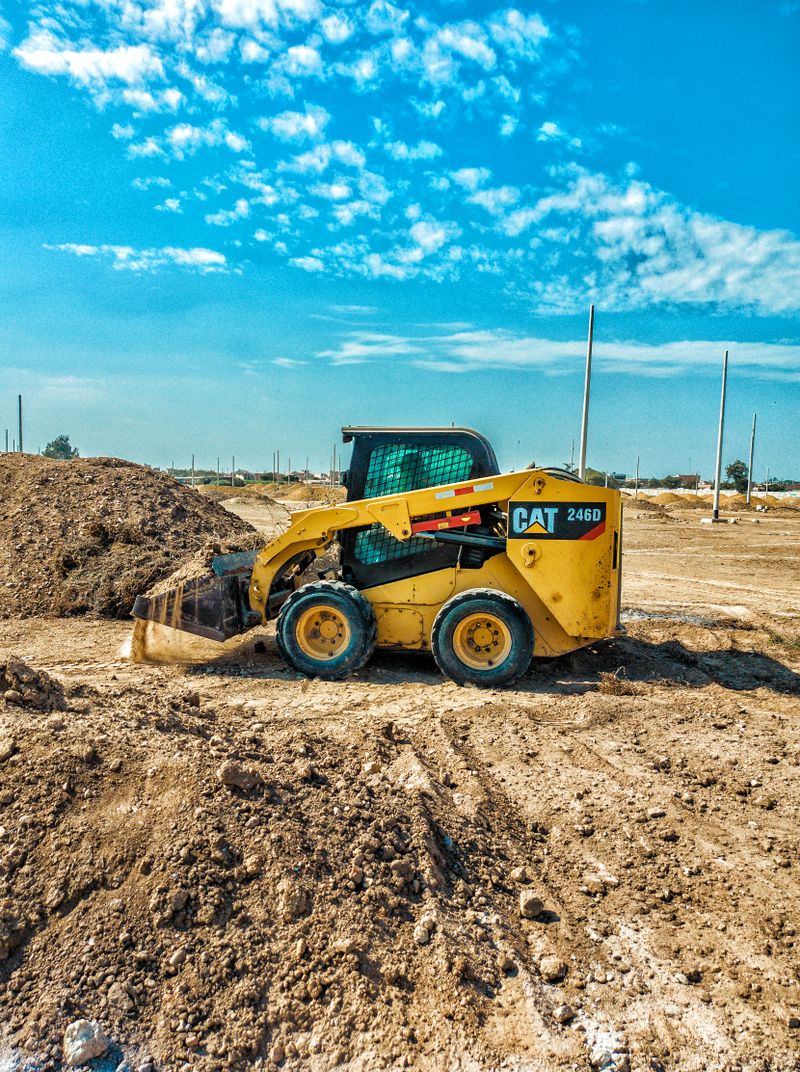
Tipping load is the point at which a skid steer reaches a defined forward-tipping condition during a controlled test. Rated operating capacity (ROC) is the lower, manufacturer-published rating intended for operation under specified conditions. Tipping load is not a payload goal, and hydraulic power to raise an object does not prove that the machine can carry it safely.
Safety boundary: Never use tipping load as an operating target or invent a capacity from a percentage alone. Follow the exact operator manual, machine rating plate, attachment instructions, site rules, and local law. If the load, load center, configuration, ground, or slope is unknown, stop and get an approved answer before lifting.
Tipping load vs. operating capacity at a glance
| Term | What it tells you | What it does not tell you |
|---|---|---|
| Tipping load | A stability value established under a defined test setup | A safe load to carry, raise, travel with, or handle on a slope |
| Rated operating capacity | The OEM’s published operating rating for a stated model and configuration | Approval for every attachment, load shape, height, surface, or operating method |
| Breakout force | Available force for curling or lifting material under a specified test | Stability or safe payload; a machine can have enough force to become unstable |
| Attachment rating | The attachment’s own structural or hydraulic limit | Permission to exceed the carrier’s ROC or stability limits |
ISO 14397-1 covers calculation of rated operating capacity and verification of tipping load for wheeled and crawler loaders fitted with buckets or material-handling forks. The standard was confirmed current in 2025. SAE J818 also recognizes that operating conditions can require a smaller load than the published rating.
Those details matter. A brochure that identifies ISO 14397-1, a North American page that lists an SAE rating, and a compact track loader page that shows multiple percentage references are not interchangeable specifications.
Is ROC 50% of skid steer tipping load?
For many wheeled skid steer listings, the published base ROC is approximately 50% of tipping load. For example, Bobcat lists 5,800 pounds tipping load and 2,900 pounds ROC for the S76-2. That relationship describes the published rating for that machine; it is not a universal field formula.
Do not transfer the same assumption to every compact loader. Caterpillar’s current compact track loader pages, for example, show separate 35% and 50% tipping-load references. Machine class, region, standard, and configuration must stay attached to the number. If you are deciding between undercarriages, read skid steer vs. compact track loader before comparing capacity figures.
Current OEM skid steer capacity examples
The following official North American specifications were checked on August 24, 2026. These 74-hp-class machines make a useful decoding example, but this is not a normalized lift test or a brand ranking.
| Current OEM listing | Base ROC | Tipping load | Configuration detail to keep with the number |
|---|---|---|---|
| Bobcat S76-2 | 2,900 lb | 5,800 lb | Bobcat separately lists 3,050 lb ROC with a 200-lb counterweight and 3,100 lb with a 300-lb counterweight |
| Cat 260 | 3,160 lb | 6,321 lb | Cat’s base note specifies operator, fluids, open ROPS, bucket, tires, standard flow, manual coupler, and no optional counterweights |
| John Deere 324G | 2,690 lb | 5,380 lb | Deere identifies an SAE ROC and separately lists 2,850 lb with counterweight |
The differences are a warning against copying the largest number from a comparison table. Counterweights, tires, couplers, bucket, cab, operator basis, and regional specification can change the published setup. Our Bobcat vs. Kubota vs. Cat skid steer comparison covers broader buying criteria without treating ROC as the only decision.
Why a published ROC is not the whole job plan
Attachment mass and load center
Pallet forks, grapples, buckets, adapters, couplers, and any rigging add mass and move the combined center of gravity. A long pallet or suspended object can place the load farther forward than a compact bucket load of the same weight. That greater moment can reduce stability.
Do not blindly subtract attachment weight from ROC and call the remainder safe. First establish what attachment and configuration the OEM rating includes, then obtain an approved limit for the actual tool and load center. The skid steer attachments guide provides a compatibility checklist covering weight, hydraulics, couplers, controls, and guarding.
Height, movement, and terrain
The machine’s balance changes as the lift arms rise and the load moves forward. Braking, turning, dropping a wheel into a rut, crossing soft ground, or allowing a load to swing adds dynamic forces that a static headline number cannot capture.
WorkSafe Victoria advises operators to carry loads close to the ground, determine the machine’s heavier end for the attachment and load, measure slopes, avoid sudden control movements, and keep clear of holes and soft ground. Use our ground conditions and equipment stability guide to document the travel path, but let the model manual set the actual slope and operating limits.
Hydraulic force is not capacity
Breakout force, lift-cylinder force, hydraulic pressure, and ROC measure different things. A loader may curl, pry, or briefly raise an object that exceeds its stable operating limit. That does not create extra safe capacity, and adding counterweight is valid only when the OEM approves the exact kit and publishes a revised rating.
Skid steer load-planning worksheet
Use this worksheet to prepare a dealer, rental desk, supervisor, or competent-person review. It is a screening record, not a capacity calculator. A blank or estimated critical field means the lift is not ready to approve.
| Input | Record before the job | Why it matters |
|---|---|---|
| Exact carrier | Model, serial/PIN, rating plate, market, manual revision | Similar model names can have different ratings |
| Machine configuration | Cab, tires, coupler, approved counterweights, ballast, fluids | Published capacity depends on a defined setup |
| Attachment | Make, model, mass, rated capacity, carrier approval | The tool has its own limits and changes machine balance |
| Load | Verified total mass, including material, container, pallet, adapters, and rigging | Guesses miss moisture, packed material, and hidden contents |
| Load center | Center-of-gravity distance and load dimensions | Equal weights can create different forward moments |
| Lift and route | Pickup height, carry position, required lift height, dump reach, turns, stops | Raising and moving the load change stability demands |
| Ground | Firmness, level, holes, edges, trenches, debris, tire support | Loss of support can overturn a machine below headline ROC |
| Slope | Measured front-to-back and side slope; exact manual limit | Direction and gradient change weight distribution |
| Controls | Exclusion zone, spotter plan, visibility, restraints, training, SWMS/site procedure | Capacity does not control struck-by, crush, or falling-material hazards |
| Approved result | Exact permissible load and restrictions from the controlling documentation | The final limit must come from an authoritative model-specific source |
For powered tools, capacity review is separate from hydraulic compatibility. Use the standard-flow vs. high-flow skid steer worksheet to verify flow, pressure, case drain, cooling, couplers, and controls.
How to compare a rental or purchase
Ask every dealer or rental company for the same evidence:
- The rating plate and current operator manual for the exact serial-numbered machine.
- The published ROC basis, including the test standard and installed equipment.
- Written approval and capacity information for the exact attachment and load center.
- The revised rating for any approved counterweight package.
- Model-specific slope, travel, lift-height, and surface restrictions.
- Actual operating and transport weight for the configured machine.
Then compare job fit, service support, transport, and ownership cost. Do not choose a machine solely because its tipping load is larger.
Useful next step
Copy the worksheet into the job file and complete it with the dealer, rental provider, supervisor, or other qualified decision-maker. If one supplier cannot document the exact machine-and-attachment combination, compare another configuration or use equipment designed for the lift.
Before operation, review the skid steer operating guide and record the pre-start, travel route, exclusion zone, surface, slope, and load controls in the site’s required procedure.
Sources and scope
Primary sources reviewed on August 24, 2026, Australia/Melbourne date:
- ISO 14397-1:2007 standard summary
- SAE J818 rated operating load standard summary
- Bobcat S76-2 specifications
- Cat 260 specifications
- John Deere G-Series skid steer specifications
- WorkSafe Victoria: controlling risks from skid-steer loaders
- WorkSafe Victoria: mini loader overturning controls
Specifications can change. Confirm the current local manual, rating plate, attachment documentation, and legal requirements before planning or performing work.

Ironworks Insider Editorial Team
Independent trade-focused editorial team