Skid Steer vs. Compact Track Loader: The Complete Comparison
Quick answer
Skid steers are generally better on hard surfaces and lower-cost jobs, while compact track loaders provide more flotation and traction on soft, muddy, or uneven ground. Ground conditions should drive the choice more than brand preference.
Common questions
- When should you choose tracks over wheels?
- Choose tracks for soft soil, mud, slopes, grading, and jobs where flotation matters. Choose wheels for pavement, frequent road travel, lower maintenance cost, and abrasive surfaces.
- Are compact track loaders always more productive?
- No. They can be more productive in poor ground, but tracks cost more to maintain and can wear quickly on hard abrasive surfaces.
Source note: Reviewed July 2026 against the article guidance and common heavy-equipment practice; manufacturer manuals, site plans, OSHA rules, and competent-person direction control field work.
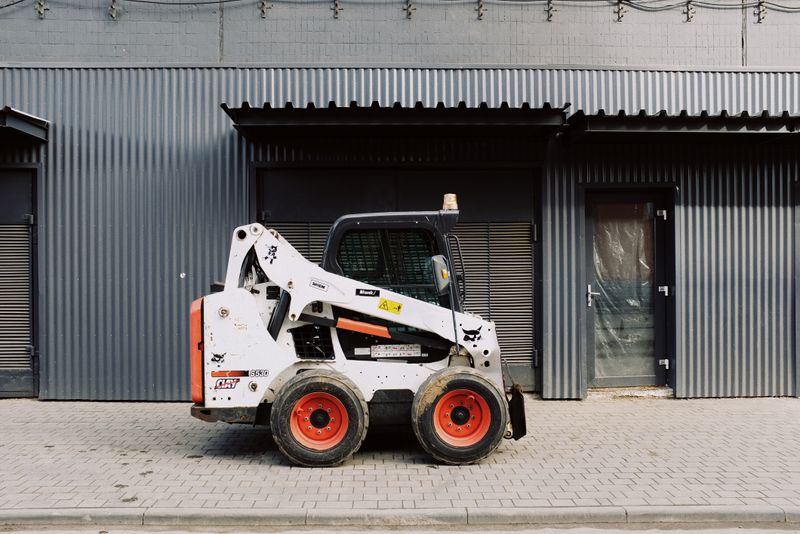
Few decisions cause more debate on the job site than the choice between a skid steer loader (SSL) and a compact track loader (CTL). Both machines share the same basic frame, the same attachment interfaces, and the same operator station — yet they perform very differently depending on the ground beneath them. Buy the wrong one and you’ll either tear up a pristine lawn or watch your machine sink into a muddy field while your deadline slips.
This guide breaks down every meaningful difference between the two so you can make the right call for your operation.
What Is a Skid Steer Loader?
A skid steer loader is a compact, rigid-frame machine that steers by independently varying the speed of wheels on each side. The “skidding” motion is what gives it the name — the tires drag and pivot to change direction rather than using a steering axle.
SSL machines typically run on four solid rubber or pneumatic tires. They are lighter, faster, and cheaper to maintain than their tracked counterparts. The Bobcat S70, Kubota SSV75, and CAT 262D3 are among the most popular models in the field.
What Is a Compact Track Loader?
A compact track loader uses rubber tracks instead of wheels. Hydraulic drive motors power the undercarriage, and the same skid-steering principle applies — each track runs at a different speed to turn the machine. CTLs typically weigh 1,000–2,000 lbs more than equivalent-horsepower SSLs, and they cost more to purchase and maintain.
Popular CTL models include the Bobcat T76, CAT 259D3, and John Deere 333G.
The Core Differences at a Glance
| Feature | Skid Steer (SSL) | Compact Track Loader (CTL) |
|---|---|---|
| Ground pressure | 25–45 PSI | 4–7 PSI |
| Traction on soft ground | Moderate | Excellent |
| Ground damage | Higher | Lower |
| Maneuverability (tight spaces) | Better | Good |
| Purchase price | Lower ($30K–$55K) | Higher ($45K–$75K) |
| Maintenance cost | Lower | Higher (tracks, rollers) |
| Transport weight | Lighter | Heavier |
| Speed (travel) | Faster (up to 12 mph) | Slower (8–10 mph) |
| Resale value | Moderate | Strong |
| Best terrain | Hard, stable surfaces | Soft, wet, uneven terrain |
Traction and Flotation: Where CTLs Dominate
The single biggest advantage of a compact track loader is ground pressure. The wide rubber tracks spread the machine’s weight across a much larger footprint than four small tires ever could.
A typical skid steer exerts 25–45 PSI of ground pressure. A comparable CTL exerts only 4–7 PSI — roughly the same as a person walking. On saturated soil, freshly graded fill, sandy terrain, or muddy construction sites, that difference is everything.
When the ground is soft, a skid steer will dig in, spin its tires, and potentially get stuck. A CTL floats on top of those same conditions and keeps working. If your operation regularly takes you into muddy fields, wetlands, beach sand, or loose fill, a CTL is the practical choice — full stop.
Specific Terrain Recommendations
- Wet clay or saturated soil: CTL strongly preferred
- Sandy or loose soil: CTL preferred
- Freshly placed topsoil or sod: CTL preferred (less rutting)
- Packed gravel or asphalt: SSL equally capable, lower wear cost
- Concrete floors or pavement: SSL preferred (tracks wear faster on hard surfaces)
- Rocky terrain: SSL preferred (rocks damage rubber tracks)
- Mixed conditions: CTL if soft days outnumber hard days; SSL otherwise
Ground Damage: Protecting Finished Surfaces
If you work on turf, finished landscapes, or golf courses, ground disturbance matters as much as traction. Skid steers are notoriously hard on surfaces. The skidding, scrubbing motion of the tires shears grass, displaces topsoil, and leaves deep ruts — especially when turning under load.
CTLs are significantly gentler. The longer track contact patch distributes weight more evenly, and the machine doesn’t “scrub” the surface the same way. Landscape contractors doing high-end residential work often choose CTLs for this reason alone.
Note: Even CTLs can cause turf damage if operated aggressively. Counter-rotating (spinning in place) should be avoided on finished surfaces regardless of machine type.
Maneuverability: Skid Steers Win in Tight Spaces
Here’s where SSLs take back the advantage. The compact footprint and zero-turn radius of a skid steer make it exceptional in tight, confined areas.
Skid steers are typically 2–8 inches narrower than equivalent CTLs (depending on brand and model). In an urban alley, inside a building, or navigating between established landscaping, those extra inches matter enormously. CTLs are not exactly cumbersome — they’re still compact machines — but if you’re regularly working inside structures or on crowded urban job sites, an SSL is the easier machine to position.
SSL also wins on travel speed. Most skid steers top out at 10–12 mph, while CTLs are limited to 8–10 mph. When you’re moving across a large site repeatedly throughout the day, that speed differential adds up.
Operating Costs: SSL Wins on Maintenance
Tracks are more expensive than tires — in every way. Here’s what you need to budget for with a CTL:
CTL Track Costs
- Rubber tracks: $1,500–$3,500 per pair depending on size
- Track lifespan: 1,200–2,000 hours under normal conditions (less on rocky or abrasive surfaces)
- Rollers and idlers: Must be inspected regularly; replacements run $200–$600 per roller
- Undercarriage inspection: Should happen every 250–500 hours
SSL Tire Costs
- Pneumatic tires: $150–$350 per tire
- Solid rubber or foam-filled tires: $400–$900 per tire
- Tire lifespan: 1,500–3,000 hours (varies by surface)
- Flat repair: $50–$150 depending on severity
Over a 5-year ownership period, a CTL typically costs $8,000–$20,000 more to maintain than a comparable SSL, primarily due to track replacement. Factor this into your total cost of ownership calculation before you fall in love with the sticker price.
Fuel Efficiency
The additional mechanical complexity of a CTL undercarriage creates more drivetrain resistance, which translates to slightly higher fuel consumption — typically 5–10% more than an SSL in similar conditions. Over thousands of operating hours, that adds up.
Purchase Price and Financing
Skid steers in the 70–75 HP class typically range from $30,000–$55,000 new, depending on configuration, cab options, and brand.
Compact track loaders in the same horsepower range typically run $45,000–$75,000 new.
That $15,000–$20,000 gap is real, but it needs to be weighed against job performance. If a CTL allows you to work through mud seasons when an SSL would sit idle, the productivity gain may well justify the premium.
Used equipment tells a different story — CTLs hold their resale value better because demand stays strong among buyers who specifically need soft-ground performance. A 3-year-old CTL with 1,500 hours often retains 55–65% of its original value; an equivalent SSL might retain 45–55%.
Transport Weight
This is a practical consideration many buyers overlook until the first time they need to haul their machine.
- A typical SSL in the 70 HP class weighs 6,000–8,000 lbs
- A comparable CTL weighs 8,000–11,000 lbs
That weight difference can push you from a single-axle trailer with a half-ton truck into a larger setup. If you’re hauling your machine regularly between jobs, confirm your tow vehicle and trailer setup are rated for the CTL’s weight before you commit.
Attachment Compatibility: The One Area Where They’re Equal
Both SSLs and CTLs use the same universal skid steer quick-attach plate (standard or Bob-Tach, depending on brand). This means the entire ecosystem of buckets, grapples, augers, pallet forks, trenchers, brush cutters, and specialty attachments works on both machine types interchangeably.
One caveat: High-flow hydraulic attachments (cold planers, high-flow mulchers, large augers) require a machine with a high-flow hydraulic option. This is available on both SSLs and CTLs — just confirm the flow rate (GPM) and pressure (PSI) specs of your attachment match your machine’s auxiliary hydraulics output.
Technology and Operator Comfort
Modern SSL and CTL machines from major brands are nearly identical inside the cab. Both offer:
- ISO or SAE joystick control patterns (switchable on many models)
- Touchscreen displays with machine diagnostics
- Telematics for remote fleet monitoring
- Optional heated/cooled seats and pressurized cabs
- Rear-view cameras and work lights
The driving experience differs slightly — CTLs feel more planted and stable on rough terrain, while SSLs have a more responsive, agile feel on hard surfaces. Experienced operators generally adapt to either machine quickly.
Decision Flowchart: Which Machine Is Right for You?
Work through these questions in order:
1. Do you work primarily on soft, wet, or muddy ground?
- Yes → Lean CTL
- No → Continue
2. Do you work on finished turf, landscaping, or sensitive surfaces regularly?
- Yes → Lean CTL
- No → Continue
3. Do you work frequently inside structures, alleys, or tight urban spaces?
- Yes → Lean SSL
- No → Continue
4. Is your budget under $45,000 for a new machine?
- Yes → SSL
- No → Continue
5. Do you expect to work in conditions that shift between hard and soft terrain?
- Mostly hard → SSL
- Mixed or mostly soft → CTL
When in doubt: If you operate on construction sites in climates with wet winters or springs, or if landscaping work makes up more than 30% of your revenue, the CTL’s advantages will likely pay for themselves over time.
Recommended PPE and Operator Gear
Whether you’re operating an SSL or CTL, proper personal protective equipment is non-negotiable.
- Hard hat: MSA V-Gard Hard Hat — rated Class E, comfortable all-day fit
- High-visibility vest: Ergodyne GloWear 8215BA — ANSI/ISEA 107 Class 2
- Safety glasses: 3M SecureFit 400 — anti-fog, wraparound coverage
- Steel-toe boots: Caterpillar Second Shift Steel Toe — waterproof, durable
- Gloves: Mechanix Wear M-Pact — impact protection without sacrificing grip
Maintenance Supplies to Keep on Hand
Regardless of which machine you choose, these items should be on every service trailer:
- Hydraulic fluid: Consult your machine’s spec sheet — most use ISO 46 or 68
- Engine oil: 15W-40 diesel engine oil for most models
- Grease gun kit: Lincoln Industrial 1162 Grease Gun — zerks need regular hits
- Track tension gauge (CTL): Essential for proper undercarriage maintenance
- Air pressure gauge (SSL): JACO ElitePro Digital Tire Gauge
- Hydraulic fitting set: Leaks happen — a basic JIC/ORB fitting assortment saves trips to the shop
The Bottom Line
The skid steer is the right machine when you prioritize maneuverability, lower operating costs, hard-surface performance, and budget efficiency. It is the workhorse of concrete flatwork contractors, demolition crews, and any operation where the ground is reliably firm.
The compact track loader earns its premium when your ground conditions are challenging — muddy, soft, sandy, or sensitive. It outperforms the SSL in those conditions by a wide margin, and it protects finished surfaces far better. Landscapers, site-prep contractors, and anyone working through wet seasons will get real, measurable value from the CTL.
Most operations benefit from having access to both — and many rental fleets make it practical to start with one and supplement with the other when conditions call for it. If you can only own one machine, be honest about where you spend most of your working hours, and let the terrain make the decision for you.

Ironworks Insider Editorial Team
Independent trade-focused editorial team