Skid steer won’t move: Safe no-travel diagnosis
Quick answer
If a skid steer starts but will not move, stop forcing the travel controls. Record whether lift, tilt, and auxiliary functions work; whether one or both drive sides are affected; the interlock and parking-brake status; every warning or code; operating temperature; and what changed immediately before the fault. Complete only the normal enable sequence in the exact operator manual. A persistent no-travel condition needs model-specific electrical, hydraulic, brake, or drivetrain diagnosis by a qualified technician.
Common questions
- Why does my skid steer start but not move?
- Common diagnostic branches include an unsatisfied operator-presence or parking-brake interlock, a control that is not enabled or neutral, low electrical supply, a warning-related lockout, low charge pressure, a brake-release problem, or a mechanical drive fault. The function pattern and exact fault code narrow the branch; they do not identify a part by themselves.
- Why will the bucket move but the skid steer will not drive?
- Normal lift and tilt with no travel points attention toward the travel-enable, parking-brake, drive-control, electrical, or propulsion circuits. It does not prove the hydraulic system is healthy. Follow the exact manual and have pressure or electrical testing performed by a qualified technician.
- What does it mean when only one side of a skid steer will not move?
- One-side loss narrows the problem toward that side’s control, hose or circuit, drive motor, brake, chaincase, axle, tire, or track components. Stop if the machine pulls, binds, grinds, leaks, or cannot be controlled; do not keep counter-steering to move it.
- Can I bypass a seat bar or interlock to test a skid steer?
- No. Never jumper, tape, block, defeat, or reposition an operator-presence switch, seat belt, restraint bar, door switch, parking brake, or other safeguard. Inspect and test safety systems only by the manufacturer’s procedure.
Source note: Reviewed against a Bobcat S510 Operation & Maintenance Manual, John Deere skid-steer operating guidance, Caterpillar diagnostic guidance, and the NIOSH skid-steer safety alert. The operator and service manuals matched to the machine model, serial number, and installed controls govern every procedure, code, pressure, and specification.
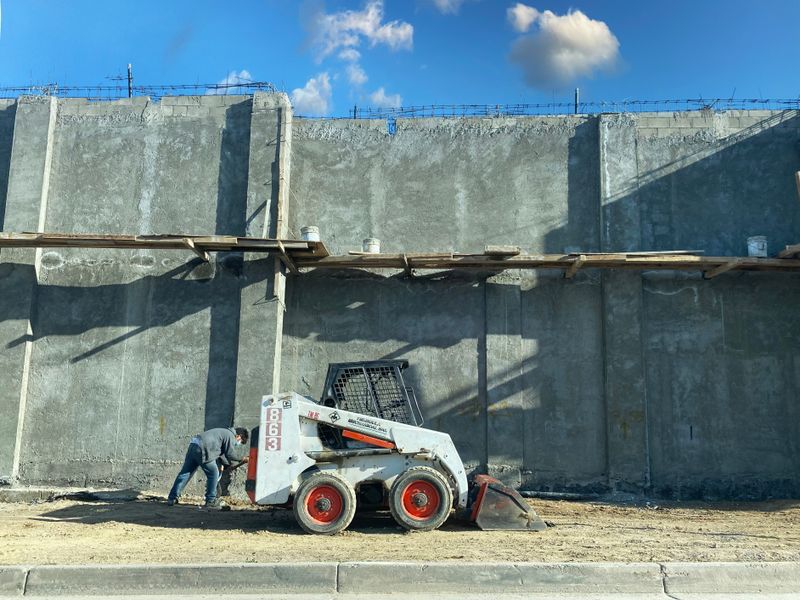
If your skid steer starts but won’t move, do not assume the drive pump has failed. A no-travel complaint can begin with the normal operator-enable sequence, an active parking brake, low system voltage, a control or sensor fault, loss of hydraulic charge pressure, a brake-release problem, or mechanical damage.
The safest first move is to preserve evidence. Stop cycling the controls and record which functions still work, which warning is displayed, and what happened immediately before travel was lost. That pattern gives an operator or technician more value than a guessed parts list.
Stop before troubleshooting when the machine is unsafe
Lower the lift arms and attachment to the ground if the machine can do so normally. Place the controls in neutral, apply the parking brake, shut down, remove the key, and follow the site’s isolation procedure before leaving the seat.
Remove the machine from service immediately if any of these conditions applies:
- It is on a slope, blocking traffic, or cannot be secured against unintended movement.
- The lift arms are raised and cannot be lowered normally.
- A hose has burst, oil is spraying, or fluid is pooling near a hot surface.
- You smell burning insulation or overheated oil, or see smoke.
- Travel loss followed a collision, rollover, dropped load, or work around buried debris.
- A red stop warning, hydraulic-temperature warning, or brake warning remains active.
- The machine pulls sharply, binds, grinds, or moves without a predictable control response.
Never stand under raised lift arms without the manufacturer-approved support installed by the specified procedure. Never search for a hydraulic leak with your hand. The NIOSH skid-steer safety alert calls for maintained interlocks, operator restraints, manufacturer service procedures, and an approved lift-arm support when raised-arm service is unavoidable.
Build a no-travel symptom record
Make one controlled observation from the normal operator position only when the machine is in a safe, open area and the operator manual allows it. Do not repeat a test that produces a warning, leak, unusual noise, or uncontrolled movement.
Record:
- Machine model, serial or product identification number, hour-meter reading, and installed control pattern
- Whether the engine reaches normal idle and whether the display stays powered
- Seat, belt, restraint-bar, cab-door, hydraulic-lock, and parking-brake indicators
- Exact warning text, lamp, and code, including whether it is active or stored
- Whether lift, tilt, and auxiliary hydraulics respond normally
- Whether travel is lost on the left side, right side, or both sides
- Whether the fault is constant, intermittent, cold-only, hot-only, or load-dependent
- Ground and weather conditions, attachment fitted, and what changed just before the fault
Photograph the display without clearing codes. Do not translate a code using a list for a different brand, model, serial range, or software version. Caterpillar’s diagnostic guidance likewise recommends capturing the conditions before the failure, checking fault codes, and using the manual or dealer to interpret them.
Skid-steer no-travel symptom matrix
| What still works? | Travel symptom | First safe branch | What a qualified technician may need to isolate |
|---|---|---|---|
| Lift and tilt work normally | Neither side moves | Normal enable sequence, park-brake status, control-neutral status, warnings | Interlock inputs, drive command, brake release, charge pressure, propulsion control |
| Lift, tilt, and auxiliary functions are also disabled | Neither side moves | Operator-presence system, hydraulic lockout, door or restraint status, electrical supply | Shared enable circuit, controller power, sensor input, charge or pilot supply |
| Loader functions work | One side is weak or dead | Tire or track condition, visible obstruction, leaks, impact history | Side-specific control, hose or circuit, drive motor, brake, chaincase, axle |
| All functions work after startup | Travel fails when warm | Temperature warnings, fluid level by the manual, cooler obstruction, fault timing | Charge pressure, restriction, brake release, internal leakage, fluid condition |
| Travel is jerky or intermittent | One or both sides cut in and out | Display resets, loose visible connector, seat or restraint indication, terrain/debris | Voltage drop, harness or sensor fault, control signal, pressure instability |
| Travel stopped after service | Pattern depends on work performed | Verify the service record and correct fluid/filter/connector by part number | Installation error, air or restriction, disconnected harness, calibration or test procedure |
This matrix narrows a system, not a failed component. For example, normal bucket movement does not prove the charge circuit, travel-control electronics, brake-release circuit, or both propulsion loops are healthy.
If the problem is only that an attachment will not operate while the loader travels normally, use the separate auxiliary-hydraulics diagnostic. This page owns machine travel loss, not attachment-circuit troubleshooting.
Confirm the normal enable sequence once
Different machines use different combinations of a seat switch, seat belt, restraint bar, cab-door switch, parking-brake control, hydraulic lock, start sequence, and control-neutral check. Use the operation manual for the exact serial number.
From the seat, follow that manual’s normal sequence once. Confirm each indicator changes exactly as described. John Deere’s published skid-steer operating instructions, for example, give model-specific procedures for testing the park-brake, seat, belt, and boom-and-bucket interlock systems. Bobcat’s manual catalog likewise distinguishes operation-and-maintenance instructions from diagnosis and repair information.
Do not hold, tape, jumper, or reposition a switch to make the machine move. A failed or inconsistent safety-system check is a stop-work finding, not a workaround. The normal steps in our skid-steer operating guide can help distinguish an unfamiliar control sequence from a new fault, but the machine manual always controls.
Inspect only what is visible and safely accessible
After safe shutdown, complete a ground-level walkaround. Look for a deflated or damaged tire, derailed or jammed track, material wrapped around an axle, fresh impact damage, a hanging harness, loose battery connection, or fluid below the machine. Keep clear of pinch points and do not open a pressurized system.
Check fluid level only in the position, temperature condition, and reservoir specified by the operator manual. Do not top off by color or by a generic viscosity. Overfilling, mixing incompatible products, or using the wrong fluid can create another fault. Use the heavy-equipment fluids guide for identification principles and the hydraulic-system maintenance guide for contamination and leak-control practices.
If the display dims, resets, or produces several unrelated faults, note that behavior for the technician. Low supply voltage or a poor connection can disrupt controllers and solenoids, but voltage must be measured at the points and under the conditions specified in the service manual. If outside power is being considered, first follow the voltage-identification and stop rules in our 12V vs. 24V jump-start guide.
Know where operator checks end
A qualified technician with the correct service information should take over when the normal enable sequence and visible inspection do not restore travel. Depending on the symptom, diagnosis may require:
- Reading live switch, sensor, command, and controller data
- Checking battery voltage drop and protected power or ground circuits
- Measuring charge, brake-release, pilot, or loop pressure at specified ports
- Performing a drive-motor case-drain or hydraulic isolation test
- Inspecting a brake, chaincase, axle, coupler, drive motor, or pump
- Applying model-specific calibration, towing, or recovery procedures
These tests expose personnel to stored pressure, hot oil, rotating components, and unintended movement. Pressure values, test ports, brake-release methods, and towing steps are model-specific; publishing one generic number or hose-disconnection sequence would be unsafe.
Give the technician the symptom record, photos, exact codes, recent repairs, fluid or filter changes, and the last known normal operating condition. That handoff reduces repeat testing and makes an intermittent fault easier to reproduce safely.
The practical diagnosis
When a skid steer won’t move, begin with the function pattern, not a replacement part: both sides or one, loader functions available or unavailable, cold or hot, warning or no warning. Confirm the prescribed enable sequence once, complete a shutdown walkaround, and stop at the boundary between observation and service testing.
Do not defeat an interlock or force the controls to finish a job. Record the evidence in the heavy-equipment inspection log, remove the machine from service when the fault persists, and give the exact model and serial information to a qualified technician.
Sources

Ironworks Insider Editorial Team
Independent trade-focused editorial team