Trenching and Excavation Safety: OSHA Standards and Best Practices
Quick answer
Trenching safety starts with competent-person assessment, protective systems when required, safe access and egress, spoil-pile control, utility locating, atmospheric checks when needed, and keeping workers out of unsupported hazardous trenches.
Common questions
- Why is trench collapse so dangerous?
- Soil can collapse suddenly and is heavy enough to trap, crush, or suffocate workers. Even shallow-looking trenches can be hazardous depending on soil, water, vibration, and nearby loads.
- What should happen before digging?
- Locate utilities, evaluate soil and water conditions, plan access, choose protective systems, manage spoil piles, and assign a competent person to inspect conditions as work changes.
Source note: Reviewed July 2026 against the article guidance and common heavy-equipment practice; manufacturer manuals, site plans, OSHA rules, and competent-person direction control field work.
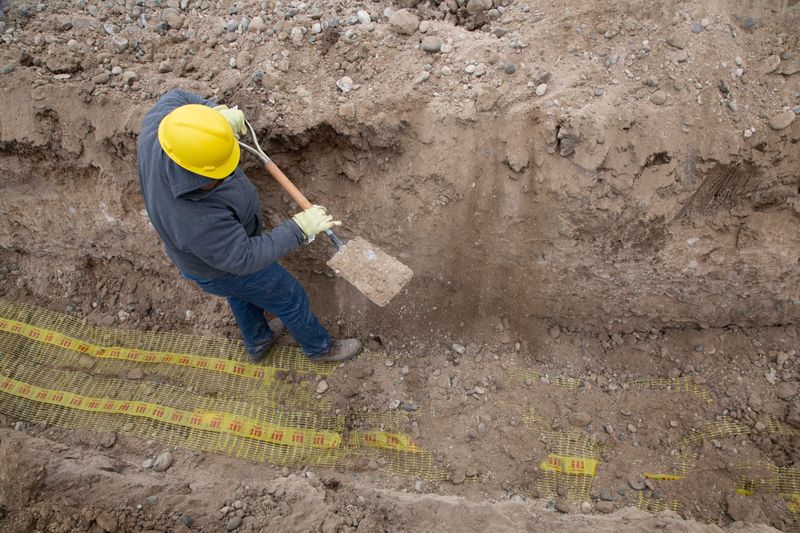
Cave-ins kill. That is the blunt, unavoidable fact that drives every provision of OSHA’s trenching and excavation standard. A cubic yard of soil weighs approximately 3,000 pounds — comparable to a mid-size car. Workers who are buried by a trench collapse have only minutes before suffocation or crush injuries become fatal. Yet trenching fatalities continue to occur year after year, overwhelmingly on sites where the hazard was well understood and the required protective measures were simply not implemented.
OSHA 29 CFR 1926 Subpart P governs excavation and trenching safety in construction. Understanding and following it is not optional — it is the minimum standard required to work safely below grade.
Definitions: Excavation vs. Trench
OSHA distinguishes between two types of below-grade openings:
Excavation: Any man-made cut, cavity, trench, or depression in an earth surface formed by earth removal.
Trench: A narrow excavation made below the surface of the ground — deeper than it is wide (measured at the bottom), and no wider than 15 feet.
The practical significance: all excavations 5 feet or deeper require a protective system unless the excavation is made entirely in stable rock. Excavations 20 feet or deeper require a protective system designed by a registered professional engineer (PE).
The Competent Person Requirement
The single most important concept in Subpart P is the competent person. OSHA requires a competent person to be present at all excavation operations. The competent person must:
- Be capable of identifying existing and predictable hazards in the surroundings (soil conditions, water intrusion, equipment proximity, etc.)
- Have authority to take prompt corrective measures — including stopping work — without requiring management approval
- Classify soil before excavation begins
- Perform daily inspections (and inspections after every rainstorm, other hazard-increasing occurrence, or change in conditions)
- Evaluate atmospheric hazards when they may exist
- Determine the appropriate protective system
Being a competent person for excavation is a formal designation. Simply having years of experience is not sufficient — formal training in soil classification and protective systems is required. OSHA does not require a specific certification, but training should be documented.
Soil Classification
Soil classification is the foundation of every protective system decision. OSHA’s Appendix B to Subpart P establishes a classification system with three categories based on the soil’s strength and stability.
Type A — Most Stable
- Cohesive soils with an unconfined compressive strength of 1.5 tons per square foot (tsf) or greater
- Examples: Clay, silty clay, sandy clay, clay loam
- Previously disturbed soil cannot be classified as Type A
- Soil cannot be classified as Type A if: it is subject to fissuring, is subject to vibration from heavy equipment, has water seeping through it, or is part of a sloped, layered system
Type B — Intermediate
- Cohesive soils with unconfined compressive strength between 0.5 and 1.5 tsf
- Examples: Angular gravel, silt, sandy loam, unstable rock
- Previously disturbed soils (unless they otherwise qualify as Type A)
- Dry rock that is unstable
- Soil from which water is freely seeping
Type C — Least Stable
- Cohesive soils with unconfined compressive strength less than 0.5 tsf
- Examples: Granular soils (gravel, sand, loamy sand), submerged soil, unstable rock
- Soil subject to running conditions
- Most sandy and gravelly soils will be classified Type C
Soil Testing Methods
The competent person uses several methods to classify soil:
Visual tests:
- Check for cracks, fissures, or spalling — indicators of unstable soil
- Observe whether excavated soil retains a clump shape (cohesive) or falls apart (granular)
- Presence of water seeping into the excavation
- Check for layered soils (each layer may need separate classification)
Manual tests:
- Thumb penetration test: Press a thumb into the soil sample. If it penetrates only with great effort, it may be Type A (≥1.5 tsf). If it penetrates fully with moderate effort, likely Type B. If the thumb easily penetrates, likely Type C.
- Pocket penetrometer: A handheld device that directly measures unconfined compressive strength in tsf. Far more reliable than the thumb test. Every competent person should carry one.
- Torvane shear device: Measures shear strength; useful for fine-grained soils.
- Dry strength test: Crumble a dried soil sample. High dry strength (difficult to break) suggests Type A clay. Sand and silt break easily.
Protective Systems
OSHA requires one of four protective approaches for excavations 5 feet and deeper:
- Sloping or benching
- Shoring systems (timber, hydraulic, pneumatic, or screw jack shores)
- Trench boxes/shields
- Other protective systems designed by a PE
Sloping
Sloping means cutting back the trench wall at an angle inclined away from the excavation. The required angle depends on soil type:
| Soil Type | Maximum Allowable Slope |
|---|---|
| Type A | 3/4:1 (53° from horizontal) |
| Type B | 1:1 (45° from horizontal) |
| Type C | 1.5:1 (34° from horizontal) |
| Stable rock | Vertical (90°) |
The ratio is expressed as horizontal:vertical. Type C at 1.5:1 means for every foot of depth, the bank must be cut back 1.5 feet horizontally — creating a very wide excavation for deep trenches, which is why shoring or trench boxes are often more practical in urban or confined sites.
Benching
Benching cuts the excavation walls into a series of horizontal steps. Like sloping, the geometry depends on soil type:
- Type A soils: Simple and multiple bench configurations are allowed. Simple bench: vertical face to 4 feet, then 1/2:1 slope to the top.
- Type B and C soils: Multiple bench configurations only, and the overall slope from the bottom of the vertical face to the top of the slope must not exceed the sloping ratios above.
Benching is NOT permitted in Type C soils when the depth exceeds the initial bench height.
Shoring Systems
Shoring provides a structural support system that prevents soil movement into the excavation. Types include:
Timber shoring: Traditional method using upright timbers (uprights), horizontal walers, and cross braces. Sized according to tables in Appendix C of Subpart P. Labor-intensive but useful in situations where trench boxes won’t fit.
Hydraulic shores (hydraulic cylinder shores): Metal cylinders with hydraulic pistons extend to push against uprights or directly against trench walls. Faster to install than timber, can be adjusted as depth increases. Available in single-cylinder and double-cylinder configurations.
Pneumatic shores: Similar to hydraulic shores but operated with compressed air. Less common than hydraulic but useful where hydraulic fluid contamination is a concern.
Screw jack shores: Steel jack screws extend mechanically. Lower cost than hydraulic, but slower to adjust.
All manufactured shoring must be used per the manufacturer’s tabulated data, which must be on site whenever the system is in use.
Trench Boxes (Trench Shields)
Trench boxes (also called trench shields are pre-fabricated steel or aluminum structures placed inside the trench. Unlike shoring, trench boxes do not prevent soil movement — they protect workers inside the box if soil does move.
Key rules for trench box use:
- Workers must work inside the protected area of the box at all times
- The box must be moved along with the work — workers cannot step outside the box
- The space between the box and the excavation wall must be backfilled or the box must fit snugly against the soil
- Manufacturer’s data must specify the depth and soil type rating
Trench boxes are the most common protective system for utility installation work because they are fast to deploy and reusable.
Atmospheric Hazard Testing
Excavations can accumulate hazardous atmospheres — particularly deep trenches, excavations near landfills, gas mains, sewer systems, or contaminated sites.
The competent person must test the atmosphere in excavations greater than 4 feet deep where there is a potential for hazardous atmospheres before workers enter and as conditions change.
Test for:
- Oxygen deficiency (below 19.5% oxygen) or oxygen enrichment (above 23.5%)
- Flammable gas (combustible gas detector reading above 10% of the Lower Explosive Limit is cause for action)
- Carbon monoxide from nearby engines, landfill gas, or decomposing organic material
- Hydrogen sulfide in sewage work or near swampy ground (immediately dangerous at 100 ppm)
- Other toxic contaminants specific to the site history
Testing Equipment
A multi-gas detector (4-gas monitor) simultaneously tests for oxygen level, LEL (combustible gas), CO, and H2S. Every competent person working on excavations with potential atmospheric hazards should have one.
Industrial Scientific MX6 iBrid Multi-Gas Monitor and the BW Technologies GasAlert Quattro are widely used, OSHA-acceptable 4-gas monitors. Price range: $400–$700 new; rental available from most safety equipment suppliers.
If hazardous atmospheres are found or potential exists, the excavation must be treated as a permit-required confined space under 1910.146. Forced air ventilation must be provided and maintained.
Water Accumulation Management
Water in a trench is a serious hazard — it softens soil, can indicate subsurface pressure, and creates drowning risk. OSHA 1926.651(h) prohibits employees from working in excavations where water has accumulated unless:
- Adequate precautions have been taken to protect them from the hazard
- Water is being controlled by a de-watering system that removes water as fast as it collects
The competent person must monitor water levels and evaluate whether the influx of water is changing soil stability. Surface water must be diverted away from the excavation using diversion ditches, dikes, or other means.
Spoil Pile Placement Rules
OSHA 1926.651(j) requires that excavated material (spoil) be placed at least 2 feet from the edge of the excavation. This rule exists because:
- Spoil piles create surcharge loading on the trench wall, increasing the risk of collapse
- Spoil piles can fall back into the trench, burying workers
- Spoil piles can restrict egress from the excavation
Two feet is the absolute minimum — more distance is better. On longer trenches, excavators typically deposit spoil on one side, keeping the other side clear for equipment access and worker egress.
Access and Egress Requirements
OSHA 1926.651(c) requires safe access and egress for all excavations 4 feet or deeper. Specifically:
- Ladder, stairway, or ramp must be provided at intervals no greater than 25 feet of lateral travel from any worker in the excavation
- Structural ramps used for equipment or as structural supports must be designed by a competent person
- Workers may not jump down into or climb out of excavations using equipment or other improvised means
Equipment Near Excavations
Heavy equipment operating near excavations creates additional hazards:
- Equipment vibration can destabilize trench walls — particularly in Type B and C soils
- Equipment loading near the edge contributes surcharge loads
- Utility lines, equipment cables, and hydraulic hoses can create tripping and entanglement hazards near open trenches
Best practices:
- Keep heavy equipment at least one equipment-width away from the trench edge unless the trench wall has been rated for the surcharge load
- Use a spotter when backing equipment toward excavations
- Stop equipment use near the trench if the competent person observes increased cracking or soil movement
Emergency Response Planning
Every excavation operation should have a written emergency response plan that addresses:
- Who to call (911, site superintendent, safety officer) and how
- Location of first aid supplies and nearest hospital
- Excavation rescue procedures (a competent rescuer must be on site or immediately available)
- Equipment for excavation rescue (shovel, hand tools — never send rescuers into an unstable trench without shoring it first)
OSHA specifically warns: do not enter an unstable excavation to rescue a buried worker without first stabilizing the walls. Multiple fatalities occur each year when would-be rescuers are themselves buried.
Excavation Permit and Daily Inspection Checklist
While OSHA does not mandate an “excavation permit” in the same way it requires a confined space permit, many safety programs and contractors use a pre-excavation checklist as a best practice. Here is a practical daily inspection checklist for competent persons:
Pre-Excavation Checklist
- Utilities located and marked (call 811 before you dig)
- Soil classified by competent person; classification documented
- Required protective system type determined and on site
- Competent person designated and on site for entire operation
- Access/egress ladder or ramp locations planned (max 25-ft intervals)
- Atmospheric testing performed if required; equipment calibrated
- Water control plan in place if groundwater expected
- Spoil pile locations established (minimum 2 feet from edge)
- Emergency response plan reviewed with crew
Daily Inspection Items (Before Each Shift and After Any Rain/Incident)
- Inspect trench walls for cracking, fissuring, or bulging
- Inspect shoring or trench box for damage, displacement, or unusual loading
- Check for water accumulation; assess impact on soil stability
- Verify spoil piles are properly set back
- Verify access/egress is in place and unobstructed
- Re-test atmosphere if conditions have changed
- Document inspection results (date, findings, corrective actions)
Common Citations Under Subpart P
OSHA consistently lists excavation violations among the top-cited construction standards. The most common:
- No protective system in excavations 5 feet or deeper
- Failure to have a competent person on site
- Inadequate access and egress (no ladder, or ladder too far from workers)
- Spoil pile too close to trench edge
- No atmospheric testing in excavations with hazardous potential
- Failure to conduct daily inspections or document them
Penalties for excavation violations can reach $16,550 per violation for serious citations and $165,514 for willful violations. But the real cost of non-compliance cannot be overstated — a trench collapse can and does kill experienced workers in seconds.
Final Thoughts
Trenching and excavation safety is one of the most well-defined areas of OSHA construction regulation, yet fatalities persist. The reason is almost always the same: the protective measures required by Subpart P were known, they were available, and they were not used.
Train your competent persons rigorously. Document your soil classifications and daily inspections. Never allow workers below 5 feet without a proper protective system. These are not complex requirements — they are the basic minimum that stands between a worker and 3,000 pounds of collapsing earth.
The regulations are detailed because the consequences are fatal. Treat them accordingly.

Ironworks Insider Editorial Team
Independent trade-focused editorial team